

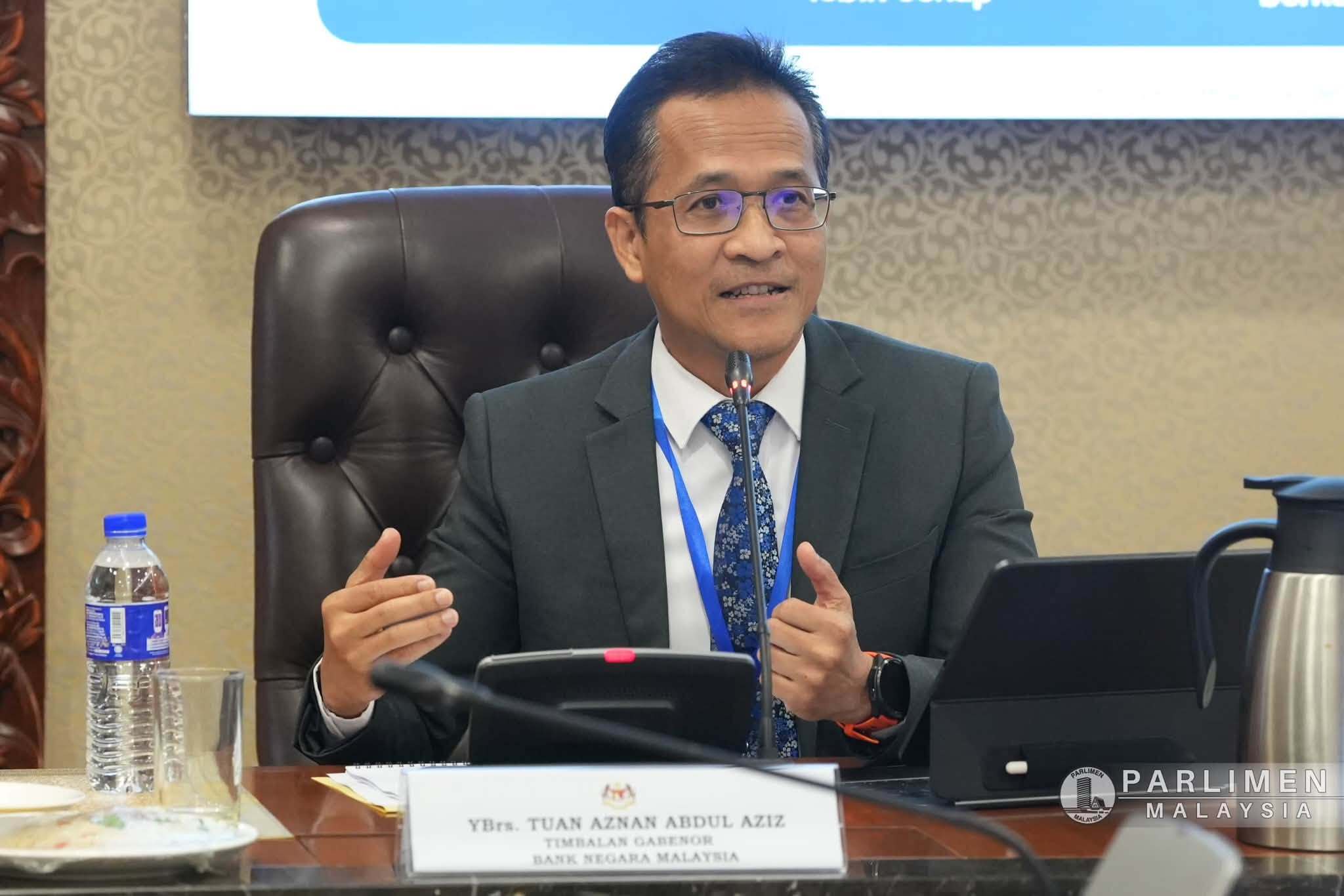
KUALA LUMPUR, Nov 26 — Bank Negara Malaysia (BNM) has defended its decision to protect only 80 per cent of medical and health insurance/takaful (MHIT) policyholders from annual premium increases exceeding 10 per cent.
According to the central bank, some insurers incurred losses after keeping premiums unchanged for several years despite rising medical costs.
BNM deputy governor Aznan Abdul Aziz told Parliament’s Public Accounts Committee (PAC) that the prolonged freeze during the Covid-19 pandemic had created a widening gap between insurers’ medical costs and the premiums they collected.
“When we obtained the industry’s commitment, we certainly wanted to cover as many people as possible,” Aznan said during an October 6 PAC proceeding with representatives from BNM, the Ministry of Health (MOH), and the Ministry of Finance (MOF).
“However, because of Covid at the time, many insurance companies had also not increased their policies or premiums for several years. As a result, there was a very wide gap between costs and premiums. So, insurance companies were indeed making losses when providing MHIT insurance to some consumers.”
Aznan was responding to PAC member and Kubang Pasu MP Ku Abd Rahman Ku Ismail, who questioned why the repricing protection was not extended to all policyholders.
Aznan said BNM and insurers had agreed on the 80 per cent threshold to avoid forcing insurance companies to provide coverage below cost, which could undermine the availability of medical insurance products. Actual coverage exceeded the commitment, reaching 90 per cent of policyholders, he said.
“Although we set the threshold at 80 per cent, the actual achievement was higher than that. As stated here, the actual achievement was 90 per cent,” Aznan told the PAC.
But Ku Abd Rahman questioned the relevance of insurers’ decision to freeze premiums during the pandemic when the committee was discussing repricing after Covid-19. “Yang masa Covid itu, different – sorry lah. Kita cerita pasal lepas Covid,” he said, according to Hansard published in the PAC’s 91-page report, tabled in the Dewan Rakyat last week.
Aznan maintained that protecting all policyholders from premium increases exceeding 10 per cent could be financially unsustainable given the accumulated gap between medical costs and premiums.
“If we want to cap it at 100 per cent, it may not be sustainable,” he said.
Ku Abd Rahman remained unconvinced, reiterating that all policyholders should receive the same protection. “I am not entirely convinced by the answer, but we can move forward. I still believe we should aim for 100 per cent,” the Perikatan Nasional lawmaker said.
Aznan described the repricing protection as an interim measure, pointing to MediAsas, the government’s proposed basic MHIT plan, as a longer-term option for consumers facing rising premiums.
“The long-term measure is MediAsas. So, all insurance or takaful customers will have the option of switching to MediAsas as a product that is more affordable and more sustainable in terms of costs,” he said.
CodeBlue reported yesterday about insurance and takaful operators (ITOs) potentially withdrawing individual medical insurance/takaful products from sale beginning January 1, 2027, the same date as a planned nationwide rollout of MediAsas. At least one ITO, Great Eastern, has already posted a public notice to that effect.
The PAC report noted that BNM received 264 complaints related to MHIT as of August 31, 2026, all of which had been resolved. However, the central bank did not specify how many involved premium repricing, rejected claims, coverage disputes, or guarantee letters.
BNM’s interim measures to limit medical insurance premium hikes to under 10 per cent for most policyholders for three years from December 2024 to the end of 2026 are coming to a close next month.
Last Saturday, BNM governor Abdul Rasheed Ghaffour reportedly admitted in a keynote address at an event that containing insurance premiums alone wouldn’t resolve rising health care costs.
MediAsas Pilot Draws Interest, But No Claims Recorded
MediAsas is being tested ahead of its nationwide rollout in January 2027, but the pilot has yet to record any insurance claims.
Aznan told the PAC that more than 1,600 individuals had expressed interest in the plan, although about 1,300 were still considering participation. BNM assistant governor Lau Chin Ching said some prospective participants might be waiting for the January launch before deciding whether to enrol.
The first phase involved 14 organisations, mainly government-linked companies (GLCs) and government agencies, including BNM. A second phase is expected to involve 30 organisations, including small and medium enterprises (SMEs) seeking medical coverage for their employees.
Aznan said the pilot was intended primarily to test the plan’s operational readiness ahead of its nationwide rollout, rather than serve as a full-scale assessment. It was not open to the general public, and no claims had been recorded under the programme, he confirmed.
Former Health Minister Dr Zaliha Mustafa, a PAC member, questioned whether employees of GLCs and insurance companies were suitable participants, given that many already receive medical coverage through their employers.
Aznan said BNM had initially focused on GLCs and government agencies, including its own employees, and held engagement sessions to explain MediAsas, its benefits, and costs.
Some prospective participants might also be considering the plan for parents or adult children who were no longer covered by employer-sponsored medical benefits, he added.
MediAsas Board To Oversee Pricing, Claims, And Cost Controls
The government has established an independent MediAsas Board to provide strategic oversight of the plan, safeguard the public interest, and ensure its long-term sustainability ahead of its nationwide rollout.
The Joint Ministerial Committee on Private Healthcare Costs (JBMKKS) announced the board’s formation on November 4. It is chaired by Prof Emeritus Dr Norma Mansor, with five other members: Prof Dr Elil Renganathan, Hamidah Naziadin, Ivan Loh Ee Hoe, Serena Thio Hui Ming, and Prof Dr Woo Yin Ling.
Their expertise spans public policy and governance, public health, health care, hospital operations, insurance and takaful, actuarial management, and business and human resource management.
The board will also include ex-officio representatives from the MOH, MOF, and BNM. ProtectHealth Corporation will operate the MediAsas Office to support the board’s work.
The government has appointed Prof Dr Winnie Yip of Harvard T.H. Chan School of Public Health as a global expert adviser, while former BNM deputy governor Jessica Chew will serve as a technical adviser.
However, the board’s statutory status remains unclear. The PAC had specifically asked whether it would have statutory powers or function only as an advisory body to MOH and MOF, but BNM did not clearly establish its legal authority.

