


Politics are the authoritative allocation of scarce resources.
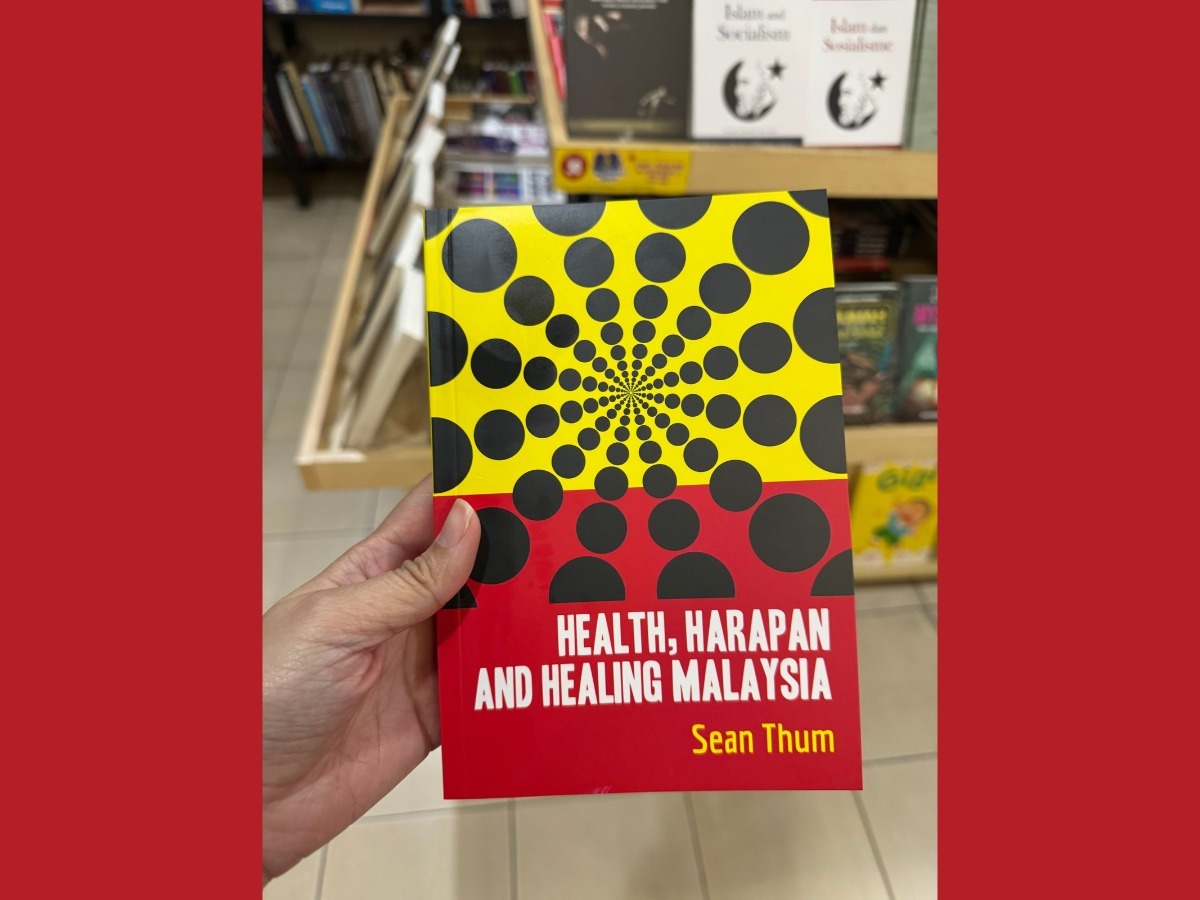
I recently bought a copy of Health, Harapan and Healing Malaysia by Dr Sean Thum, a new release published by Gerabudaya, because I thought the special functions officer to Deputy Communications Minister Teo Nie Ching from the DAP would help explain how that works in real life.
A patient’s breakdown at a Covid-19 quarantine and treatment centre in Tuaran, due to fears for the livelihood of her parents and children, triggered Dr Thum’s eventual shift from medicine to policymaking. He served as a volunteer medical doctor on the ground in Sabah from October to December 2020 during the pandemic.
Aside from that anecdote, he doesn’t dwell on his career switch from initially attempting to specialise in psychiatry to joining Teo’s office in January 2024.
Disappointingly, there is very little written about his day-to-day job as a deputy minister’s aide and how policymaking works behind the scenes, such as the compromises that politicians need to make, or how scarce resources are allocated.
The nitty-gritty of policymaking would have been illuminating, especially since it’s easy for critics (including me) to disparage bad policies from the outside without knowing what happened in the room.
Dr Thum’s book elaborates on various health care issues in Malaysia, including the contract doctor system (which personally affected him), mental health, health technology, medical insurance, the country’s dual public-private health care system, and tobacco and nicotine control.
The main problem with Health, Harapan and Healing Malaysia is that the author offers very few personal opinions about these issues, aside from writing what was already reported in the public domain and Madani’s proposed policy solutions (read: government propaganda).
Dr Thum even makes basic factual mistakes.
Totally Wrong About GEG, Nicotine Delisting
One of the most egregious errors in his book, written as of December 2025, is about Malaysia’s tobacco and nicotine control. Although he dedicates an entire chapter to this issue, Dr Thum ignores the June 2023 judicial review application filed by the Malaysian Council for Tobacco Control (MCTC) over the delisting of liquid nicotine from the Poisons List, an historic lawsuit by anti-tobacco groups against the government.
That is a glaring and inexplicable omission from the public record. Anti-smoking groups would later go on to win their case in May 2026 when the High Court nullified the 2023 liquid nicotine exemption order, effectively making nicotine vape sales illegal and potentially invalidating more than RM354 million in excise duties collected, though the government has yet to explain the impact of the court ruling.
Yesterday, the Malaysian Council for Tobacco Control (MCTC) alleged a possible renewed attempt by the government to exempt nicotine e-liquids from the Poisons List by returning to the Poisons Board. Dzulkefly Ahmad is the current health minister.
Dr Thum also fails to mention that Dr Zaliha Mustafa was the first health minister in the history of the pre-Merdeka Poisons Board to reject its advice, when she removed liquid and gel nicotine used in e-cigarettes and vape from the list of scheduled poisons in March 2023 despite unanimous opposition from the Board.
Although Dr Thum acknowledges that the delisting of liquid nicotine allowed nicotine vapes to be legally sold to children, he incorrectly says the legal lacuna lasted for “nearly a year” (it was actually one and a half years from March 31, 2023, to September 30, 2024).
He also wrongly claims that the Control of Smoking Products for Public Health Act 2024 (Act 852) was introduced as an “emergency measure” to fill that lacuna. It wasn’t.
The Madani government already had a 2022 version of the bill sitting on the shelf, a leftover from Prime Minister Ismail Sabri Yaakob’s administration that failed to get it passed before the 15th general election.
But Prime Minister Anwar Ibrahim’s administration self-created the legal lacuna by delisting liquid nicotine in March 2023 to tax nicotine vapes, before tabling the tobacco and vape control bill.
A version of the bill, which contained the generational end game (GEG) policy, was only tabled later in June 2023. It was later retracted and replaced with another version omitting the GEG in November 2023, which then became Act 852 that only came into effect on October 1, 2024.
Dr Thum also erroneously claims that “public support fractured” for the GEG bill and that early government messaging – presumably when Health Minister Khairy Jamaluddin proposed a prohibition on smoking and vaping for future generations – was “vague, poorly explained, and slow”.
On the contrary, the GEG policy was easily understood by the general public. It had massive public support, as shown in a survey by an anti-tobacco group in early 2022. A purported failure in “strategic communication” didn’t kill the GEG. Politicians, including those from DAP or Pakatan Harapan (PH), had killed it.
Even if Dr Thum didn’t have insider knowledge on the mindset of the party that he works for, there is already public record of opposition towards the GEG policy from then-Youth and Sports Minister Hannah Yeoh from the DAP and Tourism, Arts and Culture Minister Tiong King Sing from GPS. Warisan’s Kota Belud MP Isnaraissah Munirah Majilis said her constituents didn’t support the proposed generational smoking ban.
Then-Deputy Health Minister Lukanisman Awang Sauni even told the Dewan Rakyat in March 2024 that the tobacco and vape industry had gotten the GEG killed by successfully lobbying MPs.
However, Dr Thum’s book cites then-Attorney-General Ahmad Terrirudin Mohd Salleh’s statement that the GEG was “unconstitutional” because the proposed generational smoking ban discriminated against citizens based on birth year. The author omits the fact that this was a different stance from one initially taken by the Attorney-General’s Chambers, as proven by Hansard.
Dr Thum claims Putrajaya didn’t want to face a legal challenge (the government of the day has been sued many times on various public interest issues) and Madani couldn’t realistically obtain two-thirds majority to amend the Federal Constitution (nobody asked for this, least of all amending Article 8 on equality under the law).
As a deputy minister’s officer, Dr Thum would be well within his rights to support elected representatives’ personal beliefs or their desire to vote based on their constituents’ opposition to the GEG – if he wanted to.
At the very least, the political appointee could untangle such conflicts – which he alludes to on various issues in his book, but never specifies – to demonstrate the lived realities of policymaking in Malaysia. Is it ethical for an MP to go against her personal beliefs or the wishes of her constituents, even if the overarching goal is public health?
Is rejecting a ban tantamount to supporting smoking or vaping, or is it more nuanced than that, especially when some GEG opponents are female non-smokers?
On the other hand, when furious government backbenchers and Opposition MPs alike condemned the decoupling of GEG from the tobacco bill during their debate, should the government have held a vote that same evening and faced a possible loss instead of postponing it to the next day? Should MPs be allowed to vote based on their conscience for certain issues or is the Whip a must for all government bills?
Dr Thum also contradicts himself in his book. He alludes that the constitutionality issue killed the GEG, but implies that “industry influence” resulted in phased enforcement of parts of Act 852 and non-prohibition of flavoured vapes.
Out of all the health care issues listed in Health, Harapan and Healing Malaysia, tobacco and nicotine control is the one issue that had direct involvement from politicians. MPs don’t really have differing opinions on the contract doctor system or private health care costs, aside from everyone just wanting some sort of solution.
But instead of attempting to answer difficult questions, Health, Harapan and Healing Malaysia takes the easy way out by spouting government propaganda.
Bland Retelling Of Contract Doctors’ 2021 Strike

Dr Thum was part of various medical groups, including the Malaysian Medical Association’s (MMA) Schomos, during the Code Black campaign in July 2021 that culminated in a brief walkout by contract doctors.
He writes that he wished Schomos had the same “leeway” as the aggressive Hartal Doktor Kontrak (HDK), but Schomos, tied to MMA, “had to operate within certain bounds”.
He goes on to talk about small wins after the walkout, like more permanent posts and clearer career pathways. But that’s just rehashing news reports about what happened.
I would have liked to know how junior doctors made the decision to conduct a strike at the height of the Covid-19 pandemic, whether their seniors supported them, if there were dissenting voices within the fraternity itself, and how people eventually came together.
Dr Thum also doesn’t explain why his own association, MMA, was so restricted in its actions despite being the largest doctors’ group in the country. (He was recently elected Schomos chairman for the 2026/2027 term).
He says “advocacy and activism must work hand in hand”, but says in the same breath that Code Black and Hartal changed things and “forced a conversation that had long been buried”, after stagnant progress from meetings with successive health ministers (which he doesn’t elaborate on).
So were repetitive press statements and stakeholders’ engagements actually effective? Or was it non-violent resistance that sparked real change?
Dr Thum talks about how disagreements are common in coalition work, but his book doesn’t cite specific incidents, whether on the contract doctors’ strike or other issues. Instead, he makes motherhood statements: “The value lies in negotiating across differences, refining positions, and finding common ground that reflects the realities of a diverse society.”
Any NGO can say that.
What Do Politicians Really Do For A Living?

Health, Harapan and Healing Malaysia talks about doctors’ on-call allowance, which was increased by 40 per cent in October 2025 to RM12.82 per hour, the first raise since 2012. Dr Thum writes that although this fell short of the proposed RM25 per hour, it showed how advocacy was an “endurance race” and that “each modest gain is a step forward”.
The contract system introduced by Prime Minister Najib Razak’s administration in 2016 defined “an entire generation of medical professionals” marked by “uncertainty, inequity, and attrition”, he says.
Madani has pledged to end the contract doctors’ system. But just like the new on-call rate that remains insufficient, will these measures be enough to stem doctors’ resignations, specialist attrition, and youths’ declining interest in studying medicine?
If it took 10 years for the public health care system to deteriorate to its current state, will it take another decade to recover? Health care policies are unique because it generally takes years for impact. In that sense, are “modest gains” or even something as big as abolishing the contract doctor system (if this indeed comes to pass) enough? I would have liked to see deeper reflection.
Citing previous suggestions to cut MPs’ salaries to fund doctors’ on-call allowance, Dr Thum touts the importance of an elected representative’s work of “legislating, scrutinising government policies, and ensuring the machinery of state functions properly”.
He criticises our political culture of treating MPs as welfare officers, saying Malaysians should be educated to understand the difference between MPs, state assemblymen, and local authorities.
Dr Thum says the question isn’t whether MPs are “overpaid”, then calls for higher wages across Malaysian society. Well obviously, everyone (including me) wants bigger salaries. But that still doesn’t explain how to pay for things in government, like health workers’ remuneration.
If the author opposes cutting MPs’ allowances to fund a much higher increment in doctors’ on-call allowance beyond 40 per cent, then what should be cut? Fuel subsidies that disproportionately benefit the rich? Literally anything else from any other ministry?
But Health, Harapan and Healing Malaysia doesn’t tackle the thorny issue of resource allocation at all.
As an aide to Teo, I expected Dr Thum to detail how the Kulai MP presumably works on weekends from 7am to midnight, with endless meetings and frequent handouts to constituents, so as to justify MPs’ monthly allowances of over RM25,000.
Rather than a generic statement about how Malaysians generally think, “I voted for you, therefore you must serve me”, it would have been illuminating for Dr Thum to write about specific encounters with Kulai residents or exactly how much Teo gives her constituents every month and for what purpose.
Then I might have a greater appreciation of MPs’ predominant work in their constituencies. Show, not tell.
Aside from “stronger political education”, Dr Thum doesn’t say if he wants incumbent MPs to be barred from giving handouts to constituents in between elections so that they can focus on their “true legislative role”, or if he thinks this practice should be legally permitted to continue.
Surprisingly, as someone who works in a deputy minister’s office, the author’s statement about how MPs should ideally focus on “legislative work” belies the fact that Malaysia doesn’t function like a conventional Westminster democracy.
Regardless of which party is the government of the day, bills are routinely passed in a few days, compared to about a year for typical bills in the United Kingdom. In the UK Parliament, most bills are referred to a public bill committee at the committee stage, where MPs conduct clause-by-clause scrutiny and can take oral evidence from key stakeholders. Clauses can be amended or removed, and new clauses may be proposed.
But in Malaysia, so-called “debates” in Parliament are mere shouting into the wind (sometimes literally) because MPs cannot change a single word in any bill. Hence, most bills are passed in a voice vote.
It’s no surprise then that MPs (and ordinary citizens) generally focus on constituency work, rather than whatever happens in Dewan Rakyat. True policymaking or “legislative work” is done by civil servants.
Conclusion: Not Recommended For People Already Familiar With Health Issues

The only thing I like about Health, Harapan and Healing Malaysia is Dr Thum’s interesting stories about practising medicine because he relates his own experiences or those of other individuals.
His work on the decriminalisation of attempted suicide is also one of the better written parts of the book. But not much is told about the obstacles that Dr Thum personally faced, if any, ahead of the repeal of Section 309 of the Penal Code in 2023.
Thirdly, the author suggests a “Thum Model of Cans and Wants”, which he even copyrights, but doesn’t apply this interesting concept to the issues he lists in his book, writing just a few paragraphs instead.
I personally feel that while this model is useful for individuals, it’s irrelevant to policymaking because there is nothing the State can’t do. “In health care policy, non-performance occurs when institutions lack both the capacity (Can) and the will (Want) to fix systemic issues,” Dr Thum writes, without giving specific examples.
Again, politics are about the allocation of resources.
Do we allocate funding to overseas trips by ministers and top civil servants or do we use that money to purchase equipment for health care facilities? If the government wanted to increase public health care spending to 5 per cent of the country’s gross domestic product (GDP), it could. Putrajaya just needs to find the money for it by either diverting funding from other sources or raising taxes.
Malaysia’s fuel subsidies are projected at RM40 billion. If all of this was diverted to health – the Ministry of Health (MOH) received RM47.7 billion under Budget 2027 – we would probably nearly reach 5 per cent of GDP.
I’m not proposing this as a solution. What I’m saying is that I expected a deputy minister’s aide, who should be more familiar with policymaking than the average clinician, to unpack these issues.
Overall, I dislike the book because it simply compiles various health care issues and Madani’s responses, without much of the author’s opinion about the government’s policy measures.
The only substantive ideas expounded by Dr Thum are corporatising public hospitals to decentralise the public health care system, which was mentioned in the Health White Paper (HWP), as well as forming a Health Service Commission (the latter is absent from the HWP).
Although a chapter written by guest author Dr Sivabala Selvaratnam eloquently describes problems and proposed solutions, it sits oddly in the book. I would have preferred Dr Thum to use that space for his own thoughts and behind-the-scenes storytelling instead.
To me, writing is an act of bravery. A writer must be honest. But Health, Harapan and Healing Malaysia gives me the impression that its author was either ignorant about things or afraid to say what he really thought.
The book surprisingly lacks anecdotes about individuals, even though politics are all about people. Despite the word “Harapan” in its title, which ostensibly refers to Pakatan Harapan, Dr Thum barely mentions PH, if at all.
I also have a minor quibble with GerakBudaya: there is a missing Oxford comma in the title of the book itself.
In conclusion, I don’t recommend Health, Harapan and Healing Malaysia to people who are already familiar with health care issues in Malaysia. Those who aren’t, however, may find it to be a useful compilation without needing to trawl through hundreds of articles on the internet.
Non-fiction isn’t meant to be a mere collation of news reports or motherhood statements. It’s supposed to tell things that the reader doesn’t know, be it the author’s personal opinions, experiences, or events that aren’t reported publicly.
If Dr Thum practised self-censorship because he’s still serving in Teo’s office, perhaps he should have waited until the dissolution of the 15th Parliament before publishing Health, Harapan and Healing Malaysia. He might have written a far more interesting book then.

