

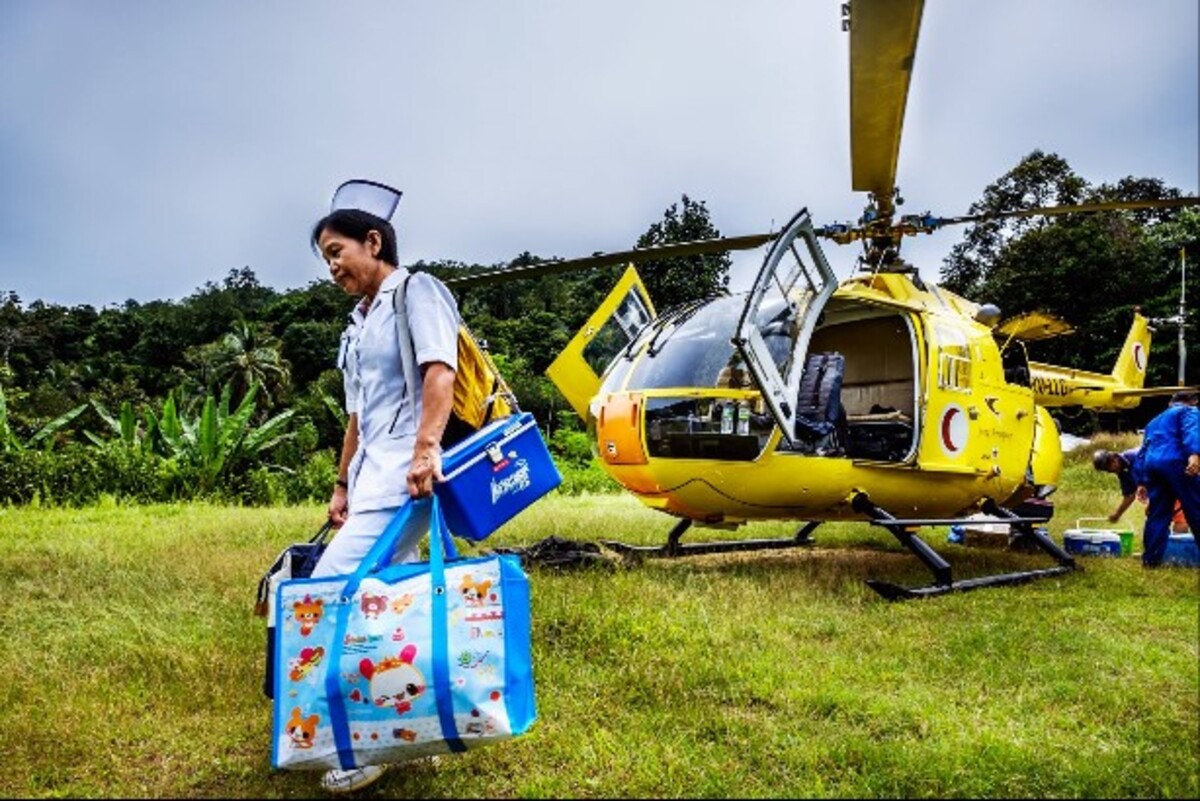
The deaths of health care personnel in the recent helicopter crash in Sarawak are devastating. They should also force an uncomfortable question: how much risk should health care workers be expected to assume simply to do their jobs?
The answer cannot be unlimited. Doctors spend years being trained to diagnose illness, manage emergencies, prescribe treatment and care for patients. Medical school teaches anatomy, physiology, pathology, pharmacology, and clinical medicine.
Clinical training moves that knowledge into hospitals and wards. Housemanship then turns the graduate into a working doctor through supervised responsibility and real-world experience.
We are trained for medicine, not aviation risk. That does not mean a doctor must know how to fly a helicopter. That would be absurd.
But when repeated helicopter travel becomes an unavoidable part of delivering health care, the risk associated with that travel is no longer incidental. It becomes occupational. That distinction matters.
A health care worker boarding a helicopter for a remote medical mission is not simply a passenger going on holiday. The journey is being undertaken because the health care system requires it.
The worker is exposed to that risk in the course of employment, in terrain and conditions that may be difficult, unpredictable and unforgiving.
That means the system has a responsibility to do more than get them from one point to another. It must ask whether health care personnel are adequately prepared for the environments they are sent into.
Are emergency procedures sufficient? Is survival training appropriate? Is the necessary safety equipment provided? Are weather and operational thresholds conservative enough?
Can a doctor, nurse, or medical assistant refuse a flight they believe is unsafe without fearing professional consequences? Are contractors subjected to the level of scrutiny that such missions demand?
These questions do not presume the cause of the Sarawak crash. That is for investigators to determine. But the tragedy makes those questions impossible to ignore.
There is, however, an equally important reality. The Flying Doctor Service (FDS) exists because some communities remain difficult to reach by conventional means. It exists to provide health care where geography, infrastructure and distance make ordinary access extraordinarily difficult.
Those communities cannot simply be abandoned in the name of safety. Ending such services without replacing them would not eliminate risk. It would merely transfer that risk from health care workers to rural patients.
A pregnant woman who cannot reach obstetric care, a child who misses essential vaccination, an elderly patient without access to medication, or a critically ill person requiring evacuation faces risks of their own.So the choice cannot be framed as doctors versus patients.
A functioning health care system has obligations to both. It must protect the people receiving care, and it must protect the people providing it.
In the short term, that means rigorous aviation oversight, transparent investigation, proper safety preparation, appropriate survival training, clear operational standards and strong safeguards for every health care worker required to travel by air.
In the longer term, we need to confront a more difficult question. Why does providing ordinary health care still require extraordinary journeys? Health care access should not depend so heavily on postcode.
Remote communities need stronger permanent health care capacity. They need better roads and bridges where geography allows, reliable transport systems, improved emergency evacuation networks and infrastructure that progressively reduces dependence on high-risk methods of access.
The Flying Doctor Service was created to bridge a gap. The goal should never be to make that gap permanent. The tragedy in Sarawak should not end with condolences, memorials, and an investigation report.
It should force us to examine what we ask of health care workers, what risks they should reasonably be expected to carry, and why, after decades of development, some Malaysians still require extraordinary measures simply to receive ordinary health care.
Doctors have a duty to care for patients. The system has a duty to bring them home safely.
The author is a general practitioner in Ipoh, Perak.
- This is the personal opinion of the writer or publication and does not necessarily represent the views of CodeBlue.


