

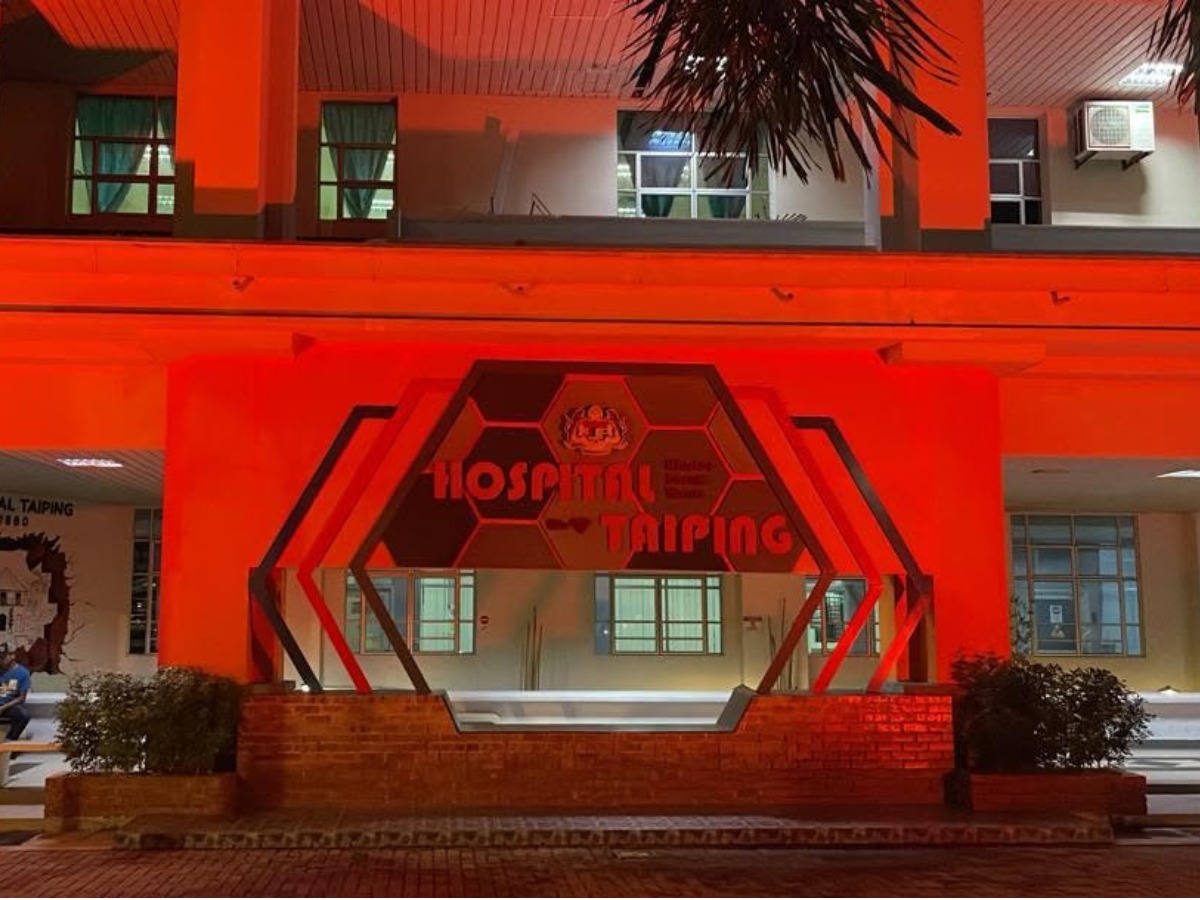
I am a medical officer from the emergency department of Taiping Hospital. Our department is in a critical condition, lacking manpower like what is happening in another department, as reported by CodeBlue earlier.
As emergency medical officers (MOs) in Taiping Hospital, we are the very frontline of frontliners because we are the first doctors who attend to patients.
Our patient-to-doctor ratio in the emergency department is around one doctor treating almost 50 patients. This is the ratio in the Green Zone due to insufficient manpower. Normally, we have at least two MOs.
The average waiting time in the Green Zone used to be one to two hours, before increasing to four to five hours. This is concerning, because patients might deteriorate, and all the blame will be placed on the Green Zone doctor.
Besides treating sick patients, we also need to handle difficult patients who can’t take long waiting times. We are being disturbed every 10 minutes by different patients asking when is their turn, causing burnout among us.
Secondly, the Yellow Zone used to consist of at least three MOs. It’s the busiest among all zones.
Usually, the waiting time at Yellow Zone is only 15 to 30 minutes; house officers (HOs) are allowed to help in this zone, but because there hasn’t been a recent intake of housemen at Taiping Hospital, this has caused a crisis.
Amid a lack of MOs, we are left with two MOs to handle a bunch of patients from district hospitals and klinik kesihatans (KKs) from all over Larut, Matang, and Selama, which consist of nearly 13 KKs.
On a normal working day, they will refer up to 20 to 30 cases per day. This excludes ambulance call patients from Taiping and surroudnign areas, leading to long waiting hours of one to two hours in the Yellow Zone.
We see a range of patients in the Yellow Zone: animal bites, medical cases, surgical cases, and even trauma cases.
During peak hours, every klinik kesihatan will send patients in one ambulance, plus ambulance call patients, but we only have two MOs to handle all these patients. Within 10 minutes, eight patients could arrive.
On top of clerking and seeing new patients, we need to set our own branula, scan the patient, request scans, trace results taken, review the results, and finally refer them to the primary team.
The Red Zone is supposed to have patients treated instantly, with a waiting time of zero to five minutes. But with our current manpower, we are overwhelmed, with taking over unstable patients from district hospitals, seeing our own new cases, and resuscitating unstable patients in the zone.
On top of this, we are also doing blood-taking, tracing results, and referring patients. If you are unlucky, your partner will be doing an emergency procedure like inserting a chest tube, and you are left handling all these tasks by yourself.
It is very concerning because we are the ones handling unstable patients before we can refer them to the primary team for further treatment.
I am writing to CodeBlue because I am very concerned about patient safety.
The author is a medical officer at the emergency department of Taiping Hospital. CodeBlue is providing the author anonymity because civil servants are prohibited from writing to the press.
• This is the personal opinion of the writer or publication and does not necessarily represent the views of CodeBlue.
Editor’s note: Perak state health executive councillor A. Sivanesan and Taiping Hospital director Dr Khuzaini Abd Karim didn’t respond to CodeBlue’s requests for comment, prior to publication of this article, despite Sivanesan’s earlier invite to CodeBlue to verify facts with him or the hospital director because “we have nothing to hide”.
When CodeBlue contacted the other doctor who previously complained of “zero housemen” at Taiping Hospital, in response to Sivanesan’s claim that the hospital had 93 house officers, the medical officer insisted that while there may be 90 plus HOs on paper, there is “one to none” on the ground.
“Legally, he is not wrong but in reality, he is wrong. We would gladly invite him to do rounds at night, rather than having meetings with our upper management,” the doctor told CodeBlue.


