

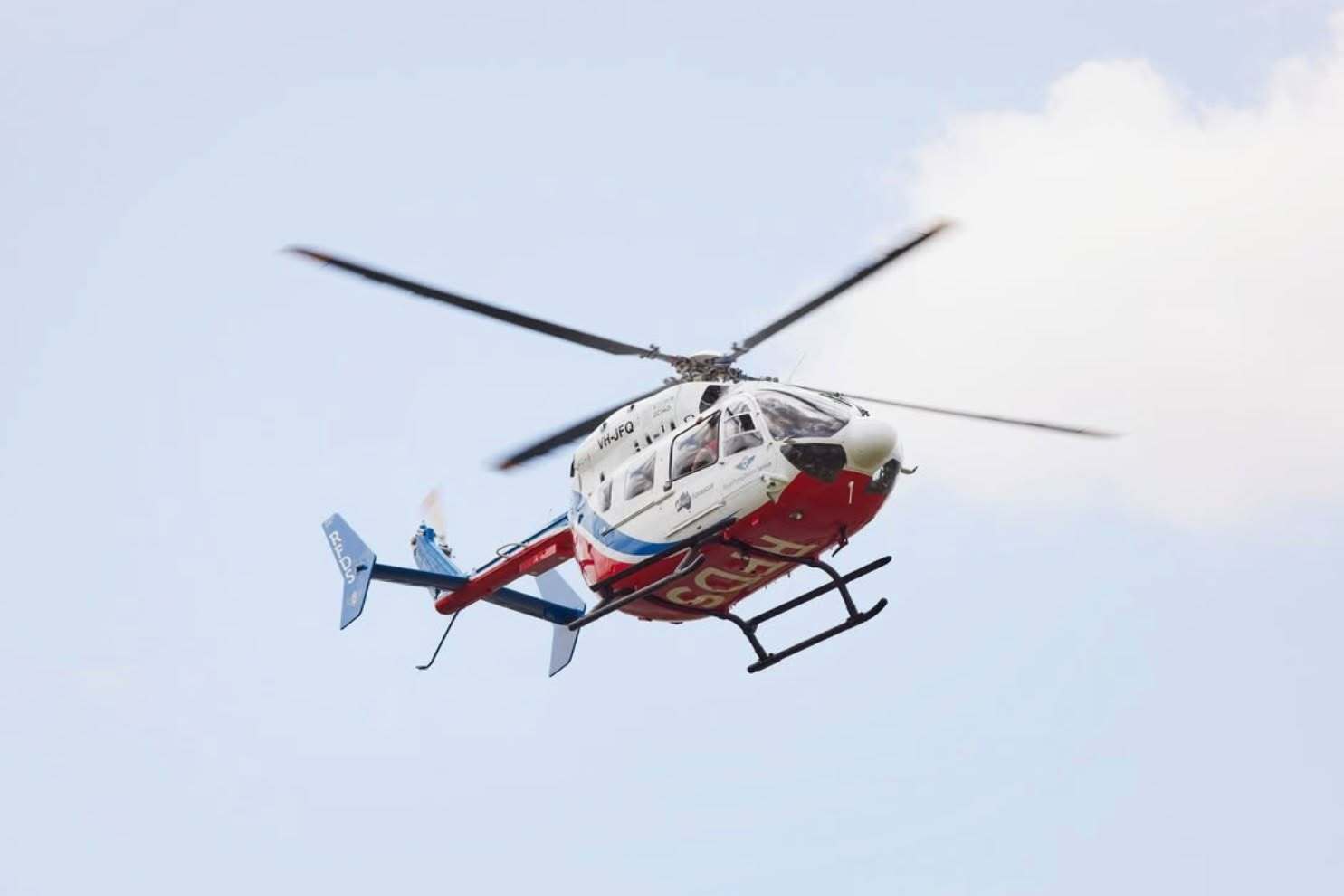
KUALA LUMPUR, Sept 17 — A Malaysian doctor practising in Australia has suggested the establishment of a specialised aeromedical service in Sarawak, instead of treating the Flying Doctor Service (FDS) as a mere transportation method.
Dr Tony Ak Albert, a former Ministry of Health (MOH) doctor who participated in rural FDS and Medevac missions in Sarawak, said Australia’s Royal Flying Doctor Service (RFDS) showed how aeromedical care could be organised as an integrated health care system.
“RFDS is not simply an aeroplane with a doctor inside,” Dr Tony, who now practises as a family medicine specialist in Perth, told CodeBlue recently.
“Many Malaysians may imagine RFDS as Australia’s equivalent of Sarawak’s FDS: doctors and nurses board an aircraft, fly to a remote community, treat patients and return. That is only part of the story.
“RFDS WA (Western Australia) operates across more than 2.5 million square kilometres and maintains dedicated aeromedical bases, aircraft, pilots, doctors, nurses, engineers and a 24-hour coordination system.
“The aircraft are part of a clinical network rather than merely transport. That distinction matters.
“A sophisticated aeromedical service includes the aircraft, certainly – but also the medical fit-out, communications, retrieval protocols, receiving hospitals, workforce training, clinical governance, maintenance systems, patient-transfer coordination, and long-term fleet planning.”
The Western Australian government signed a 10-year contract worth more than A$800 million (RM2.32 billion) in 2024, including additional frontline positions, greater integration with WA Country Health Service and St John Ambulance, data sharing and performance indicators.
“Do not duplicate Australia’s budget. Replicate the architecture,” Dr Tony said.
This could include predictable funding, dedicated aviation safety training, emergency-egress training, recurrent simulation, fatigue management, insurance and long-term fleet planning, he said.
Dr Tony said the RM30 FDS allowance in Malaysia, which dates to 1978, should also be reconsidered as part of a broader aeromedical workforce framework.
“Rather than simply debating whether RM30 should become RM50 or RM100, perhaps the entire aeromedical workforce framework should be reconsidered: dedicated allowances, aviation-safety induction, emergency-egress training, recurrent simulation, fatigue management, appropriate insurance and formal recognition for health care staff regularly undertaking these missions,” he said.
RFDS Western Australia currently advertises a starting pilot salary of A$132,870 (RM132,870), together with regional benefits including accommodation assistance, district allowances, 42 days of annual leave and salary packaging.
For medical practitioners, it advertises a starting salary of A$425,870 (RM1.24 million), together with seven to eight weeks’ annual leave, comprehensive aeromedical retrieval training and, for regionally based employees, furnished housing, utilities, and a vehicle.
“Malaysia obviously cannot convert A$425,870 into ringgit and simply reproduce the number,” Dr Tony said.
“Australia has much higher wages, a different tax system, a different cost of living and substantially greater fiscal capacity. The number is not the lesson. The philosophy is.
“Australia treats aeromedical medicine as specialised professional work. The people doing it are trained for it. There are defined career structures. There is recognition of the unusual working environment. And remuneration reflects expertise, scarcity, responsibility, and risk.
“Malaysia could adopt those principles without paying Australian salaries,” Dr Tony added.
The Sarawakian doctor previously flew on the same BO-105 helicopter, registration 9M-LLF, that crashed near Long Lellang on September 8, killing pilot Captain Zainol Afiq Bee Sham, medical officer Dr Ainul Baraah Kamaruddin, assistant medical officer Alexson Adit Henry, and nurses Debra Moset and Jessie Paya Jok.
He said he had flown on 9M-LLF about 12 years ago and remembered transporting critically ill patients, including two extremely premature babies weighing about 600 to 900 grammes, who were already intubated.
“I also remember patients deteriorating in the air: blood pressure falling, oxygen saturation dropping. A helicopter cabin is not an emergency department. Space is limited. Your options are limited,” Dr Tony said.
He cautioned against speculating on the cause of the crash while investigations are ongoing, including whether aircraft age, maintenance or weather played a role. But he said the tragedy should prompt a broader question about the future of FDS.
“What kind of Flying Doctor Service do we want to build for the next generation?”
He proposed a specialised Sarawak aeromedical service, Sarawak Flying Doctor Service (SFDS), covering emergency medical evacuation, critical care retrieval, inter-hospital transfers, medical repatriation, disaster response, and scheduled outreach.
The service could operate under a 10-year funding framework with dedicated aeromedical staff, standardised medical aircraft interiors, 24-hour coordination, integrated hospitals and ambulances, telehealth, appropriate remuneration and insurance, and a transparent fleet-renewal programme.
“There is another lesson from RFDS that Malaysia rarely discusses. The government does not necessarily have to fund every improvement alone,” said Dr Tony.
“Australian governments remain the core funders of RFDS, but philanthropy has helped fund aircraft, medical equipment, telehealth and innovation.”
He highlighted home-grown corporate groups in Sarawak, like Rimbunan Hijau Group, Sarawak Oil Palms Berhad, Shin Yang Group, Ta Ann Holdings, Samling Group, and Cahya Mata Sarawak.
“The point is not that these companies owe the government an aircraft. Nor should essential health care become dependent on corporate charity,” Dr Tony wrote.
“But imagine a properly constituted, independently governed Sarawak Aeromedical Foundation. The government would continue funding core operations.
“Corporations, foundations and wealthy individuals could voluntarily contribute to clearly defined projects: neonatal transport systems, portable ultrasound machines, simulation centres, telemedicine equipment, rural base infrastructure or even the medical fit-out of new aircraft.”
AirBorneo could be roped into a new SFDS.
“If meaningful health autonomy eventually comes to Sarawak, perhaps one serious option deserves study: a dedicated Sarawak Flying Doctor Service. It would not need to copy Australia’s RFDS,” said Dr Tony.
“Perhaps the state would own some aircraft and lease others. Perhaps specialist aviation operators would still fly them. Perhaps the clinical organisation would operate as a statutory body or not-for-profit institution.
“Perhaps the government would provide core funding while an independent foundation supported additional capital projects. What matters is not the logo or ownership structure.
“What matters is that somebody takes responsibility for the whole system over decades, rather than simply purchasing individual flights.”
FDS Crucial For Maternal And Child Health, Preventing Infectious Disease Outbreaks
Dr Tan Poh Tin, who worked as a Divisional Medical Officer in Kapit from 1982 to 1984 and undertook FDS missions during that period, said the debate over reform must begin with why the service remains necessary.
FDS was introduced as a pilot project in Sarawak in 1973 to provide health care to 40 difficult-to-reach locations. It became permanent in 1975 with two Bell helicopters and expanded to three helicopters in 1977, covering 227 locations once every one to two months, Dr Tan said.
She said FDS should not be viewed simply as a mobile dispensary.
The service brings maternal and child health care directly to communities, including pregnancy follow-ups, child growth monitoring and vaccinations. Staff from divisional or district health offices also bring follow-up medicines for patients with tuberculosis, leprosy, mental health conditions, and cancer.
This helps maintain treatment compliance among patients for whom travelling to a health facility is costly and time-consuming, she said.
Sarawak already has rural village health teams comprising a medical assistant, nurse and rural health worker, but these teams generally serve villages within about 7km of existing clinics.
“Most of the FDS locations are beyond the cost-effective reach by river or road of these existing clinics,” Dr Tan, a paediatrician and public health specialist, told CodeBlue.
Sarawak covers 124,450 sq km, with 62 per cent of its land under forest cover. About 46 per cent of its 2.6 million people live in widely scattered rural villages, compared with 20 per cent in Peninsular Malaysia, she said.
Although many villages are located along rivers, only about 3,300 of Sarawak’s 5,000 rivers are navigable. During the rainy season, rapids can make river travel dangerous for small boats, while dry conditions can force villagers to carry boats and engines over rocks or through forests.
For communities with little cash, even buying petrol can be prohibitive, while logging roads can be dangerous and unpredictable, Dr Tan said.
“The FDS is a monthly life line which saves the community the hard earned cash and time they would need to walk or pay for their trip to the nearest clinic,” she said.
Dr Tan warned that suspending routine FDS and retaining only medical evacuation services (Medevac) would shift the cost of health care onto villagers.
“Limiting FDS service to Medevacs alone would be a great mistake, and a false saving,” she said.
FDS helicopters have only four seats, meaning only urgent cases can be evacuated. A Medevac can also leave the FDS team stranded in a village unless another helicopter is available, particularly if the evacuation occurs late in the day.
Because of weight restrictions and the medicines, vaccines and records carried, FDS personnel do not bring overnight clothes or extra rations, Dr Tan said.
She warned that reduced FDS coverage could mean more money and time spent by villagers travelling for vaccinations, pregnancy follow-ups and chronic disease treatment.
“Our infant and maternal mortality in these communities will probably shoot up,” she said, adding that reduced compliance with tuberculosis and leprosy treatment could have longer-term consequences for disease transmission.
Dr Tan recalled a Penan father she encountered in 1991, whose four-year-old daughter was receiving chemotherapy for leukaemia at Miri Hospital.
After several weeks, he wanted to bring his daughter home despite the incomplete treatment. When Dr Tan told him the child would die, he replied, “my wife and three children in the village will also die if I stay here longer”.
The father refused to leave his daughter alone in the paediatric ward, and a social worker eventually helped arrange their journey home.
For remote and hunter-gatherer communities, Dr Tan said, health care access was not just about reaching a doctor. It also involved the opportunity cost of losing days to travel and paying for transport, food, and accommodation in urban centres.
FDS Shouldn’t Be Permanent Substitute For Basic Infrastructure
Prof Dr Andrew Kiyu, a former Sarawak state health director who undertook between 50 and 100 FDS trips as a medical officer and divisional health officer from 1977 to 1987, said FDS remained essential.
“It is a very important service to reach the unreached,” Dr Andrew told CodeBlue. “The challenge is how to make the FDS safe and how to make those decision-makers at the top level aware of the need and urgency to improve all aspects of the FDS.”
A senior public health consultant, who has worked in Sarawak, Sabah and Peninsular Malaysia, said immediate independent audits should cover all aircraft, maintenance records and operational safety protocols before FDS resumes.
He also called for a dedicated budget to replace or upgrade ageing aircraft and government-funded personal accident and travel insurance for health care personnel on official FDS duty.
“FDS is indispensable in the short term, it should ideally be a transitional measure, rather than a permanent substitute for basic infrastructure,” the consultant told CodeBlue on condition of anonymity.
“The ultimate goal is to reduce dependence on helicopters by addressing the root causes of inaccessibility. This involves collaboration between federal and state governments to build roads and connectivity, allowing residents to access permanent healthcare facilities more easily.”
FDS Reform Must Include Worker Protection, Accountability
Dr Tan said the risks faced by government workers in Sarawak extend beyond aviation.
“Travelling on duty in Sarawak is perilous, not just by air, but also on rivers, shooting rapids or in coastal open seas,” she said. “Jungle ‘timber roads’ with the risk of meeting on coming lorries laden with logs, or landslides can be deadly too.”
She praised the Sarawak state government’s immediate RM100,000 assistance for each of the five victims’ families in the Long Lellang tragedy, but said the state should establish a broader protection system for government officers who die while carrying out official duties.
Dr Tan proposed group insurance covering accidental death or permanent disability, guaranteed scholarships for officers’ children from school through university, and staggered financial support for spouses or parents of single officers.
The protection should extend beyond health workers to government personnel in departments such as forestry, land and survey, and the Works Department (JKR) who also travel to remote locations, she said.
Financial assistance should not depend on an officer’s salary grade or job category, while payments to families with children could be staggered to prevent large sums from being misused by guardians, Dr Tan said.
Health workers on the FDS are federal civil servants under the MOH, whereas helicopter pilots on FDS missions are employed by the contractor that provides helicopter assets to the federal government.


