

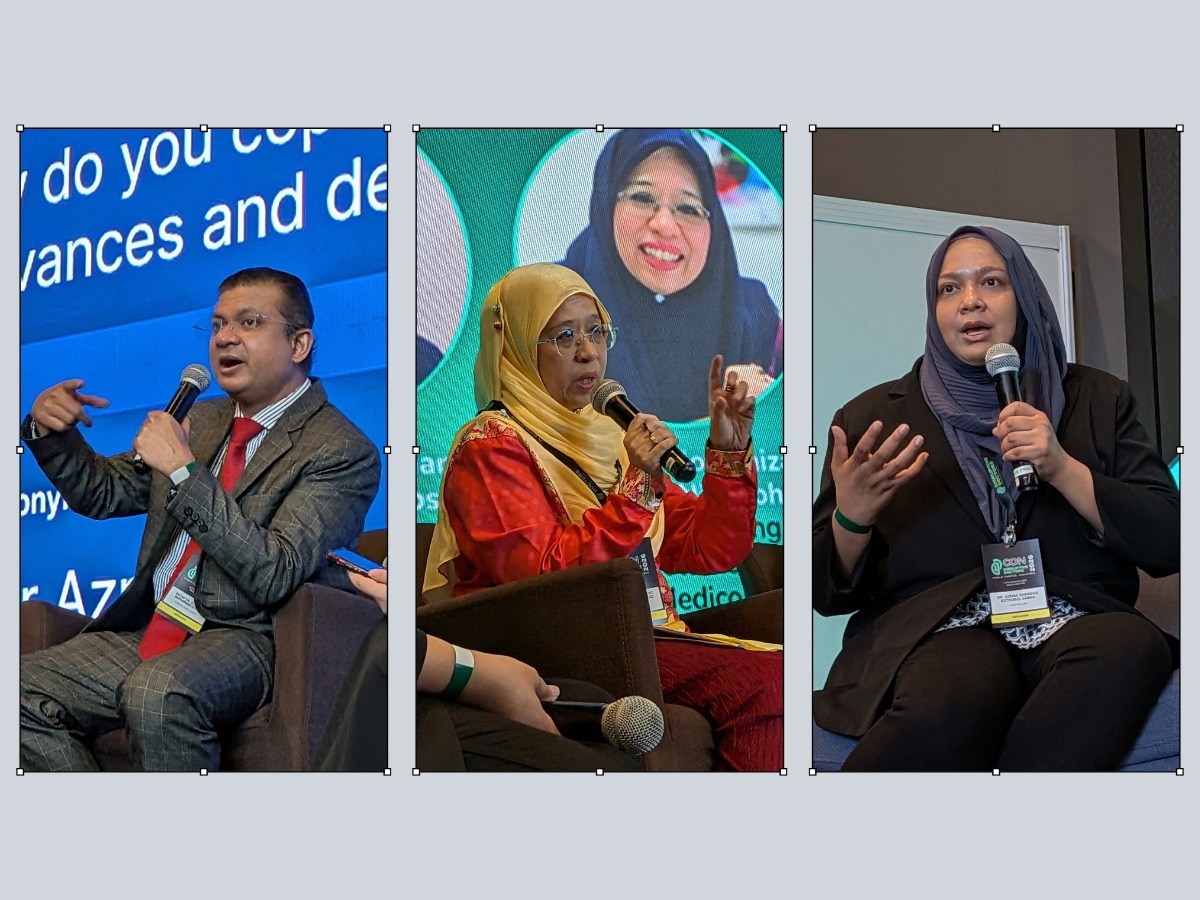
KUALA LUMPUR, Sept 28 — Young doctors considering quitting medicine should first complete their housemanship and compulsory service, three senior doctors said, as medical training can take them in many different directions.
Speaking at the “Day In The Life Of A Doctor” panel at the Disruptive Doctors Conference 2026 on September 4, 2026, the doctors shared how their own careers had taken them into health care management, academia, research, and other areas.
Kuala Lumpur Hospital (HKL) consultant emergency physician Dr Alzamani Mohammad Idrose said he had considered leaving medicine “a million times” during his 28 years in government service, but continued to find meaning in clinical work.
“My advice to you is, don’t,” Dr Alzamani said when asked what he would tell a doctor thinking of quitting housemanship.
He said housemanship was the final step before becoming a fully practising doctor.
“If you finish it, once you’re done, you can do just about whatever you want to do in the whole world and no one will take that away from you because you’re a real functioning doctor,” Dr Alzamani said.
Dr Alzamani’s own career has extended beyond emergency medicine. He has pursued qualifications in information technology management, disaster medicine, law, business administration, and mountain medicine after joining medical expeditions.
He said these interests did not require him to abandon medicine. Instead, they allowed him to explore other areas while continuing to practise.
Dr Alzamani now heads HKL’s emergency department, where his work has shifted from being predominantly clinical to administrative.
Before becoming department head, he estimated his work to be 80 per cent clinical and 20 per cent administrative. He now spends much of his time on meetings, planning and managing the department, while still performing clinical duties twice a week.
“My hospital is a war zone,” Dr Alzamani said, describing days when multiple resuscitation cases could arrive alongside trauma patients and those suffering heart attacks, strokes, and asthma.
Managing overcrowding is now one of the many responsibilities that comes with running the department.
As a department head, his leadership style involves walking around the department and making sure staff see him on the ground. “You have no idea how important it is as a leader to be seen among your people,” Dr Alzamani said.
Outside the hospital, he writes on Facebook, where he has 96,000 followers, shares health messages and documents his efforts to walk 10,000 steps a day. He also posts dad jokes. “That’s my own form of therapy.”
From Treating Patients To Managing The System
For Dr Nik Nor Aniza Nik Mohd Zain, her transition away from full-time clinical work was not entirely voluntary.
The head of the complaints and medicolegal division at the Selangor state health department (JKNS) spent 25 years in government service, beginning in emergency medicine before moving into obstetrics and gynaecology, quality management, and hospital administration.
She still considers herself an O&G doctor at heart.
One of her most vivid memories was assisting in an emergency Caesarean section after an umbilical cord prolapse, when she had to keep her hand in place to prevent the baby from compressing the cord while her colleagues rushed the patient to the operating theatre.
When the baby was delivered, she heard the cry. “It might be similar to climbing Everest to you. For me, the baby’s cry is music to my ears,” Dr Nik Nor Aniza said.
A hand problem later forced her to give up some of the procedures she loved.
She initially struggled when she moved into administration. At one point, she went back to the labour ward simply because she missed it. But she eventually found another way to contribute.
As an administrator, her clinical experience helped her understand how policies affected doctors and nurses on the ground. She became involved in quality improvement, incident reporting, and hospital management before eventually moving to the state level.
Her view of her responsibility changed with each promotion.
“When I was doing clinical work, I was in charge of one patient at a time. Then when I moved into management, I was in charge of the hospital. The hospital became my patient. Now, at the state level, I oversee the health care system in Selangor,” she said.
That experience has also changed how she views medical complaints.
Health care workers may make mistakes, she said, but bad outcomes do not necessarily mean someone intended for them to happen. At the same time, patients who were treated unjustly need protection.
“You have to find justice. You cannot put the blame totally on one side,” she said.
Changing The Training Culture From Within
For Dr Azrina Syarizad Kuthubul Zaman, staying in medicine has meant refusing to choose between clinical work and academia.
The paediatric surgeon and Universiti Kebangsaan Malaysia (UKM) clinical lecturer describes her work as juggling four roles as a clinician, educator, researcher, and administrator.
But Dr Azrina is also trying to change the culture she experienced during surgical training.
She remembers being expected to arrive at work at 6am or 7am, long before her seniors, because early arrival was seen as proof of commitment. She also disliked the shouting, anger, and other behaviour she felt was normalised in surgical training.
As a female surgical trainee in a male-dominated field, she also encountered attitudes that made her uncomfortable. Those experiences shaped how she now trains her own juniors.
“I’m a great believer in Gandhi’s words – be the change that you want to be,” she said.
Her trainees now come in at 8am, ward rounds start at 8.30am, and she tries to structure teaching so that they can leave on time. Her team also organises activities outside clinical work to build camaraderie.
Dr Azrina urged doctors to choose a career path that gives them a sense of purpose, rather than one based on other people’s expectations.
“Do what you feel passionate about,” she said.
For those who choose academia, that passion could mean teaching or finding answers that ultimately help patients. And for doctors who eventually have the authority to change the culture they experienced during training, she said they should do so.
“Remember the difficult times. And when you come to a position where you can change it, change it,” Dr Azrina said.
A Medical Degree Can Open Other Doors
Dr Nik Nor Aniza similarly urged young doctors not to see their medical degree as a trap.
She described completing housemanship and compulsory service as getting a “passport”. “Just finish it, get that passport.”
Dr Nik Nor Aniza said those who want to become health care administrators should first understand clinical work. “We cannot decide as an administrator without that clinical experience,” she said.
Dr Alzamni said when work becomes overwhelming, start with gratitude. “When you have gratitude, the doors will open and you start to have plans,” he said.
He also believes in having multiple plans in life. “If Plan A doesn’t work, you go to Plan B. If Plan B doesn’t work, there are 24 more letters to choose from.”


