

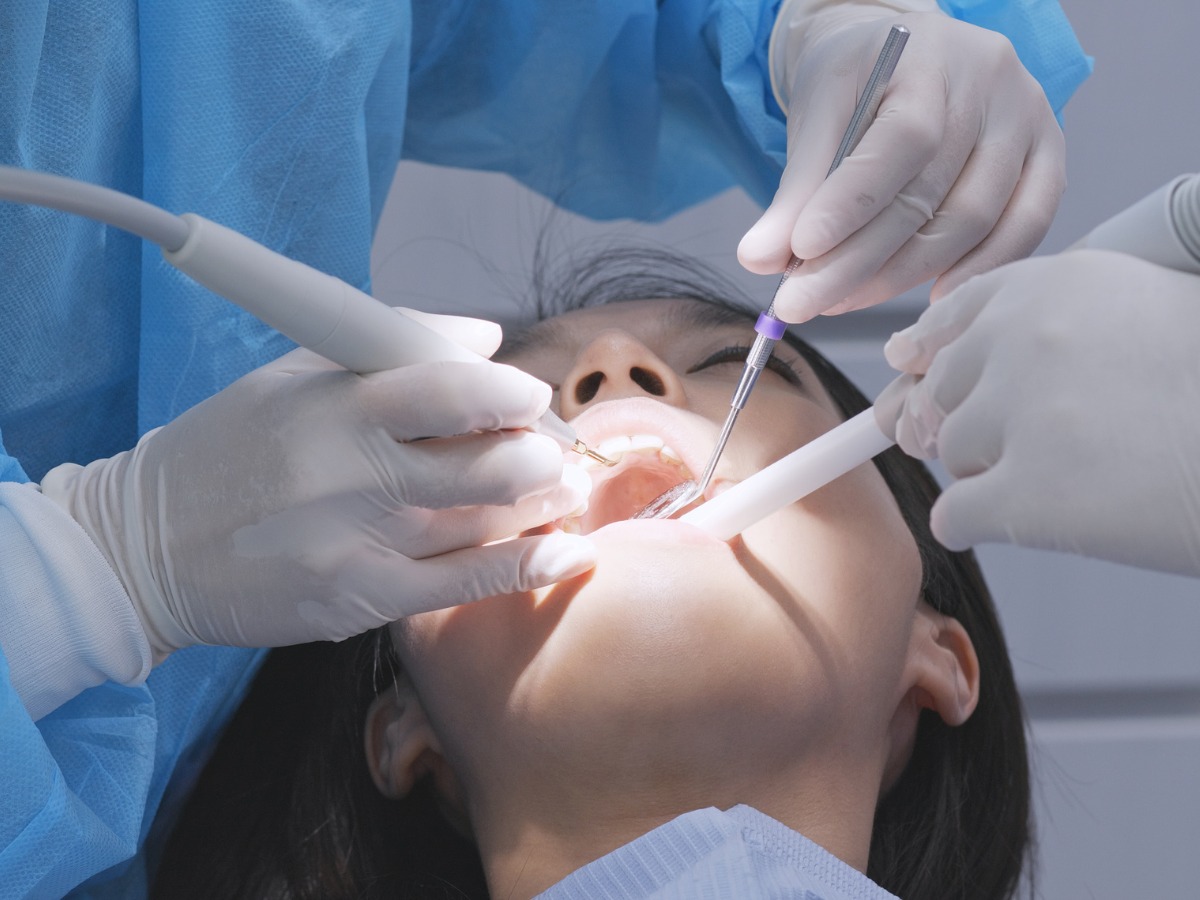
When June first sat in my dental chair, her mother’s only concern was a retained baby tooth. Twelve months later, that tooth had become the least important part of her story.
June, whose name has been changed to protect her identity, was nine years old when she first visited my clinic because several permanent teeth had failed to erupt. Like many parents, her mother wanted to know whether extraction or braces would solve the problem.
As I examined her, however, I noticed findings that extended beyond her teeth. There was inadequate space for eruption, she habitually rested with her mouth open and struggled to maintain a comfortable lip seal, her posture appeared compromised, and she had difficulty maintaining attention throughout the consultation.
Rather than asking how to create space for her teeth, I found myself asking why this child had developed this way.
I explained my concerns to her mother and suggested that, alongside managing her developing dentition, we should consider improving oral function through myofunctional therapy. She was understandably sceptical.
After years of searching for answers, she questioned whether this was simply another treatment that might not help.
Only after almost 30 minutes of conversation did she tell me that June had seen numerous child specialists, including at a tertiary referral centre, over several years. Despite extensive assessments, the family still did not have a definitive diagnosis that could fully explain her developmental challenges.
She then said something that has stayed with me ever since. “I’ll do anything, as long as she can be happy and healthy.”
Although I had received training in myofunctional dentistry, I recognised that June represented one of the most complex children I had encountered.
I therefore sought guidance from my mentors, Dr Dan Hanson and Dr Donny Mandrawa, who reviewed her clinical findings and helped refine my assessment and treatment objectives.
Given June’s postural concerns, I also consulted Dr Christine, the chiropractor who had been caring for her for several years, before commencing palatal expansion. Following discussion and her assessment, we agreed it was appropriate to proceed.
Treatment was challenging.
The first appointments were emotionally demanding, and simple procedures often took close to an hour because of anxiety, limited cooperation, and the time required to build trust.
Gradually, however, June and her mother became more engaged. We introduced a Biobloc expansion appliance, a removable orthodontic appliance designed to guide development of the upper jaw during growth and create space for erupting permanent teeth.
After approximately twelve months, sufficient space had developed for her permanent teeth to erupt more favourably. A second phase of orthodontic treatment will still be required as she grows older.
Her mother also reported improvements in June’s oral hygiene routine and ability to follow simple instructions during this period, although these observations cannot be attributed solely to dental treatment.
June’s story reminded me that sometimes a retained baby tooth is not simply a retained baby tooth. It also raised a broader question.
How many Malaysian children are referred for orthodontic assessment only after problems become obvious, when earlier recognition of developmental and functional concerns may have offered different opportunities?
One of the biggest misconceptions surrounding orthodontics is that children should only see an orthodontist when all permanent teeth have erupted or when braces are being considered.
Early orthodontic assessment is not early braces, rather it is an opportunity to evaluate how a child is growing.
The American Association of Orthodontists (AAO) recommends that every child receive an orthodontic evaluation by age 7.
A comprehensive assessment includes eruption patterns, arch development, crossbites, jaw relationships, oral habits, lip seal, tongue posture, breathing patterns and other functional findings that may influence craniofacial development.
Importantly, many children do not require treatment after an early assessment. Some simply require periodic monitoring.
Others may benefit from habit modification, observation, or carefully selected interceptive treatment while growth is still occurring.
The objective is not to treat more children, but to identify the right child at the right time.
Children with complex developmental needs also remind us that health care cannot operate in silos.
Optimal care may involve collaboration between general dentists, paediatric dentists, orthodontists, paediatricians, ENT specialists, speech-language therapists, physiotherapists or chiropractors, and other allied health professionals where clinically appropriate.
Each discipline contributes a different perspective, and no single clinician sees the complete picture. Equally important is the willingness to seek advice.
Consulting mentors, discussing difficult cases with colleagues and communicating across disciplines should not be viewed as uncertainty. They are hallmarks of responsible, patient-centred practice.
Malaysia has made tremendous progress in improving access to oral health care. The next challenge is strengthening awareness that orthodontic assessment is part of preventive health care rather than simply the pathway to braces.
To move in that direction, I believe three areas deserve greater attention:
- First, parents should understand that an early orthodontic assessment is an evaluation of growth and development, not an automatic recommendation for treatment.
- Second, health care professionals should feel confident referring children earlier whenever concerns arise regarding eruption, facial growth, breathing patterns, oral function or jaw development, even if immediate orthodontic treatment is unlikely to be required.
- Finally, communication between dentists, paediatricians, ENT specialists, speech-language therapists and other health care professionals should be strengthened so that children with complex developmental needs receive coordinated rather than fragmented care.
June did not teach me how to manage retained baby teeth. She reminded me that dentistry is often one of the first health care professions to recognise when a child’s development may not be following the expected path.
If Malaysia is serious about strengthening preventive health care for children, we should begin by looking beyond straight teeth. Early orthodontic assessment is not about placing more children into braces.
It is about recognising developmental concerns earlier, identifying the right child at the right time, and ensuring that no child misses the opportunity for timely, coordinated care.
Dr Caren Lwi Yee Chin is a general dentist in Johor Bahru with a clinical interest in children’s oral development, interceptive orthodontics, and myofunctional dentistry. She advocates for earlier recognition of developmental concerns and multidisciplinary collaboration in children’s health care.
- This is the personal opinion of the writer or publication and does not necessarily represent the views of CodeBlue.


