

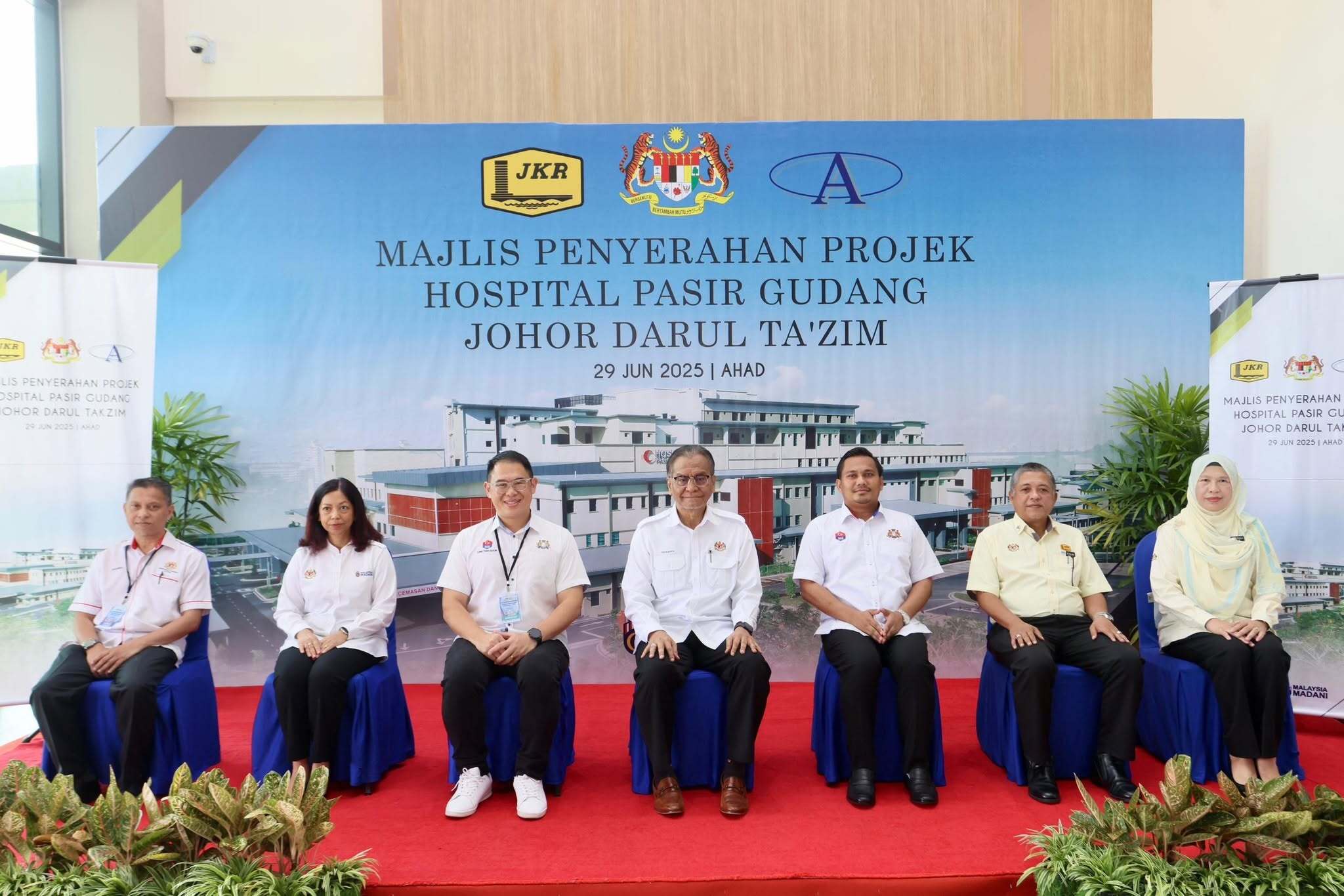
KUALA LUMPUR, August 14 — Dzulkefly Ahmad pledged today that Pasir Gudang Hospital (HPG) would operate at full capacity in December, more than a year after the specialist hospital opened in August 2025.
HPG currently has 1,075 staff filling just 48 per cent of positions, with the health minister targeting 66 per cent operational capacity in September, before achieving full capacity of 304 beds and 16 maternity wards in December 2026.
Dzulkefly listed the following projections to fill health care positions in HPG:
- Medical officers: As of August 11, about 85.4 per cent or 176 of 206 positions were filled. Permanent appointments this year are expected to fill the remaining vacancies.
- Specialist doctors: The percentage of positions filled is expected to increase from the current 36.4 per cent to 48.1 per cent when nine pre-gazettement specialists report for duty from this month until February 2027. HPG currently offers 10 basic specialty services, while ophthalmology will be introduced in six months.
- Nurses: The percentage of positions filled is projected to rise from the current 32.2 per cent to 40.4 per cent when 70 additional nurses report for duty next month.
- Assistant medical officers: Placements of 80 new officers early October will increase the rate of filled positions from 68 per cent to 91 per cent.
- Allied health sciences: Staff like X-ray technicians, medical laboratory technologists, dietitians, and physiotherapists will be progressively recruited to improve the current rate of 45 per cent of positions filled.
“The process of filling human resources at HPG is constantly being closely monitored by the top management of the Ministry of Health (MOH). MOH is of the view that the deployment of human resources needs to be carried out strategically and should not be done drastically for any one facility alone,” Dzulkefly said in a statement.
“MOH has a major responsibility to ensure an appropriate workforce distribution to prevent disruptions to services at other hospitals. MOH remains committed and will continue to make every effort to ensure that HPG can operate optimally, according to the phased plan that has been established, for the well-being and continuity of the quality of health care for the people of Johor.”
Johor Menteri Besar Onn Hafiz Ghazi has repeatedly urged the MOH to deploy health care workers to the state amid “critical” shortages of doctors and nurses in various hospitals, including HPG.
He pointed out that HPG still can’t accept patients despite opening a year ago.
Besides HPG, Onn Hafiz noted that the state hospital, Sultanah Aminah Hospital (HSA) in Johor Bahru, had 613 vacancies (14 per cent) at 3,848 of 4,461 positions filled, excluding 497 contract staff, as of June 30.
HSA reported 142 vacancies for medical officers, 220 for trained nurses, 76 for health care assistants, three for assistant medical officers, and two for pharmacy officers on that date.
In his statement today, Dzulkefly said Johor had among the highest rates of main clinical positions filled in the health service: pharmacy officers (99 per cent), dental officers (82 per cent), medical officers (81 per cent), and specialist doctors (77 per cent).
On national health human resource reform, the health minister said the parallel pathway programme for specialty training has increased to 600 slots a year.
Nursing intakes at ILKKM were drastically increased to 3,000 trainees last year, with 5,000 trainees targeted by October 2027 through the opening of four new colleges.
Senator Dr RA Lingeshwaran recently pointed out that increasing the size of nursing intakes cannot cover more than 15,500 current vacancies for nurses in the MOH because trainees will only join the workforce after completing three years of study.
Dzulkefly’s statement today, which focused on the production of specialist doctors and nurses, omitted retention measures for health care workers.
He told the Dewan Negara recently that more than 6,200 contract and permanent medical officers resigned from the MOH from 2021 to 2025, with resignations among permanent medical officers increasing every year in that five-year period and doubling from 238 in 2021 to 498 in 2025.
Beyond formal resignations, doctors’ attrition includes no-shows for permanent positions that spiked from 20 per cent in 2023 to an estimated 40 per cent in 2025 out of permanent appointment offers.

