

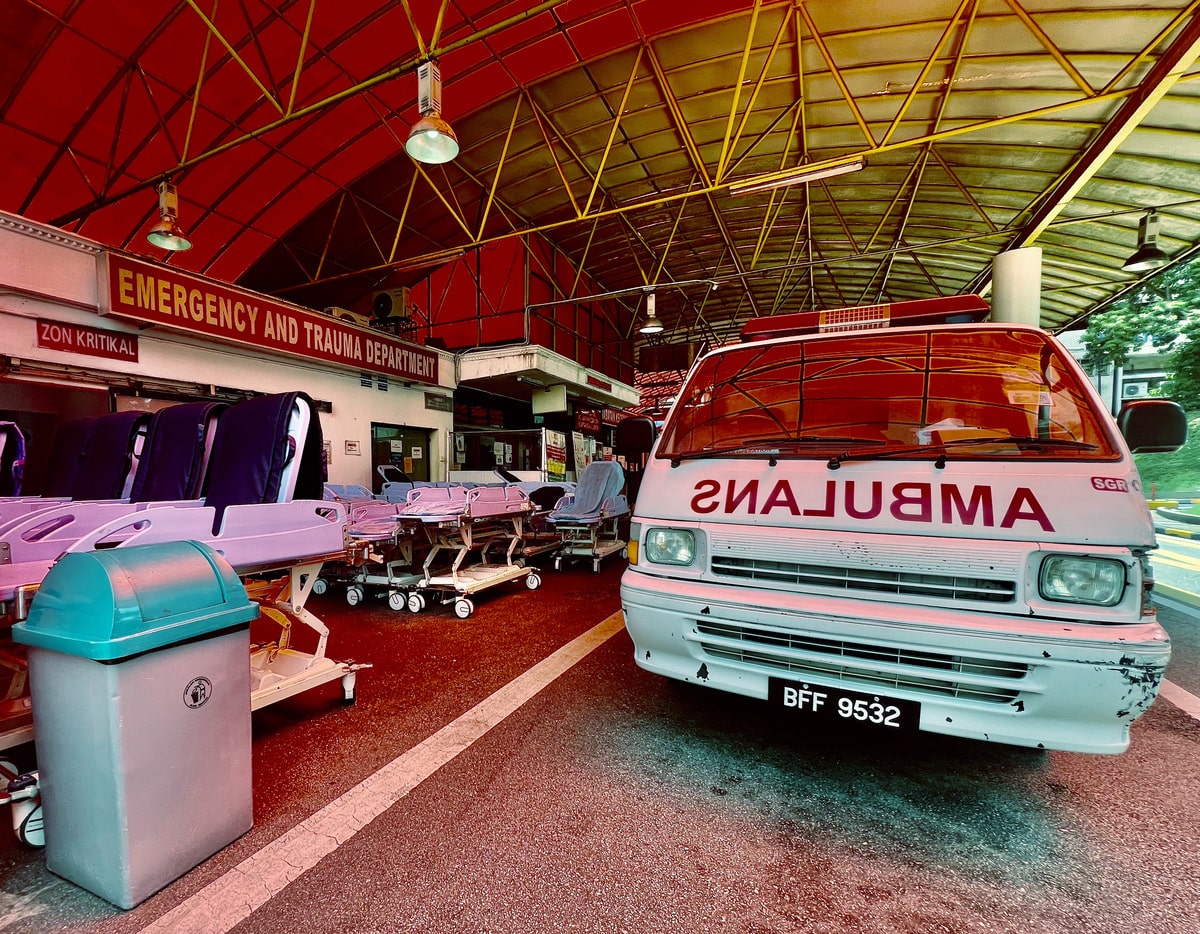
This is Part 2 of discussion examining public health care resource deployment at commercial events. In Part 1 of this series, we established a core premise: public health care and ambulance assets belong to the public domain.
Commercial event and circuit organisers — both local and international — must budget for dedicated private medical coverage. Diverting public ambulances to commercial venues deprives the general public of essential emergency services while adding severe strain to an already burnt-out public health care workforce.
How can private organisers build self-sustaining medical coverage models without public assets? Malaysia’s 20-plus years of experience hosting international FIA (four-wheeled) and FIM (two-wheeled) events at Sepang International Circuit (SIC) provides a clear blueprint.
To understand the operational gap, flagship motorsport events can be divided into two categories: Marquee Grand Prix Events (such as F1 or MotoGP) and Other Flagship Events (such as Japan GT, MotoGP Winter Tests, and F4 SEA).
To the public, the primary distinction is ticket pricing and commercial branding. On the operational side, medical coverage is divided into public spectator zones, VIP spectator zones, trackside advance teams, rapid medical transport, and designated tertiary medical centres.
While spectator coverage follows host country guidelines, trackside advance teams, medical transport, and destination hospitals are strictly regulated by international sanctioning bodies (FIA and FIM).
Historically, the Ministry of Health (MOH) has applied its medical coverage policy inconsistently across sports:
- Public participant events and other flagship events: In commercial endurance races (triathlons and marathons) as well as non-marquee motorsport events (Japan GT, MotoGP Winter Tests, F4), MOH correctly enforces organiser self-reliance.
- Marquee Grand Prix events: MOH routinely mobilises public hospital advance teams and ambulances to cover the entire trackside response, VIP spectator areas, and destination hospitals, while leaving public spectator zones to standard 999 response.
Yet, other flagship events prove every year that world-class track safety can operate seamlessly without pulling hospital advance teams, specialists, or public ambulances.
The trackside safety standards required by FIA and FIM for a Winter Test or an F4 race are identical to those of a Grand Prix. The difference lies solely in operational choices.
For non-MOH events, multidisciplinary teams with interest in motorsport medicine —comprising emergency physicians, orthopaedic surgeons, anaesthetists, radiologists, sports medicine specialists, and allied health professionals — take personal leave to serve as paid track personnel.
This self-sustaining model succeeds on three practical and ethical pillars:
- Independent Chief Medical Officer (CMO) leadership: Malaysia’s licensed FIA and FIM CMO expertise extend far beyond the select few who handle marquee events using government assets. Independent CMOs actively enforce international safety standards at SIC while mentoring the next generation of motorsport medical leaders — a sustainable capacity-building effort that public-asset deployment has failed to foster over the last two decades.
- Ethical resource independence: Specialised medical equipment does not require public borrowing. Independent CMOs practice ethical resource stewardship by refraining from tapping public inventories, requiring organisers to lease specialized gear short-term through industry partners.
- Private hospital integration: Track evacuation and receiving requirements can be absorbed seamlessly by accredited private hospitals, ending sole reliance on tertiary public facilities like Hospital Kuala Lumpur.
SIC possesses over two decades of proof that international motorsport can run safely without MOH assets. True independence and private sector growth cannot happen while MOH continues orchestrating operational takeovers for commercial entities.
MOH’s role should focus on regulatory governance — guiding private setups and enforcing safety benchmarks — rather than taking over track operations. Emergency departments operate under vastly different pressures today than they did 20 years ago.
It is time for MOH to enforce its own policies consistently, protect public hospital readiness, and let Malaysia’s commercial racing circuits stand on their own.
The author is an emergency physician.
- This is the personal opinion of the writer or publication and does not necessarily represent the views of CodeBlue.


