

SUNGAI JAWI, June 14 — Rising production costs have prompted poultry producers to reassess spending across their operations, but farmers say vaccination programmes remain a priority because preventing disease is ultimately less costly than managing outbreaks.
Syarikat Sin Long Heng Breeding Farm Sdn Bhd (SLH), one of Malaysia’s largest poultry breeding companies, says it has maintained its vaccination programme despite higher operating costs, arguing that disease outbreaks can quickly undermine production if preventive health measures are compromised.
“Animal health cannot be compromised because good production depends on healthy birds,” SLH director Terry Tan Chee Hee told CodeBlue during a visit to the company’s breeder farm in Penang.
“This is a preventive measure that we need to take very seriously. We have the basic vaccines recommended by the vaccine company, and we add more depending on the disease risks around the farm.”
Tan said vaccination programmes are tailored according to the disease risks faced by individual farms. Besides following core vaccination schedules, SLH also administers additional vaccines where disease risks are higher, such as in areas with a greater concentration of poultry farms.

A breeder rooster among breeder hens at SLH’s breeder farm in Sungai Jawi, Penang. The farm relies on natural mating rather than artificial insemination to produce fertile hatching eggs. Photo by Saw Siow Feng for CodeBlue. 
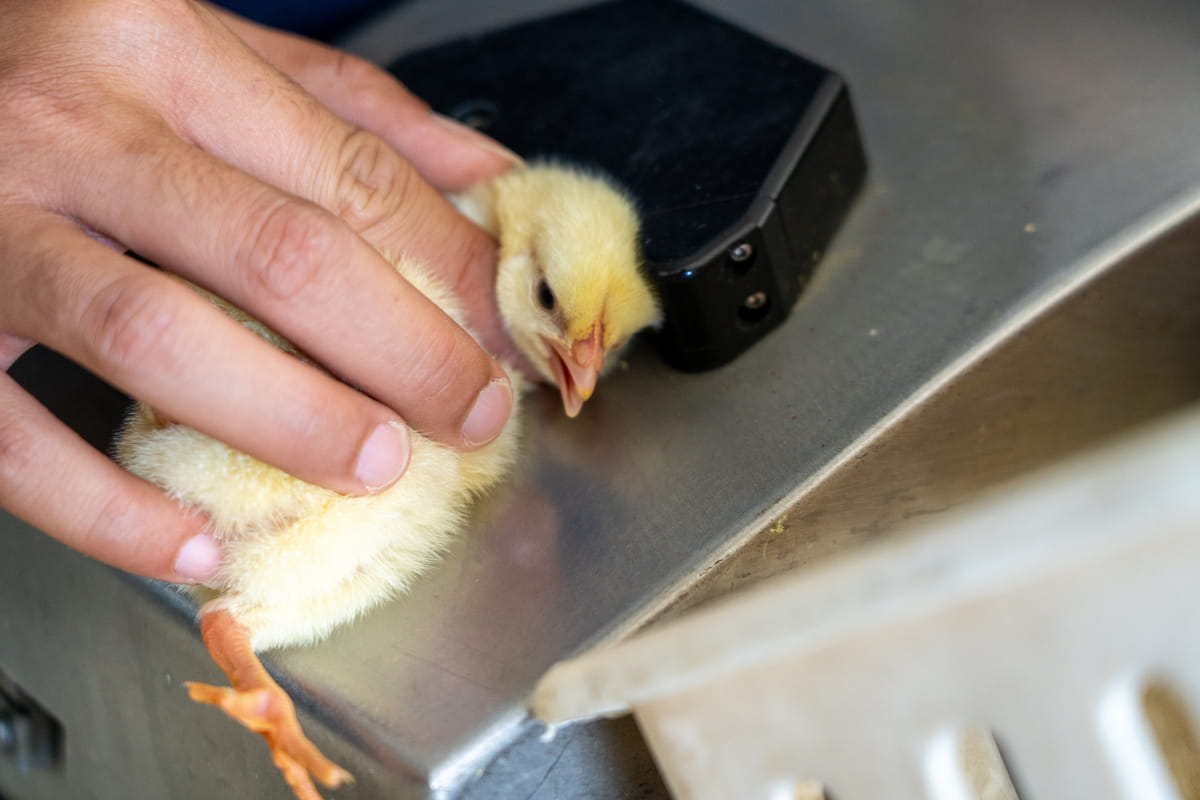
Trays of day-old chicks await sorting and delivery at SLH’s hatchery in Sungai Jawi, Penang. The chicks are vaccinated before being transported to broiler and kampung chicken farms. Photo by Saw Siow Feng for CodeBlue. 
SLH director Terry Tan Chee Hee speaks during an interview with CodeBlue at the company’s office in Penang. Photo by Saw Siow Feng for CodeBlue.
“I don’t think the poultry industry in Malaysia is cutting vaccination programmes. Some farmers may choose lower-cost alternatives, but they are still vaccinating. For our company, we will not change the vaccination programme because we cannot take that risk,” Tan said.
Despite higher production costs, Tan said vaccination remained one of the last areas the company would consider cutting. He said preventing disease was ultimately less costly than responding to an outbreak.
“Viruses and diseases cannot be controlled once they spread. What we can do is minimise the risk,” Tan added.
The company also carries out serology testing before and after vaccination to assess whether birds have developed adequate immunity. “We don’t just vaccinate. We also need to make sure the vaccination is effective.”
When Prevention Costs Less Than Outbreaks

Day-old chicks at SLH’s hatchery in Sungai Jawi, Penang. Feather colour can vary from yellow to brown and black among newly hatched chicks. Photo by Saw Siow Feng for CodeBlue. 
Breeder hens and roosters inside one of SLH’s multi-storey breeder houses in Sungai Jawi, Penang. The birds are raised to produce fertile hatching eggs supplied to the company’s nearby hatchery. Photo by Saw Siow Feng for CodeBlue. 
Dr Kam Kok Yen, Head of Animal Health for Boehringer Ingelheim Malaysia, Singapore and Indonesia, speaks with CodeBlue in an interview in Penang. Photo by Saw Siow Feng for CodeBlue.
Dr Kam Kok Yen, Head of Animal Health for Boehringer Ingelheim Malaysia, Singapore and Indonesia, said that while farmers may review vaccination programmes as costs rise, decisions should ultimately be guided by disease risks rather than cost alone.
“When farmers review costs, they will prioritise what is essential,” Dr Kam said. “But you cannot simply decide to cut costs by scaling back disease prevention. That will affect disease control.”
Dr Kam told CodeBlue that vaccination should be complemented by strong biosecurity, including farm hygiene, sanitation and routine monitoring, to reduce the risk of disease outbreaks.
He said preventing disease was generally more economical than responding after an outbreak, which could result in bird deaths, lower productivity and costly decontamination.
For Malaysia, he identified Newcastle disease, Infectious Bursal Disease and Infectious Bronchitis as among the core diseases poultry producers continue working to prevent. He added that outbreaks of highly pathogenic avian influenza in neighbouring countries underscore the need for continued vigilance.
He warned that reducing core vaccination programmes could undermine herd immunity that has taken years to establish. “You may spend years building up immunity, but one decision can undo all that. Then you have to start again.”


