

I would like to comment on the Ministry of Health’s (MOH) recent statement on subspecialty candidates, which I suspect comes from the Training Management Division (BPL) since training is their domain. MOH said 50 candidates were reconsidered, however only eight really met the criteria.
We are left wondering what is the exact criteria since there are a few candidates who have more than three LNPT (Annual Performance Appraisal Report) not listed among these 50 people.
Vaguely, MOH is pointing fingers in all directions, namely towards head of services, saying the candidates do not meet the requirement of the subspecialty when it is clear as day that some subs are hanging by a thread and had actively encouraged candidates to apply and reapply if not accepted.
Some subspecialties were forced to accept zero candidates despite endorsements, while others saw a reduction of more than 80 per cent intake compared to previous years. Some services will be suffering without fellows/trainees coming to their centre for training.
Therefore, saying that the subspecialty rules itself were a cause of rejection does not make sense. By what merit? A non-explanation is basically telling specialists of two to three years who underwent rigorous training that they’re “tidak berkelayakan“, but refusing to tell them what is lacking and can be improved. This begs the question: are all heads of service really onboard with this?
Another finger is pointing to the Public Service Department (JPA) as a decision-maker. Well, I would agree that JPA is a huge part of the problem. It’s too obvious now that JPA is disconnected from the ground level because it sees workforce as just numbers on paper.
Does JPA not care why public health care is sinking or if anything can be done? As long as what is on paper looks perfect, this stance is unacceptable. There should be dynamicity in governing human resources. A “pukul rata” concept does not mean fairness.
As a specialist myself, I am left wondering, if this continues, a deficit of subspecialists will be apparent soon. Who and where do I refer complex cases to? Some referrals are urgent and emergent.
Even as a specialist, we have our limits. We’re not God and we refuse to play God by risking morbidity for patients by managing cases that should be managed by a subspecialist. That is also a medicolegal issue.
Today’s reduction in producing a subspecialist is not a one-time problem. If this trend continues, doctors may be reluctant to join a Master’s programme to specialise. They might consider jumping ship much earlier in their career when the pathway is clearer, clinical-based, and the rules are transparent, not just some bureaucratic nonsense.
You only need to worry about clinical and academic aspects. Endorsements are not tied to bureaucracy, as if you were climbing a corporate ladder. Existing specialists may be demoralised, especially the good ones who are passionate and diligent.
What the public does not know is that some subspecialty services exist in certain centres without subspecialists because of the passion and diligence of general specialists. Some use their own savings to go for courses, workshops, and training to provide these services that otherwise do not exist in their centre for the good of patients, besides actively providing assistance to subspecialists to visit their centre.
This is a privilege for patients who are not able to travel. You may accuse specialists of wanting to go to the private sector, but so many are still loyally serving the public service despite offers from private hospitals. Doctors are only human; being pushed and treated like a doormat will crush anyone. Even a trapped rat will chew its way out to survive.
A domino effect, like what we have witnessed in contract system, will most likely happen. I believe that the 123 subspecialty training candidates are not only fighting for themselves, but also for the future of the country. In health care, nobody can survive alone.
Despite strained manpower, on top of so many other obstacles, these candidates willingly stuck their neck out for years of bond with the government after their bond for the Master’s programme that’s worth almost a whopping RM1 million.
JPA, BPL, and MOH need to stop asking the wrong questions, like “How can we stretch our existing human resources to the max? How to force them to stay in public service?” They also need to stop giving excuses without a real solution or action.
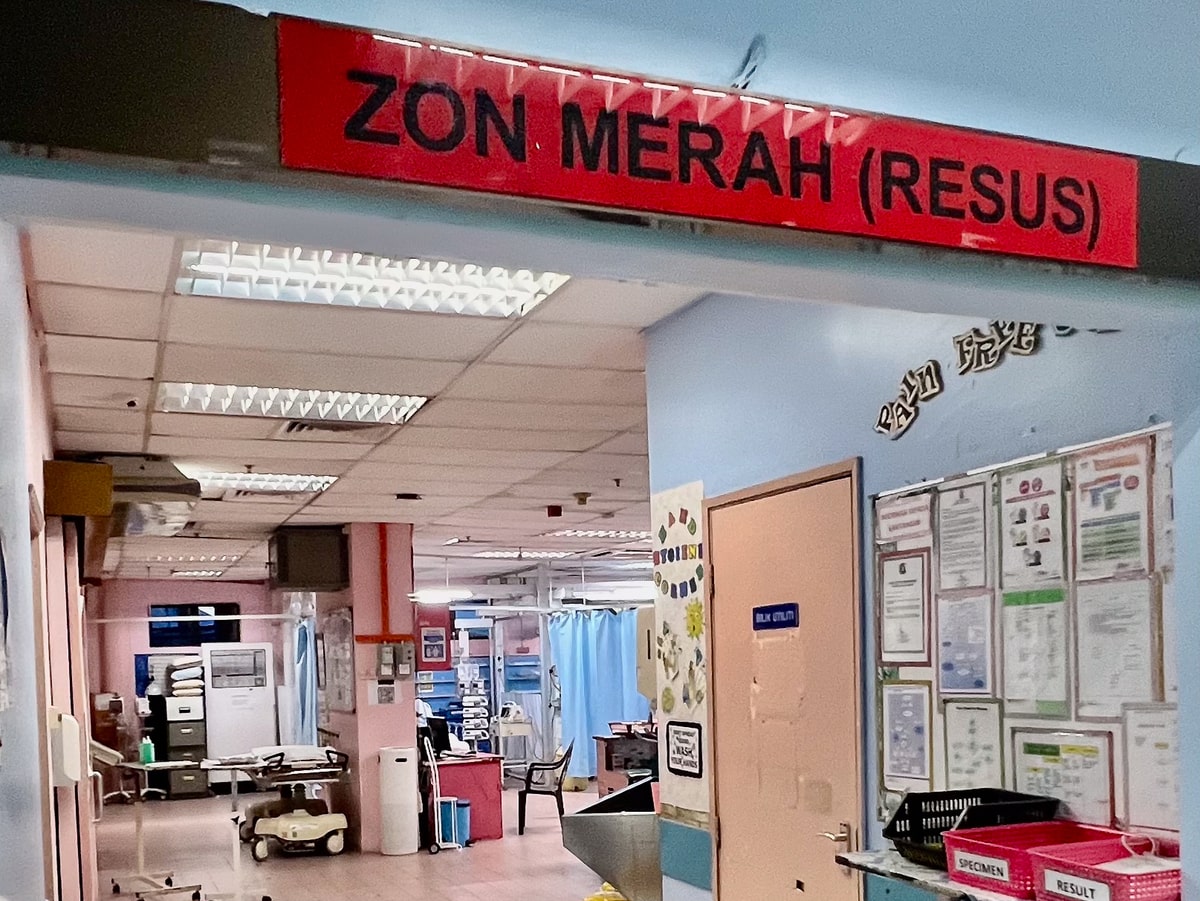
Public health care is afflicted by issues affecting support staff, allied health care, house officers, medical officers, and now subspecialists. The signs and symptoms of impending collapse are glaring, the diagnosis is screaming, but the “patient” is still in denial and refuses treatment.
In a clinical situation, this patient is heading towards Death In Line (DIL) issuance. A Do Not Resuscitate (DNR) might be the last dignified exit, without even making it to a precious ICU admission.
The author is a specialist doctor in the Ministry of Health. CodeBlue is providing the author anonymity because civil servants are prohibited from writing to the press.
- This is the personal opinion of the writer or publication and does not necessarily represent the views of CodeBlue.


