

The federal government recently announced measures to reduce operating expenditure amid growing economic uncertainty arising from the ongoing conflict in the Middle East and rising global energy costs.
Reports indicate that Putrajaya is considering approximately RM10 billion in expenditure savings across various ministries to ease fiscal pressures.
Of this amount, the Ministry of Health (MOH) is expected to contribute the largest share of the proposed cuts, amounting to approximately RM3.06 billion. The Ministry of Higher Education (MOHE) follows closely behind as another major contributor to the government’s cost-saving efforts.
Against this backdrop of economic caution and budget tightening, an important question arises: Is it really necessary to hold elections during a period of economic uncertainty and fiscal restraint?
The last Johor State Election was held in March 2022. Under Malaysia’s constitutional framework, a legislative assembly can remain in office for a maximum term of five years, meaning the Johor State Legislative Assembly could technically continue until March 2027 before another election becomes necessary.
Elections are undeniably a cornerstone of democracy. However, they also come with substantial financial costs. Organising an election requires significant expenditure on administration, security, logistics, staffing, and other operational requirements.
According to a Malay Mail article published in 2022, then-Election Commission (EC) chairman Abdul Ghani Salleh estimated that the 15th General Election (GE15) would cost taxpayers approximately RM1.1 billion. This represented more than double the RM500 million spent during the 14th General Election in 2018 and almost triple the RM400 million spent during the 13th General Election.
Similarly, an NST report published last December quoted former EC deputy chairman Wan Ahmad Wan Omar, who stated that holding state elections simultaneously with the next General Election (GE16) would be the most efficient approach from an election management perspective.
He estimated that conducting elections separately would significantly increase costs, while simultaneous elections could generate savings of approximately RM200 million through reduced operational expenses, manpower requirements, and resource utilisation.
At a time when the government is actively seeking billions of ringgit in savings, should we not be prioritising essential public services such as health care, education, social welfare, and infrastructure?
One cannot help but wonder how RM200 million or more in potential election-related expenditure could instead be utilised to improve health care facilities, replace ageing medical equipment, expand digital health infrastructure, or recruit additional health care personnel. Such investments could directly benefit patients and strengthen public health care services nationwide.
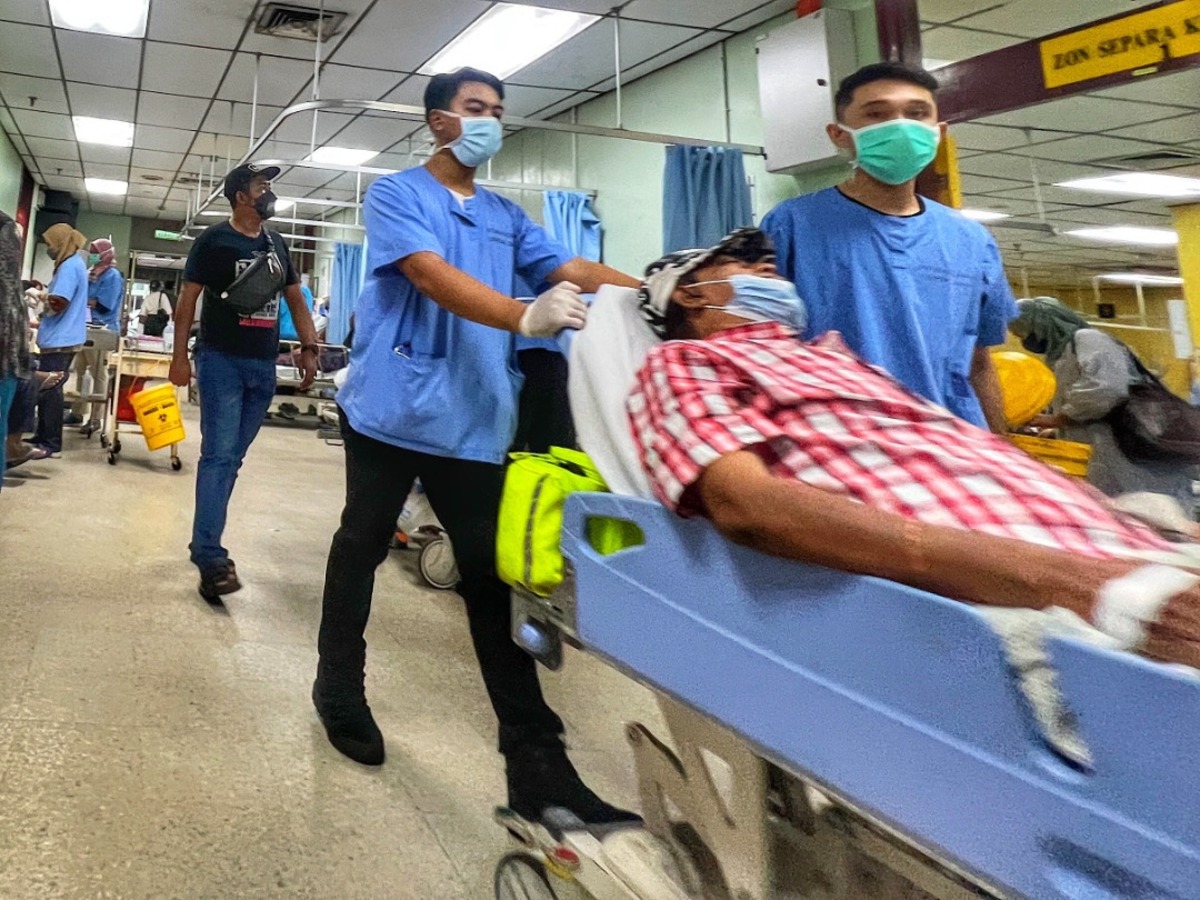
This concern becomes even more relevant when viewed against the current realities faced by health care workers. Public health care facilities continue to grapple with manpower shortages, increasing patient loads, and limited resources.
Reports have also emerged suggesting that the Ministry of Health has implemented measures, such as freezing the creation of new health care positions and withholding salary allocations for unfilled posts, as part of broader cost-saving initiatives.
If fiscal discipline is truly the objective, should scarce public funds be directed towards avoidable election expenses when critical sectors are already under strain?
The consequences of budget constraints and manpower shortages are not merely administrative issues—they have real and potentially life-threatening implications for patients.
Today, the Cardiology Unit at Hospital Raja Permaisuri Bainun (HRPB), Ipoh, has reportedly been forced to scale back certain services due to workforce limitations. This has resulted in longer waiting times and delays in critical cardiac interventions. Such developments highlight the urgent need for policymakers to prioritise essential health care services over competing interests.
In cardiology, there is a well-established principle: “Time is muscle.” This phrase reflects a fundamental medical reality—the sooner a blocked coronary artery is reopened during a heart attack, the greater the likelihood of preserving heart muscle, preventing complications, and improving survival.
Every minute that blood flow remains restricted results in irreversible damage to the heart. Delays in assessment, transfer, or intervention can significantly increase the risk of heart failure, life-threatening arrhythmias, cardiac arrest, and death. For these patients, time is not simply a matter of convenience; it is often the difference between recovery and permanent disability, or even life and death.
When health care services are stretched beyond capacity, the impact is ultimately borne by patients. This is why resource allocation should be guided by clinical necessity and public interest. At a time when hospitals are struggling with staffing shortages and increasing demand, ensuring adequate support for frontline health care services must remain a national priority.
Ultimately, this discussion is not about opposing democracy. Rather, it is about ensuring that public resources are allocated responsibly and strategically during challenging economic times. Every ringgit spent represents an opportunity cost. The question policymakers must answer is whether the benefits of holding an early election outweigh the potential benefits that those funds could deliver if invested elsewhere.
As Malaysians, we deserve a transparent discussion on national priorities. At a time when ministries are being asked to tighten their belts and essential services are expected to do more with less, it is reasonable to ask whether another election is truly the most urgent use of public funds.
Or will the outcome simply be another committee, another task force, and another set of recommendations added to a growing collection of reports that ultimately gather dust while the underlying issues remain unresolved?
The author is a medical officer at HRPB. CodeBlue is providing the author anonymity because civil servants are prohibited from writing to the press.
- This is the personal opinion of the writer or publication and does not necessarily represent the views of CodeBlue.


