

Postpartum recovery is widely described through clinical timelines — a six-week check-up recovery window and a return to normal functioning.
But lived experience rarely aligns with this framing. For many women, postpartum is marked instead by prolonged physical depletion, emotional strain, and sustained caregiving labour that continues well beyond discharge from hospital.
It is also a period where recovery is expected, but rarely supported in a structured way.
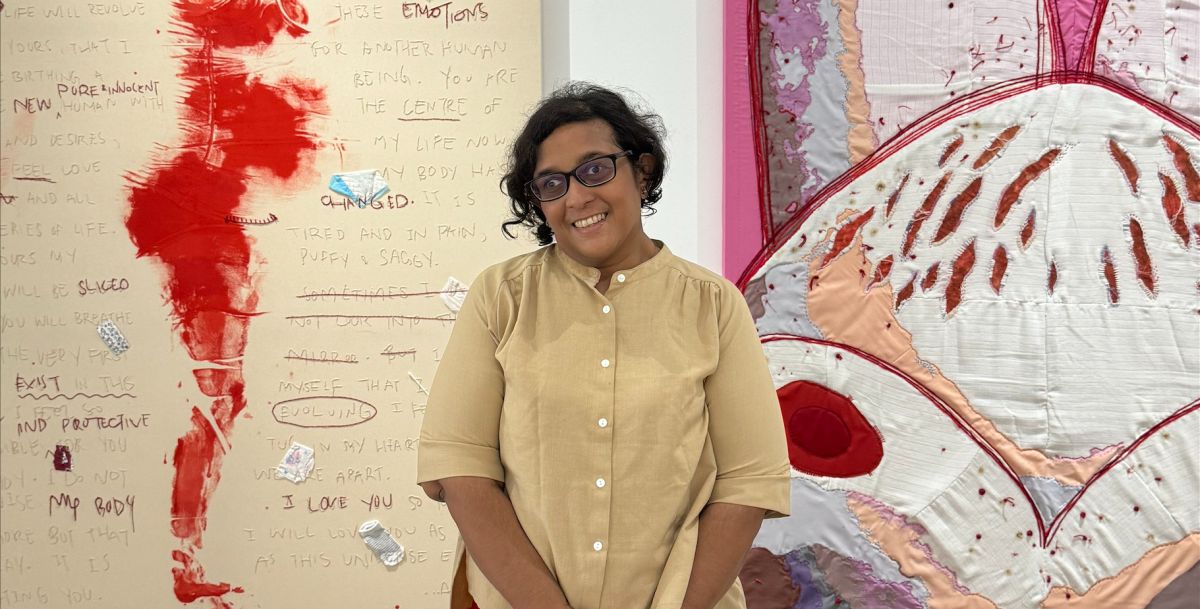
These tensions are made visible in “I’m a Mum?!”, a walk-in exhibition by Red Hong Yi at Cultprint which translates postpartum experience into material form.
Based on the artist’s experience in the first 30 days after childbirth, the exhibition reframes postpartum recovery as an ongoing and embodied process rather than a short clinical phase.
It resists idealised narratives of motherhood, instead foregrounding exhaustion, disrupted sleep, physical pain, lactation challenges, emotional instability, and the psychological weight of continuous care.
Bodily change — including stretch marks and shifts in identity — is presented as central to the experience, not incidental.
Across the works, materials such as threads, buttons, knitting, and paint smears form a language of fragmentation and repair. These gestures reflect postpartum recovery as repetitive, physical labour rather than symbolic expression.
Breastfeeding is also presented in its lived complexity — including latching difficulties and pumping. Lactation is framed as a labour-intensive process shaped by recovery conditions, time, and access to support.
Cultural postpartum practices such as red dates and warming foods further situate recovery within embodied knowledge systems.
These practices reflect a broader understanding that postpartum recovery depends on nourishment, warmth, and rest — conditions that directly affect both maternal recovery and breastfeeding capacity.
Where these conditions are present, recovery stabilises more effectively. Where they are absent, fatigue deepens and feeding difficulties increase.
This makes postpartum recovery a determinant of maternal and infant health outcomes.
One installation uses repeated feeding-related objects. This captures feeding as continuous, unpaid labour rather than discrete caregiving moments.
Another reconstructs a postpartum environment using an unmade bed and caregiving materials, reflecting interrupted recovery under ongoing physical and emotional demands.
As my doctoral research explored participatory art with refugee women around birthing, postpartum care, and infant feeding, I found the exhibition especially resonant.
The work used art as testimony whereby women expressed grief, displacement, resilience, and identity beyond clinical or academic language.
Here, public exhibits offers public witnessing of maternal labour that remains largely invisible despite being essential to family well-being and social reproduction.
Care work is treated as a private responsibility, even though women bear most of its physical and emotional costs.
These questions sit within a wider policy environment shaped by declining fertility rates and attention to population sustainability.
However, discussions on fertility often focus narrowly on birth rates without addressing the lived conditions of pregnancy and postpartum recovery that shape reproductive decisions.
While maternity leave policies exist, they do not always reflect the reality of recovery, lactation challenges, or sustained physical and emotional demands of early caregiving.
Support for fathers and caregivers is limited and inconsistently integrated into postnatal care structures. This gap matters because postpartum recovery occurs in the same continuum of fertility outcomes and maternal health policy.
How society supports recovery directly influences maternal well-being, family stability, and longer-term reproductive health decisions.
Despite growing attention to maternal health, postpartum care remains fragmented and inconsistently integrated within health and social care systems.
The recognition of postpartum care as a core public health issue is pivotal since it affects mental health, breastfeeding outcomes, physical recovery, workforce participation, and long-term well-being.
Strengthening postpartum care requires:
- Structured, continuous postnatal care beyond hospital discharge.
- Integrated maternal mental health screening and timely support.
- Expanded community and home-based postnatal services.
- Stronger workplace protections recognising postpartum recovery as a staged process beyond 90–120 days, including support for mothers, fathers, and caregivers.
- Recognition of caregiving as health-relevant labour within policy frameworks.
“I’m a Mum?!” makes visible commonly overlooked phase of motherhood. Postpartum recovery extends beyond private experience into broader issues of maternal well-being and social support systems.
June Joseph is a health sociologist and Honorary Senior Fellow with the University of Queensland, focusing on infant feeding, postpartum care, systems accountability, and governance.
- This is the personal opinion of the writer or publication and does not necessarily represent the views of CodeBlue.


