

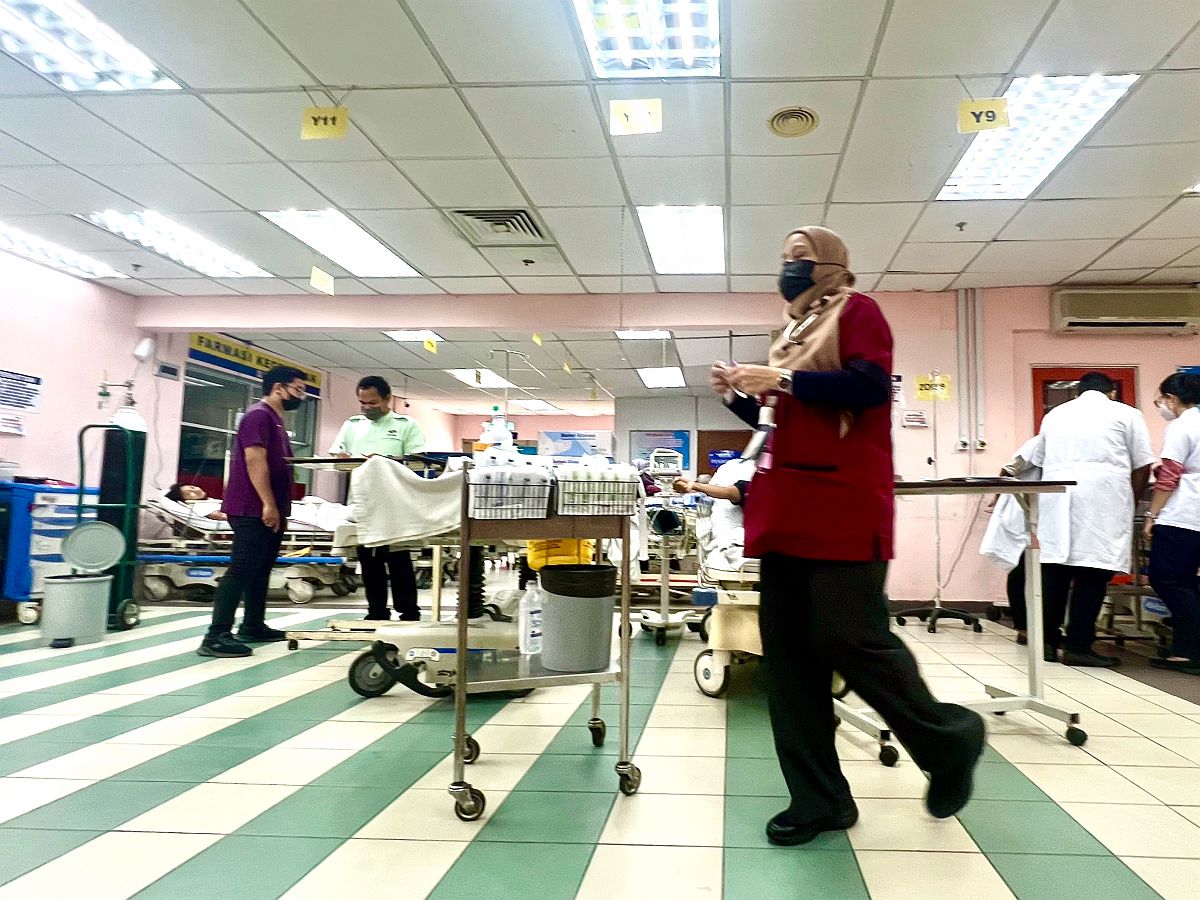
KUALA LUMPUR, May 6 — The Malaysian Medics International (MMI) has highlighted the immense workloads of junior doctors in Malaysia that are far heavier than other countries.
According to the international group led by medical students, although a flexi-system in the Ministry of Health (MOH) supposedly caps house officers’ (HO) working hours to 65 to 75 hours a week, chronic understaffing routinely pushes actual hours far beyond this limit.
For medical officers (MOs), their traditional roster institutionalises a continuous 33-hour shift.
“Furthermore, the clinical hierarchy perpetuates a toxic ‘faham-faham sendiri’ (silent understanding) culture, where junior doctors are expected to arrive hours early for ward rounds and stay late to complete tasks, resulting in 10 to 15 hours of unrecorded and unpaid overtime weekly,” said MMI in a statement.
“When compared to the regulatory frameworks of other countries where MMI operates, the systemic need to update occupational safety standards in Malaysia becomes clear.”

HOs or MOs in Malaysia average at 65 to 85 plus working hours a week, far higher than their counterparts in the United Kingdom (40 hours) and Ireland (48 hours).
The maximum continuous shift for junior doctors in Malaysia is 24 to 36 hours, without any legally enforced rest and compensation mandates, compared to the UK (13 hours) and Ireland (13 to 24 hours).
In the UK, junior doctors receive compensatory time off and extra financial pay for long shifts, whereas Ireland mandates 11 hours minimum of continuous rest per a 24-hour period.
“While health care systems globally face strain, frameworks in countries like the UK demonstrate that strict, humane labor laws are administratively possible,” said MMI.
“We strongly urge the MOH to formally establish and strictly enforce a comprehensive Safe Working Hours Policy. Crucially, any structural attempts to reduce hours, such as the failed Waktu Bekerja Berlainan (WBB), must not result in the forfeiture of critical on-call allowances, which effectively penalises doctors for systemic reforms.”
MMI also called for a guaranteed, fixed-term tenure for mandatory postings to Sabah and Sarawak or rural districts, instead of the current practice of indefinite deployments that lead to severe family separation, financial strain, and career anxiety.
“A transparent, fixed rotation allows young doctors to plan their lives and postgraduate pathways, transforming rural service from an unpredictable long-term posting into a structured, honorable national duty.”
The medical students’ group demanded restoration of the progressive structure of the Regional Incentive Payment (BIW) allowance that was previously based on up to 12.5 per cent of a medical officer’s monthly salary.
“A flat RM360 completely fails to cover the actual, exorbitant costs of cross-sea flights, dual-household living, and rising inflation,” said MMI.
MMI also urged the MOH to map out and publish the absolute minimum number of HOs, MOs, and specialists required nationally, as well as the exact quotas required per hospital department to sustain safe operations.
“Establishing a legally binding minimum capacity ensures that the moment a department falls below its safe operating threshold, an automatic ‘red flag’ is triggered.
“This transparent tracking empowers the Ministry and stakeholders to immediately identify which hospitals are operating in critical danger zones and intervene before service delivery collapses.”


