

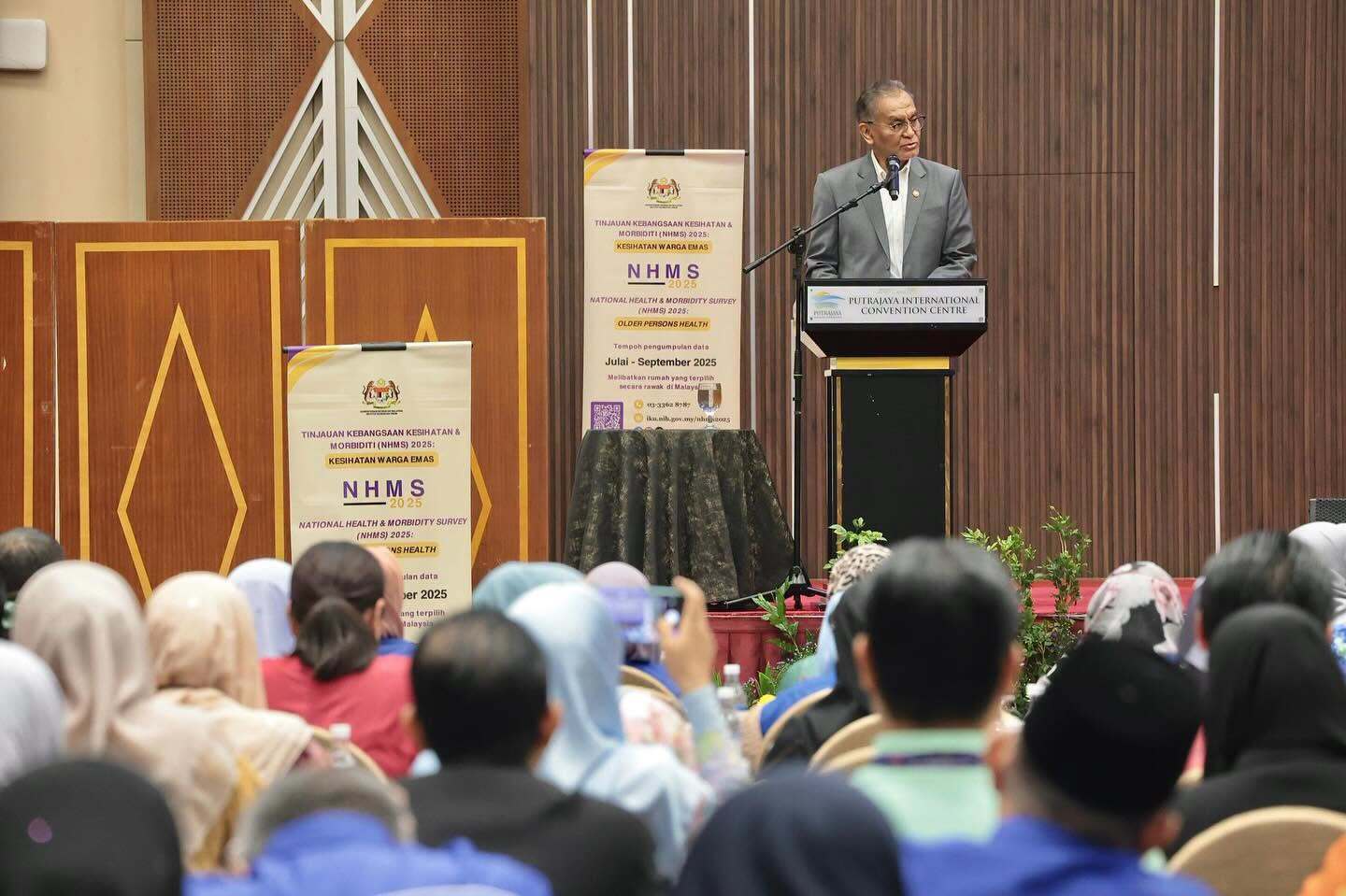
KUALA LUMPUR, April 21 — The National Health and Morbidity Survey (NHMS) 2025: Older Persons Health has found senior citizens aged 60 years and older in Malaysia to be in a poor state of health.
According to a fact sheet launched yesterday on the survey by the Ministry of Health’s (MOH) Institute for Public Health (IKU), this population only saw 14.7 per cent prevalence of ageing well.
Dementia prevalence increased from 8.5 per cent in 2018 to 9.8 per cent in 2025.
Prevalence of chronic diseases – diabetes, hypertension, and high cholesterol – was also very high among the elderly at 39.1 per cent, 73.1 per cent, and 76.2 per cent respectively. About 68 per cent live with at least two chronic conditions.
Senior citizens aged 60 years and older had undiagnosed conditions among the three non-communicable diseases (NCDs): undiagnosed diabetes (6.8 per cent), undiagnosed hypertension (15.5 per cent), and undiagnosed hypercholesterolaemia (20.9 per cent).
Prevalence of poor social support increased from 30.8 per cent in 2018 to 33.1 per cent last year. The mean score quality of life declined from 46.76 in 2018 to 46.33 on a score of 0 to 57.
Burden among primary informal caregivers was reported at 32.2 per cent.
On sarcopenia (gradual loss of muscle mass, strength, and physical performance that happens with age) and frailty, Malaysia reported the following prevalence: sarcopenia (45.3 per cent), pre-frail (60 per cent), and frailty (10.7 per cent).
Other indicators in the physical domain, however, mostly saw improvements in 2025 compared to 2018.
- Prevalence of limitation in instrumental activities of daily living (IADL): drop to 27.3 per cent from 32.7 per cent.
- Prevalence of limitation in activities of daily living (ADL): drop to 10 per cent from 17 per cent.
- Prevalence of falls: increase to 14.3 per cent from 14.1 per cent.
- Prevalence of physically inactive: increase to 30.6 per cent from 29.8 per cent.
- Prevalence of high sedentary behaviour: drop to 12.8 per cent from 23.2 per cent.
Vision and hearing also improved among Malaysians aged 60 years and older, with prevalence of vision limitations declining to 4.1 per cent compared with 4.5 per cent in 2018 and prevalence of hearing limitations dropping to 3.3 per cent compared with 6.4 per cent in 2018.
Prevalence of depression declined to 8 per cent in 2025 from 11.2 per cent in 2018, while severe depression dropped to 2.2 per cent from 5.3 per cent in that period.
The full NHMS 2025: Older Persons Health report will only be released in three months’ time.
Health Minister Dzulkefly Ahmad said Malaysia was experiencing “compressed ageing” at a rate 1.5 times faster than Japan.
“By 2036, we will officially be an ‘Aged Nation’, with over 4.1 million (15 per cent) citizens aged 60 and above,” he posted on X yesterday.
“Through the Older Persons Healthcare Service Action Plan 2023–2030 & National Dementia Action Plan 2023-2030, we are shifting from mere care to true empowerment— bringing health care ‘Closer to Home’ and exploring long-term care insurance.
“Shifting from a care-model to an empowerment-based model in ageing via fostering independence, agency, and community integration.
“This shift recognises older adults as active contributors to society rather than passive recipients of care, which improves their quality of life, self-worth, and mental health.”


