

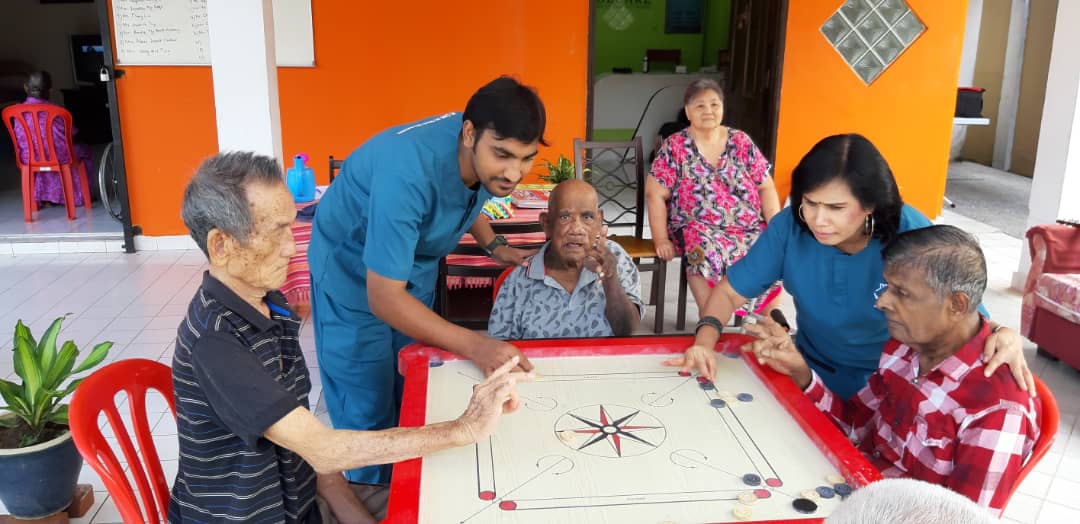

Malaysia is ageing rapidly. Yet our policies remain surprisingly young.
Across government plans and national strategies, ageing rarely appears as a central organising principle. Health reforms, hospital expansion, and insurance debates often assume a population that needs treatment for discrete illnesses. But the reality of ageing is very different.
Older persons rarely experience health as isolated episodes of disease. Instead, they live with accumulating vulnerability, complex conditions, and gradual decline.
This gap is becoming increasingly visible in our wards. Hospitals across Malaysia are filled with older patients who are medically stable but cannot safely return home. Some remain for weeks or months because there is nowhere else to go. Families struggle to cope, community services are scarce, and long-term care facilities remain uneven in quality and oversight.
What we are witnessing is not merely a medical problem. It is a policy gap. As geriatricians often remind us, the goal of ageing care is not simply to treat disease, but to preserve function, independence, and dignity for as long as possible. Achieving this requires holistic, patient-centred care delivered through seamless coordination across hospital, community, and social support services.
Frailty Is Not Inevitable
Ageing is often misunderstood as an unavoidable slide toward dependency. In reality, frailty — the gradual loss of strength, mobility, and resilience — is not inevitable.
Frailty often develops through a “slippery slope” of physical inactivity, poor nutrition, chronic disease, social isolation, and inadequate medical management. Many of these factors are preventable or manageable with the right interventions.
Research in geriatric medicine shows that early screening, physical activity programmes, proper nutrition, medication review, and community support can delay or even reverse frailty.
Yet these approaches remain marginal in Malaysia’s health system, which continues to prioritise acute hospital treatment over preventive ageing strategies.
If we continue to frame ageing only through hospital care, we will miss the opportunity to preserve independence for millions of older Malaysians.
Hospitals Are Not Nursing Homes
One of the most visible consequences of this policy shortcoming is hospital “bed-blocking”. Older patients who no longer require acute treatment remain admitted simply because no long-term care arrangements exist.
This phenomenon is inefficient and harmful. Hospital beds are among the most expensive resources in the health system. When they are occupied by patients who need rehabilitation or supportive care instead of acute treatment, the entire system slows down — emergency departments become overcrowded, elective surgeries are delayed, and health care workers face mounting pressure.
More importantly, hospitals are not designed for long-term living. Older persons confined to hospital beds often experience muscle loss, delirium, infections, and functional decline.
Repeated infections and complications can create a vicious cycle of deterioration, where recovery becomes increasingly difficult. In short, the longer an older person stays unnecessarily in hospital, the more likely they are to deteriorate.
When One Illness Becomes Many
Ageing rarely comes with a single diagnosis. Most older adults live with multi-morbidity — the presence of multiple chronic diseases such as diabetes, hypertension, arthritis, heart disease, and cognitive decline.
This complexity creates another challenge: polypharmacy.
Many older patients take five, ten, or even more medications simultaneously — often prescribed by different specialists who rarely coordinate with one another. Without careful management, these medications can interact in harmful ways, causing dizziness, confusion, falls, and hospital admissions.
Our health system, however, is structured around single diseases and specialised departments. The result is fragmented care.
What older persons need instead is coordinated, person-centred geriatric care, supported by multidisciplinary teams that include doctors, nurses, physiotherapists, occupational therapists, pharmacists, and social workers. Ageing care works best when these professionals function as an integrated team.
Malaysia’s Missing Long-Term Care System
Perhaps the most striking gap in Malaysia’s ageing policy is the absence of a coherent long-term care system.
Families remain the primary caregivers for older persons. While this reflects strong cultural traditions, it also exposes households to enormous emotional, physical, and financial strain. Many caregivers reduce their working hours or leave employment entirely to care for ageing parents.
Meanwhile, the private nursing home sector has expanded rapidly — often without consistent regulation, workforce standards, or quality oversight. Some facilities provide excellent care, but others operate with minimal supervision.
This regulatory gap leaves both families and older persons vulnerable.
Malaysia urgently needs a national long-term care framework that integrates home care, community services, assisted living, and nursing homes within a coordinated and well-regulated system.
Lessons From Japan
Other ageing societies offer important lessons.
Japan, one of the world’s most aged nations, recognised early that hospitals alone cannot manage population ageing. In 2000, it introduced a national Long-Term Care Insurance system that funds community-based services, home care, rehabilitation, and residential care.
Equally important is Japan’s emphasis on integrated geriatric care, where medical, social, and community services operate as a coordinated network.
While Malaysia’s demographic transition is less advanced, the window for preparation is rapidly closing.
Prevention Must Start Now
Addressing ageing cannot begin only at age 70 or 80. The foundations of healthy ageing are built decades earlier.
Malaysia’s escalating burden of non-communicable diseases (NCDs) — including diabetes, cardiovascular disease, and obesity — threatens to create a generation that grows old with heavy disease burdens.
Aggressive investment in NCD prevention and healthy lifestyle promotion is therefore essential.
Many experts now highlight the “Blue Zone” approach — regions where people routinely live beyond 90 years with good health. These communities share common lifestyle patterns often summarised into six pillars:
- Regular physical activity
- Balanced, whole-food, predominantly plant-based diets
- Quality, restorative sleep
- Strong and positive social connections
- Stress management and stress reduction
- Avoidance of harmful behaviours such as smoking, drugs, and excessive alcohol
Embedding these principles into national health promotion strategies could significantly reduce frailty and chronic disease in later life.
Building Geriatric Expertise
Malaysia also faces a shortage of specialists trained specifically in the care of older persons.
Geriatricians remain few in number, and geriatric training opportunities are limited. Yet the complexity of ageing — from multimorbidity and cognitive impairment to medication management and rehabilitation — requires specialised expertise.
Expanding the geriatric workforce, alongside allied professionals such as geriatric nurses, physiotherapists, occupational therapists, pharmacists, and social workers, must become a national priority.
Time To Design An Ageing State
Malaysia’s demographic future is no longer hypothetical. By 2030, the country will officially become an ageing nation.
The question is not whether Malaysia will age — but whether our policies will age with it.
A truly ageing-ready nation requires three fundamental shifts: prevention of frailty through healthier lifestyles, integrated geriatric care within the health system, and a comprehensive national long-term care framework.
These reforms must also be supported by adequate investment in the health workforce and system resources. Without these foundations, hospitals will continue to absorb problems they were never designed to solve.

Dr Zarihah Zain is a public health physician who retired from the Ministry of Health in 2012 and is now a part-time lecturer in community medicine and medical ethics. She gratefully acknowledges the valuable insights and input of Dr FS Lee, Senior Consultant Geriatrician, in shaping several perspectives discussed in this article.
- This is the personal opinion of the writer or publication and does not necessarily represent the views of CodeBlue.


