

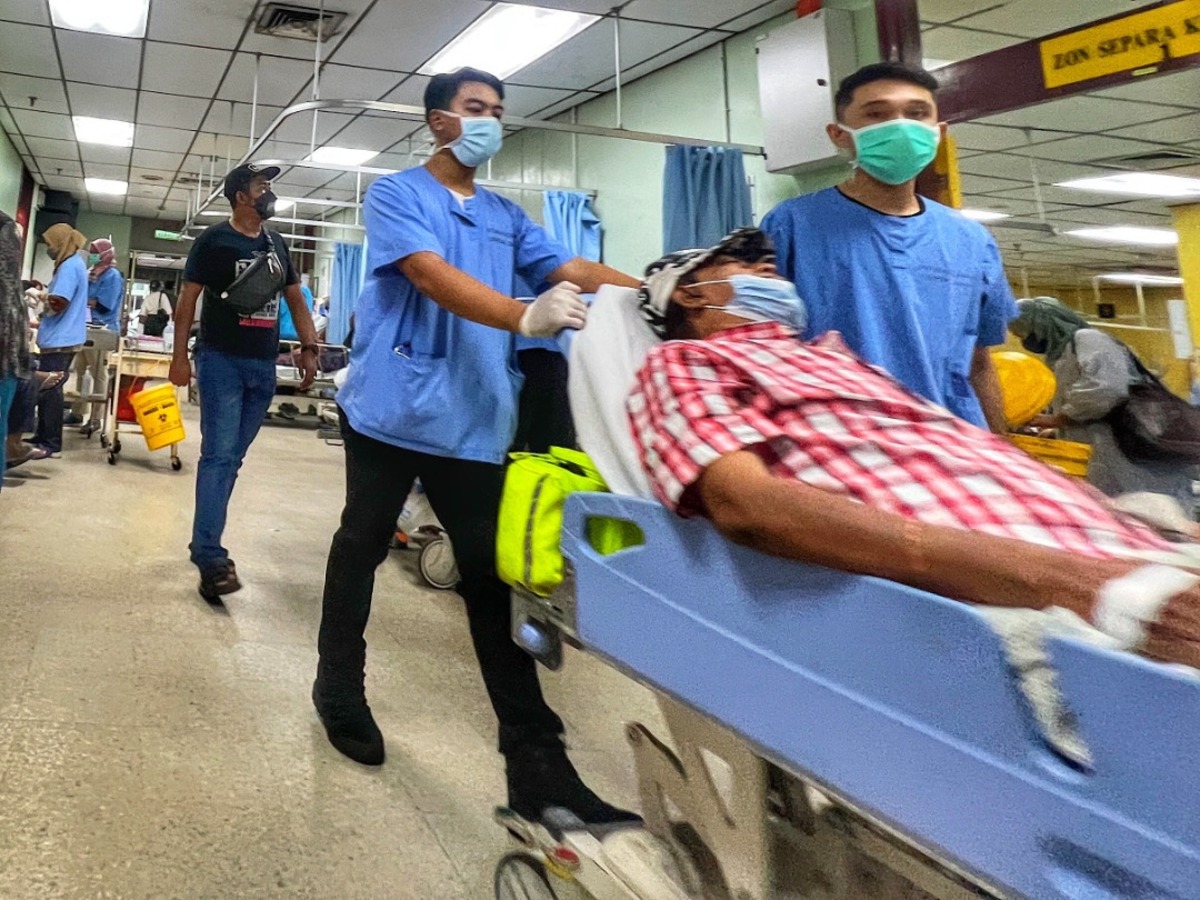
KUALA LUMPUR, March 9 — Patients admitted from emergency departments in government hospitals wait a median of 144.4 minutes (2 hours 24 minutes) for a ward bed, the Ministry of Health (MOH) said, citing national performance data for the second half of last year.
In a written Dewan Negara reply on March 4, Health Minister Dzulkefly Ahmad said national performance data for July to December 2025 showed that 83.8 per cent of hospitals met the ministry’s Bed Waiting Time (BWT) target, with 119 out of 142 hospitals with emergency departments complying with the benchmark.
Dzulkefly said the BWT indicator measures the time taken for patients in the emergency department to be transferred to a ward bed after admission is decided.
The ministry sets a key performance indicator requiring at least 80 per cent of hospitals to achieve the BWT standard. The targets vary according to each hospital’s bed occupancy rate (BOR).
“Hospitals with bed occupancy of 85 per cent or higher are targeted to achieve an average weekly waiting time of 360 minutes or less, while hospitals with bed occupancy below 85 per cent are targeted to keep waiting times to 240 minutes or less,” Dzulkefly said.
He was responding to a question from Senator Sivaraj Chandran on why treatment waiting times appear to be increasing despite rising health allocations.
Dzulkefly said several structural factors contribute to congestion in public hospitals, including rising disease burden, greater reliance on the public sector, and shortages of specialists and skilled health workers.
The 2026 federal budget allocates RM46.52 billion to the Health Ministry, an increase of RM1.25 billion (2.76 per cent) from 2025.
However, Dzulkefly said rising operating costs, procurement of new medical technologies, and high drug subsidies limit the pace at which hospital capacity — including beds, services, and specialist expertise — can be expanded.
The health minister also said current economic pressures have led more Malaysians to seek care in subsidised public hospitals instead of private facilities.
To ease congestion without imposing additional costs on patients, the ministry said it is implementing several measures, including expanding hospital capacity through facility upgrades and additional beds, strengthening primary care services at health clinics, and extending operating hours at selected clinics near major referral hospitals.
Selected government clinics now operate until 9pm on weekdays and until 1pm on Saturdays to reduce pressure on hospital emergency departments.
The ministry is also purchasing selected surgical and diagnostic services from private hospitals under the Hospital Service Outsourcing Programme, with RM140 million allocated for the initiative.
Other measures include collaboration with private general practitioners under the Madani Medical Scheme to treat minor acute cases, as well as the phased digitalisation of the national health system to improve patient flow, reduce repeat tests, and enhance monitoring of hospital bed capacity.
MOH also said it is strengthening collaboration with public university teaching hospitals to help reduce congestion in government facilities.
While the median national waiting time is about 2.4 hours, emergency department congestion in public hospitals has previously drawn attention after reports of much longer waits for ward admission.
In 2023, a case involving a heart attack patient at Serdang Hospital alleged that the patient waited nearly 30 hours in the emergency department before a ward bed became available, though the Health Ministry did not confirm the reported duration.


