

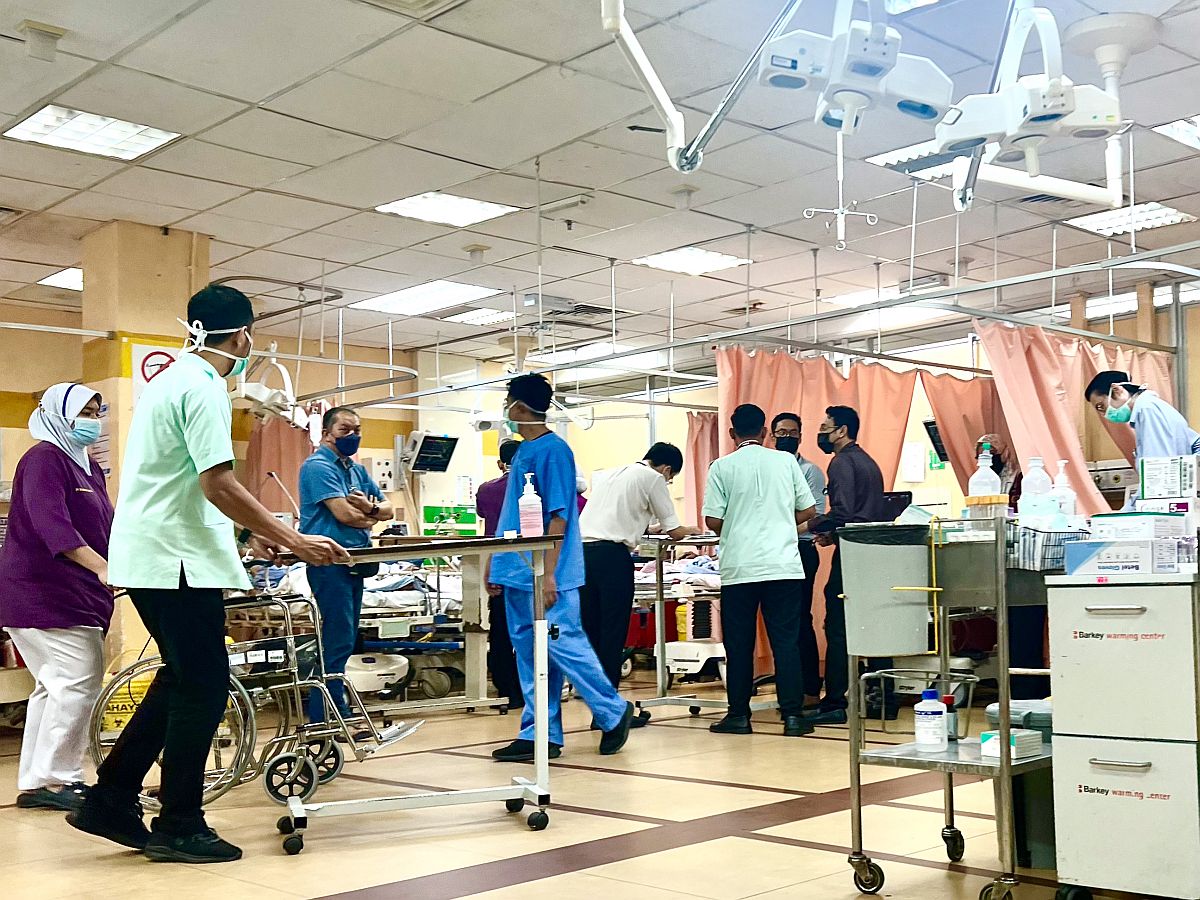
Dr Ghazali Ahmad’s recent article on CodeBlue highlighting the struggles of house officers deserves serious attention. The tragic death of a house officer in Kuala Krai should have shaken the conscience of the nation.
House officers face long hours, immense pressure, and steep learning curves. But the conversation should not stop there. Because once housemanship ends, the burden of sustaining the public health care system quietly shifts to medical officers.
House officers may be trainees navigating the system, but medical officers are the ones expected to keep the system running.
Dr Ghazali listed the responsibilities typically carried out by house officers, including clerking patients, documenting notes in electronic medical records, performing bedside procedures, arranging investigations, communicating with families, and coordinating referrals with other hospitals. These are indeed core clinical responsibilities expected from junior doctors.
But sadly, in many hospitals today, many of these responsibilities are now increasingly carried out by medical officers themselves. House officers frequently do not clerk new admissions from the emergency department unless they are specifically rotating within the emergency department.
Instead, the medical officer often becomes the one who clerks the patient, formulates the management plan, stabilises the patient, and initiates investigations.
Meanwhile, the same medical officer continues to run the ward service. In other words, the workload that was traditionally distributed across a team is increasingly concentrated onto fewer people.
House officers today also largely operate within shift-based systems. They work designated shifts and hand over to the next team. Medical officers, however, continue to carry the traditional 24-hour on-call system.
In many government hospitals today, a single medical officer may be responsible for 30 to 40 patients at a time. They clerk new admissions, review deteriorating patients, coordinate referrals, answer endless calls from wards, communicate with families, supervise house officers, arrange investigations, and complete mountains of documentation. All while navigating severe manpower shortages.
On top of normal working hours, medical officers frequently perform six to seven 24-hour on-calls every month. Anyone who has actually done these calls knows the truth.
A 24-hour call rarely ends after 24 hours. Doctors often remain in the hospital for additional hours finishing ward rounds, discharge summaries, referrals, and unresolved clinical matters before finally leaving. The official schedule may say otherwise, but the body clock knows the truth.
Despite the enormous responsibility, the compensation structure has remained largely unchanged for years. A medical officer performing overnight on-call duty receives approximately RM13 per hour. Yes, RM13. Roughly the hourly rate of a part-time service job.
Except this job involves managing critically ill patients, making life-and-death decisions, and ensuring an entire ward does not collapse overnight. But workload and pay are only part of the story.
Workplace culture can make the situation far worse. Medicine operates within a rigid hierarchy. While hierarchy is meant to ensure accountability, it can also allow toxic leadership behaviour to flourish.
One common pattern is the blame game. When things go wrong – delayed investigations, referral bottlenecks, or system failures – responsibility often travels in only one direction. Downward.
Medical officers become convenient scapegoats. After all, it is easier to blame the person doing the work than to admit the system itself is overstretched.
Another familiar pattern is misplaced loyalty. Some specialists and consultants appear more interested in maintaining cordial relationships with other departments or hospital administrators than supporting their own team. Medical officers may find themselves criticised publicly while their supervisors remain remarkably diplomatic elsewhere.
Apparently diplomacy has selective application. Then there is the classic encouragement to “voice out concerns”. Many departments proudly claim to encourage open communication. But the doctor who actually raises concerns about workload or patient safety may soon find themselves labelled “difficult”, “not resilient”, or “having attitude”. The lesson becomes very clear. Silence is safer.
In many departments, the system has also become heavily dependent on medical officers. Much of the operational workload rests on their shoulders: running wards, handling admissions, stabilising emergencies, and keeping daily clinical services functioning. Instructions are plentiful. Execution is delegated.
Constructive mentorship is essential in medicine. Yet in some environments, teaching is replaced with scolding. Mistakes become public spectacles rather than opportunities for learning. Because apparently humiliation is still considered an acceptable teaching strategy.
Perhaps the most familiar phrase every medical officer eventually hears when raising concerns: “Back in my day, things were even harder.” This nostalgic argument is often used to dismiss legitimate discussions about workload and wellbeing.
But health care today is vastly different. Patients are more complex. Documentation requirements have multiplied. Legal accountability has increased. And manpower shortages are more severe. So yes, perhaps things were difficult decades ago. But the present system has evolved into something entirely different.
Meanwhile, Malaysia proudly maintains one of the lowest public health care fees in the world. Patients pay RM1 for clinic visits and RM3 per day for hospital admission. A remarkable achievement.
But the true cost of this affordability is rarely discussed. It is paid quietly through the exhaustion of the people working inside the system. Malaysia’s public health care achievements did not appear out of thin air. They were built on the blood, sweat, and endurance of health care workers who continue to keep the system running despite increasing strain.
If house officers are described as modern slaves of the system, then medical officers may be the labour that keeps the entire machinery running. And the uncomfortable question remains: How long can a health care system continue to function on exhaustion before the people holding it together decide they have had enough?
The author is a medical officer working in the Internal Medicine Department in one of the busiest hospitals in Selangor. CodeBlue is providing the author anonymity because civil servants are prohibited from writing to the press.
- This is the personal opinion of the writer or publication and does not necessarily represent the views of CodeBlue.


