

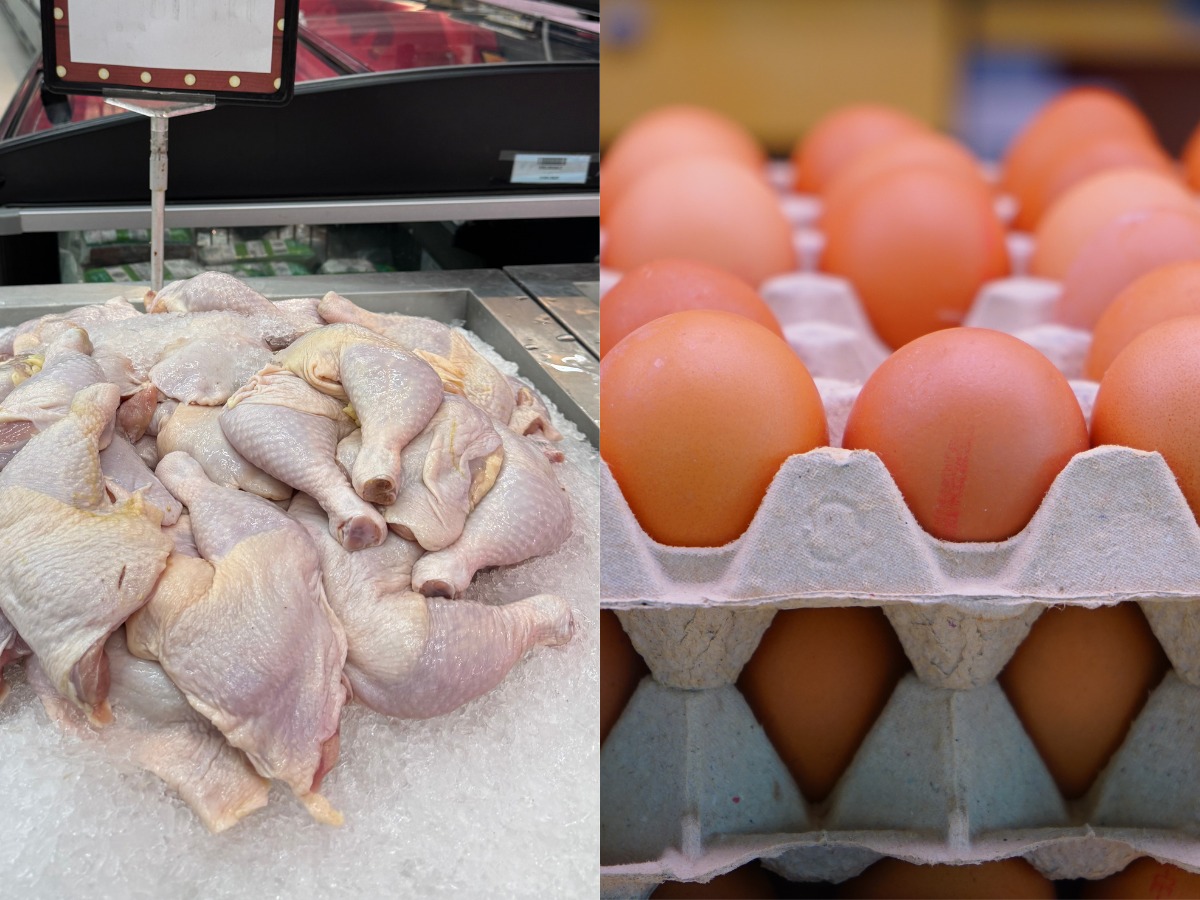
KUALA LUMPUR, March 17 — Malaysians may soon face higher prices and lower supply of chicken and eggs, warn poultry producers, as rising global costs of animal feed and fuel linked to the Iran war ripple through the country’s poultry industry.
Malaysia depends heavily on imported feed ingredients, particularly corn and soybean meal used to raise chickens and produce eggs. As global commodity prices climb amid concerns about disruptions to energy markets and shipping routes in the Middle East, poultry producers say their costs are rising as well.
Feed is by far the largest expense in poultry farming, accounting for about 60 to 70 percent of total production costs, said Dr Saravanakumar S. Pillai, a former senior deputy director at the Department of Veterinary Services (DVS).
“Malaysia relies heavily on imported feed ingredients, particularly corn and soybean meal sourced from major agricultural exporters such as Brazil, Argentina, and the United States,” Dr Saravanakumar told CodeBlue when contacted yesterday.
“When global prices of these commodities increase, the cost of feed production rises almost immediately for local feed millers. This eventually translates into higher production costs for poultry farmers.”
For broiler chicken producers, Dr Saravanakumar said even small changes in feed prices can have immediate consequences because chickens grow quickly and reach market weight in about 35 to 40 days.
“Any increase in feed price during that period directly affects the cost per kilogram of live bird produced,” he said.
Egg producers face similar pressures because laying hens require a continuous feed supply to maintain production. This means that sustained increases in feed prices raise the cost of producing each egg.
“Therefore, sustained increases in corn and soybean meal prices inevitably place pressure on the profitability of poultry producers and may eventually influence market prices if the situation persists,” said Dr Saravanakumar.
International commodity markets have already shown volatility. Fertiliser prices, particularly urea – a nitrogen-based fertiliser used to boost crop yields – have risen in recent weeks, amid fears that the Middle East conflict could disrupt energy supplies and shipping routes.
CNBC reported that the price of imported urea fertiliser in the US jumped by about 30 per cent between the weeks ending February 27 and March 6, around the start of the war. Higher fertiliser prices increase the cost of growing feed crops, such as corn and soybeans.
Bloomberg reported yesterday that China has curbed exports of nitrogen-potassium fertiliser blends. According to World Bank data, China is the biggest source country of fertiliser imports by Malaysia, followed by Russia and Canada.
Feed Price Increases Could Tighten Chicken, Egg Supply
Similarly, the Malaysian Poultry Association (MPA) warned of supply risks if input costs remained high and margins are under prolonged pressure, as this could influence production decisions (for example reducing chick placement or “early culling” in certain segments). However, the industry will try to maintain production because chicken and eggs are staple foods.
“Production prospects depend on the trajectory of global raw material prices, energy/logistics costs, exchange rates, and the stability of domestic demand,” MPA secretary Muhammad Al-Iman Mohd Zain told CodeBlue in a statement yesterday. “MPA sees the need for close monitoring and supply chain coordination so that volatility does not disrupt supply.”
He added that if feed prices remained high for several months, industry players would usually adjust operations through a combination of measures: feed efficiency and livestock performance, more cautious production planning, and input risk management.
“However, the capacity to absorb costs is limited, especially for small and medium players with tight cash flow,” said Muhammad Al-Iman.
Dr Saravanakumar similarly said poultry producers and feed manufacturers are likely to adjust operations if feed prices remain elevated for several months, although their options are limited by the strict nutritional requirements of poultry diets.
“One common response is reformulating feed rations,” Dr Saravanakumar said, noting that nutritionists sometimes incorporate alternative ingredients such as palm kernel cake or rice bran when prices spike.
But the room for substitution is limited because poultry diets must remain carefully balanced to sustain growth and egg production.
Producers may also scale back operations if profit margins tighten. Some farmers may reduce flock placements, delay expansion plans, or temporarily scale down production, while feed millers may adopt more cautious procurement strategies to stabilise ingredient supply.
If cost pressures persist, the effects could eventually ripple through the supply chain, Dr Saravanakumar said.
“In the broiler sector, this could translate into fewer birds entering the production system, while in the egg sector it could lead to slower expansion of laying hen populations,” he explained.
Still, Malaysia’s poultry industry has some buffers against short-term disruptions. Much of the sector is vertically integrated, Dr Saravanakumar said, meaning large companies control multiple stages of production from feed manufacturing to processing.
“In the near term, supply disruptions may not be immediate, but prolonged cost pressures could eventually tighten supply and place upward pressure on market prices,” he said.
Time Lag For Impact On Wholesale/Retail Prices
The impact of feed and fuel cost increases on consumer prices for chicken and eggs may take time to emerge because of production cycles and market dynamics.
“There is usually a lag period of several weeks to a few months, depending on market dynamics and government policies,” Dr Saravanakumar said, adding that producers may initially absorb higher costs before passing them on to the market.
For broiler chicken, the production cycle is relatively short. Therefore, feed price changes can influence production costs within a single cycle of about five to six weeks. For eggs, the response tends to be slower because laying hens remain in production for a longer period.
“Producers may initially absorb higher costs, but if feed prices remain elevated for an extended period, the pressure may eventually be reflected in egg prices. In Malaysia, government interventions, such as price controls or subsidies, can also influence how quickly these cost pressures are reflected at the retail level,” said Dr Saravanakumar.
MPA explained that the time lag for higher wholesale or retail prices of chicken and eggs is because raw material stocks and purchase contracts are made in advance.
“The degree of cost pass-through is not necessarily 1:1 because it is influenced by: market competition, integration structure (integrators vs non-integrators), non-feed costs (energy, labour, vaccines/medication, logistics), and pricing mechanisms at the market level,” said Muhammad Al-Iman.
“In short, persistently rising input costs typically put pressure on wholesale prices, which may then affect retail prices, but the rate and timing of transmission vary depending on circumstances.”
Call For Targeted Subsidies, Financial Assistance
Dr Saravanakumar said targeted policy support and stronger domestic feed security could help cushion Malaysia’s poultry sector from global commodity shocks.
“One approach is targeted subsidies or temporary financial support, particularly for feed ingredients or energy costs, to help stabilise production costs during periods of global price volatility,” Dr Saravanakumar said. He also stressed the importance of developing alternative local feed resources and improving research on feed efficiency and ingredient substitution.
“Ultimately, maintaining a stable poultry industry is critical for Malaysia’s food security, as chicken and eggs remain among the most important and affordable protein sources for the population.”
MPA also called for targeted assistance to producers during input shock costs, like temporary support for feed or energy costs to prevent production cuts, besides working capital financing facilities (soft loans/guarantees) for small and medium players.
“Strengthen logistics and the import supply chain (port efficiency, clearance time, transportation costs), as these directly affect feed costs,” added Muhammad Al-Iman.
Malaysia is largely self-sufficient in poultry, with domestic production meeting about 90 per cent of chicken demand, while egg production exceeds local consumption, according to official statistics.
Chicken is Malaysia’s most widely consumed protein, with Malaysians reportedly eating more than 40kg of chicken per person each year. Malaysians also consume over 220 eggs per person annually, making the country one of the world’s largest egg consumers.
Despite strong poultry production, Malaysia imports most feed ingredients, especially corn and soybean meal.
Poultry Sector Likely To Feel Cost Pressures First
The pressure on poultry producers reflects broader stresses across Malaysia’s food system, said Azrul Mohd Khalib, chief executive of the Galen Centre for Health and Social Policy.
“Rising prices for diesel, fertilisers and animal feed will push up food production costs across the board,” Azrul told CodeBlue.
“Fertilisers directly raise crop production costs, while feed is a major cost component for poultry, eggs, cattle, and aquaculture (e.g. fish cultivation). For Malaysia, that means more expensive food production and, eventually, higher food prices.”
Some sectors are particularly vulnerable because they rely heavily on imported inputs and operate on relatively thin margins.
“The most exposed are poultry, eggs, livestock, aquaculture, vegetable farming, and rice,” Azrul said. “These sectors rely heavily on fuel, feed, fertiliser or imported inputs, so they are the first to feel sustained cost shocks.”
“In short, sectors with thin margins and high dependence on imported inputs will feel the pressure first and most sharply,” he added. “The price of chicken and eggs, for example, will likely be one of the first to be affected.”
If input costs remain elevated, producers may begin adjusting production decisions, while importers could reduce inventories or pass higher costs along the supply chain.
“They will cut back where they can,” Azrul said. “Farmers may reduce fertiliser use, livestock producers may shrink output, and importers may hold lower inventories or pass on costs.”
The result could be tighter supply and higher prices for consumers, though the effects may take time to emerge.
“Not likely to be immediately, but it will come through if the pressure persists,” Azrul said. “Short shelf life goods like vegetables, poultry, and eggs usually reflect higher costs more quickly, while staples may take longer if subsidies or price controls remain in place.”


