

KUALA LUMPUR, Jan 21 — The Malaysia-United States Agreement on Reciprocal Trade (ART) shows that Malaysia agreed to recognise the safety of the American food system, said a top US Department of Agriculture (USDA) official.
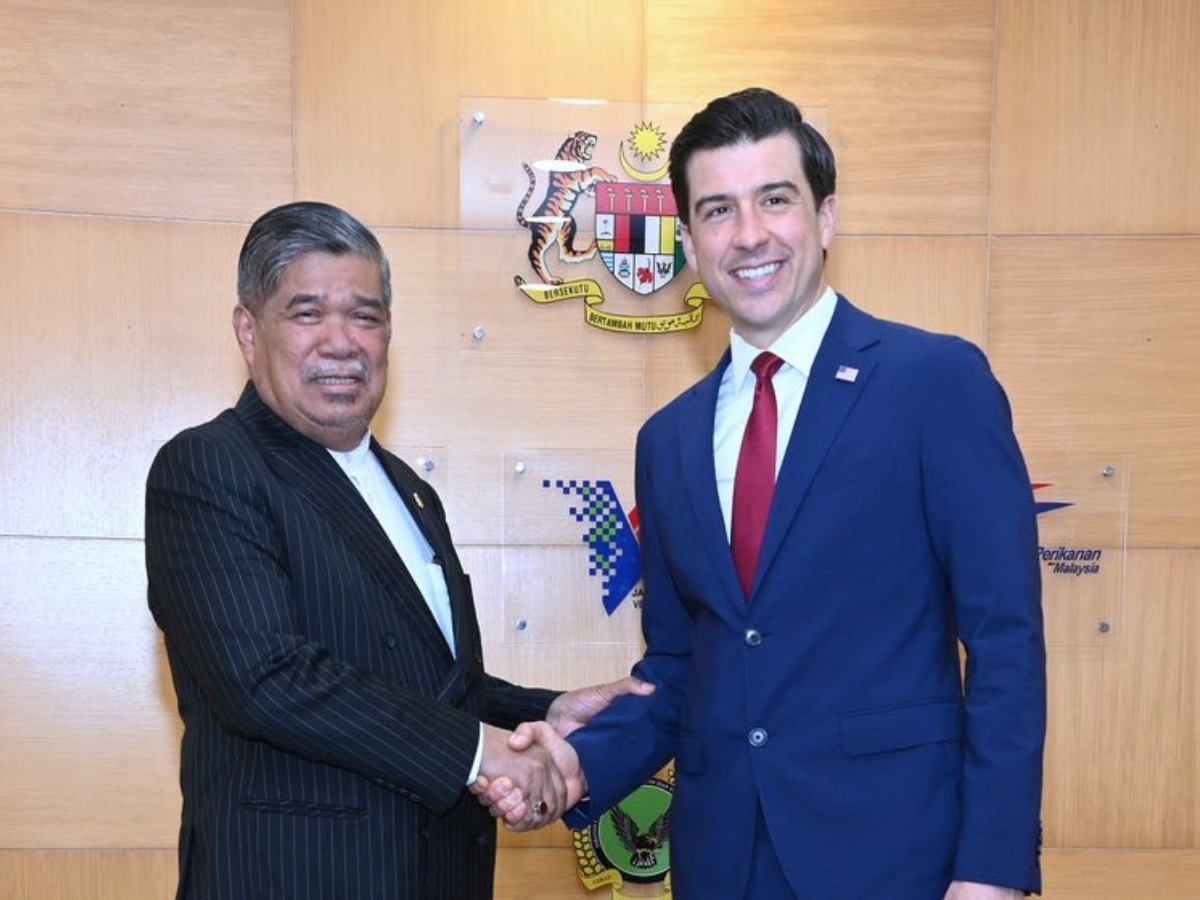
USDA Undersecretary for Trade and Foreign Agricultural Affairs Luke Lindberg visited Malaysia last week from January 14 to 15, including a courtesy call to Agriculture and Food Security Minister Mohamad Sabu, as part of the first Trade Reciprocity for US Manufacturers and Producers (TRUMP) mission of 2026.
After returning to the US, Lindberg told local media that the USDA’s delegation to Malaysia, which included 16 American agribusinesses and trade associations, were “out there getting some deals done under President Trump’s new agreement with Malaysia”.
“The biggest thing about this Malaysia agreement that excites me is that we, as part of the negotiation, Malaysia agreed to recognise that the US food system is safe,” Lindberg was quoted as saying Monday by Southeast AgNet, an agriculture media company based in Florida.
Southeast AgNet described this recognition as a departure from previous negotiations that focused on commodity-specific standards, rather than the overall integrity of the US food system.
“What this really does is it removes a lot of the trade irritants and trade barriers that existed in Malaysia before this,” Lindberg said.

Farm Journal, a US-based agricultural publication, reported that progress was made on many fronts from Lindberg’s trip to Malaysia, including soybeans, dairy, ethanol, and beef.
Lindberg was quoted as saying that US leaders met with the largest soy crush facility in Malaysia, as well as a “very successful restaurant group in Malaysia that’s been begging for US beef for a long time”.
“They’ve actually invested in a beef processing plant in the United States to get their beef halal certified so that they’re ready to go when the actual duties shift and the regulations come into full force,” he said.
Lindberg added that his delegation also discussed ethanol opportunities. “Malaysia is a regional distributor of fuels, and so working ethanol into the fuel supply chain can really spread throughout the Asean region, a lot of good opportunities out there.”
Farm Journal reported that Malaysia imported US$118 million in dairy products in 2024. “We’ve seen a tremendous increase in dairy access and opportunities there, 23 per cent growth this past year for dairy,” Lindberg was quoted as saying.

The USDA undersecretary described these TRUMP missions as part of the US government’s plan to ramp up American agricultural exports. Malaysia is reportedly the US’ 26th biggest agricultural trade market.
“The analogy I’ve been using is the president is opening the door, and it’s our job to drive a bus through it,” Lindberg said.
“A lot of our producer groups haven’t been able to compete on a level playing field in Malaysia in the past, and now they have that access and that opportunity,” he added. “When our groups can compete on a level playing field, I think we win more often than we lose.”
Based on posts on X by the USDA foreign agricultural service, Lindberg’s delegation toured Jaya Grocer and had meetings with Matrade, a national trade promotion agency under the Ministry of Investment, Trade and Industry (Miti), national oil company Petronas, as well as top Miti officials like secretary-general Hairil Yahri Yaacob.
“US-Malaysia TRUMP Mission Day 2: Built ties with importers and retailers for US beef, chicken, milk, grapes, fish, and peanuts,” tweeted @USDAForeignAg last January 16, using emojis for the food products. “Stronger trade, stronger food security”.

In a statement on January 15, KPKM said the meeting between Lindberg and Mohamad, as well as top ministry officials in Putrajaya, was focused on expanding bilateral agricultural trade and technical cooperation and investment to enhance productivity in the agricultural sector.
The meeting also discussed a KPKM visit to the US, involving representatives from the Department of Veterinary Services (DVS) and Department of Agriculture (DOA), from January 17 to 24. According to KPKM, its visit was aimed at “increasing cooperation between both countries on sanitary and phytosanitary aspects”.
Previously, KPKM announced that its delegation to the US would inspect and benchmark American food safety and agricultural systems under commitments linked to ART.
Yesterday, KPKM’s Facebook page posted photos of KPKM secretary-general Isham Ishak in Washington DC that included a visit to the ministry’s agricultural office and a courtesy call to Malaysian ambassador to the US, Muhammad Shahrul Ikram Yaacob, to discuss implementation of the trade deal to boost Malaysian agricultural exports.
Farm Journal reported that the Malaysian delegation would be visiting the US administrative capital this week, but didn’t mention any other state. Washington DC isn’t a farming state.
Texas is the US’ top beef-producing state, followed by states in the Great Plains and Midwest like Nebraska, Kansas, Oklahoma, South Dakota, and Missouri. Top broiler (chicken meat) producing states include Georgia, Alabama, and Arkansas.

It’s unclear why the KPKM delegation is visiting the US in January when various parts of the country are under winter weather alerts due to snowstorms and blizzard conditions. Winter is also generally a lower-production but higher-maintenance period for cattle farms; spring and early summer (March to June) are typically the most active periods.
KPKM declined to answer CodeBlue’s questions about its visit to the US, including the delegation’s itinerary, the states and facilities planned for tours, and an estimated cost of the one-week trip.
“For the time being, any official information regarding this matter will only be conveyed through media statements or the Ministry’s official channels,” KPKM’s corporate communications unit told CodeBlue.
“The Ministry also wishes to inform that no special interview sessions regarding ART will be conducted at this time.”
The Malaysian Veterinary Medical Association (Mavma) previously warned that the trade pact risked undermining Malaysia’s veterinary authority and control over food safety, biosecurity, and halal standards, due to a requirement for automatic recognition of American food safety systems.
Under ART, Malaysia must recognise US food safety, sanitary and phytosanitary (SPS) systems for meat, poultry, dairy, and certain agricultural products, streamlining import eligibility by accepting US federal inspection directories and limiting additional approval requirements.
“In the next couple months, we’ll see full implementation of the deal, and that’ll really be the access-opening opportunity for our producers,” Lindberg said.


