

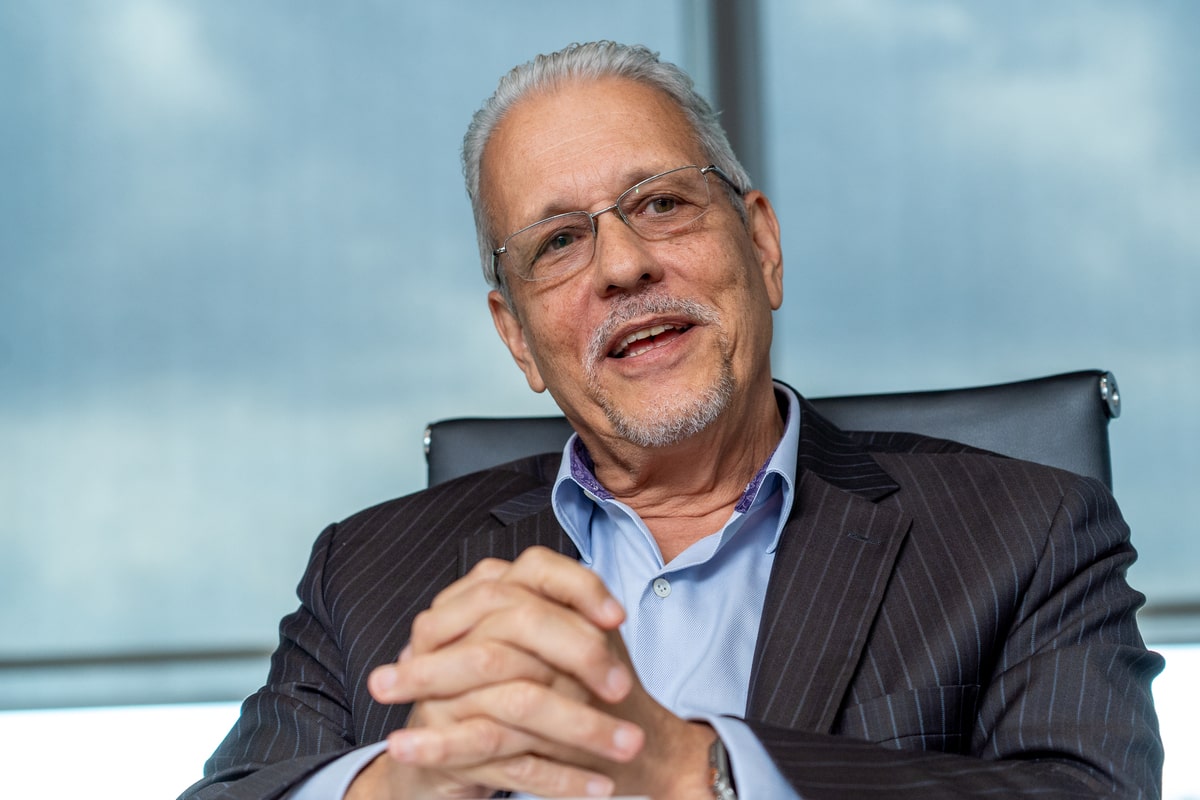
KUALA LUMPUR, March 3 — The Life Insurance Association of Malaysia (LIAM) claims that the average medical insurance claim is about RM12,000, as it defends the adequacy of the proposed Base Medical and Health Insurance/Takaful (MHIT) plan’s RM100,000 annual limit.
LIAM chief executive officer Mark O’Dell said industry data showed that the average claim currently stands at about RM12,000, suggesting that the RM100,000 (for those aged 60 and under) and RM150,000 (for older adults) annual limit would be sufficient for most treatments.
In an interview with Bernama, O’Dell was reported as saying that the base MHIT plan is designed to remain affordable while providing meaningful coverage, with annual limits set to cover common and high-volume treatments in private hospitals.
He was also reported as saying that more complex and costly treatments exceeding these limits are “expected to continue being handled by the public health care system”, as MHIT complements rather than replaces public health care.
O’Dell noted in the interview that respiratory and gastrointestinal conditions account for a large share of current claims. Bernama attributed him as saying that these are “common medical conditions expected to be covered in 99 per cent of treatment cases”.
In a 2024 interview with CodeBlue, O’Dell highlighted his own bill of about RM19,000 for a minor hernia surgery at a private hospital, involving a one-night stay and a 13-page itemised bill. The total cost exceeds the purported industry average.
Common conditions can also exceed the RM12,000 mark. CodeBlue editor-in-chief Boo Su-Lyn noted in a previous op-ed that her sister’s five-day dengue hospitalisation cost over RM15,000.
Higher-cost cases, including complications, intensive care admissions, or repeated hospitalisations, can quickly push total spending beyond the RM100,000 threshold in private hospitals, where charges remain largely unregulated outside of doctors’ fees.
This partly explains why insurers continue to market medical policies with far higher annual limits. It is now common for policies to offer RM1 million or more in annual coverage, with some extending into several million ringgit for major medical events.
The Base MHIT plan, targeted for rollout in 2027 under the government’s broader RESET reforms, is designed as a lower-cost entry product, with annual limits of RM100,000 for those aged 60 and under and RM150,000 for older adults.
If the industry’s own data suggests that the average medical claim is about RM12,000, requiring policyholders to pay RM10,000 to RM15,000 out of pocket under the Base MHIT plan before coverage kicks in raises questions about the value of such insurance.
In effect, policyholders could end up paying a large share, or nearly all, of a typical hospital bill themselves before receiving any insurance payout.
The rationale for purchasing a base plan with relatively low annual limits and high deductibles may therefore be less clear, particularly when weighed against paying for lower-cost hospital episodes out of pocket.
LIAM Backs DRG, EPF Withdrawal Option For MHIT
In his interview with Bernama, O’Dell also described diagnosis-related group (DRG) pricing, aimed at addressing rising medical costs, as a “complex packaged pricing” mechanism that would shift the current fee-for-service model towards bundled payments for specific treatments.
Under a DRG system, hospitals would receive a fixed payment covering the full course of care, instead of charging separately for each item or service.
“This is well underway, but it will take time to implement because it is quite complex, so it will be introduced gradually. Hopefully next year we might see 20 to 30 per cent of procedures under DRG, and the proportion will increase year by year,” he said.
Separately, O’Dell welcomed ongoing discussions on allowing withdrawals from the Employees Provident Fund (EPF) to help fund MHIT coverage.
He reportedly described the proposal as a positive development, saying it would provide consumers with an additional option to pay for insurance.
“But this will be an individual choice for consumers, allowing one additional avenue to help fund their MHIT. So I think it is a good thing. They must be able to make their own decisions about how to utilise their EPF,” he said.


