

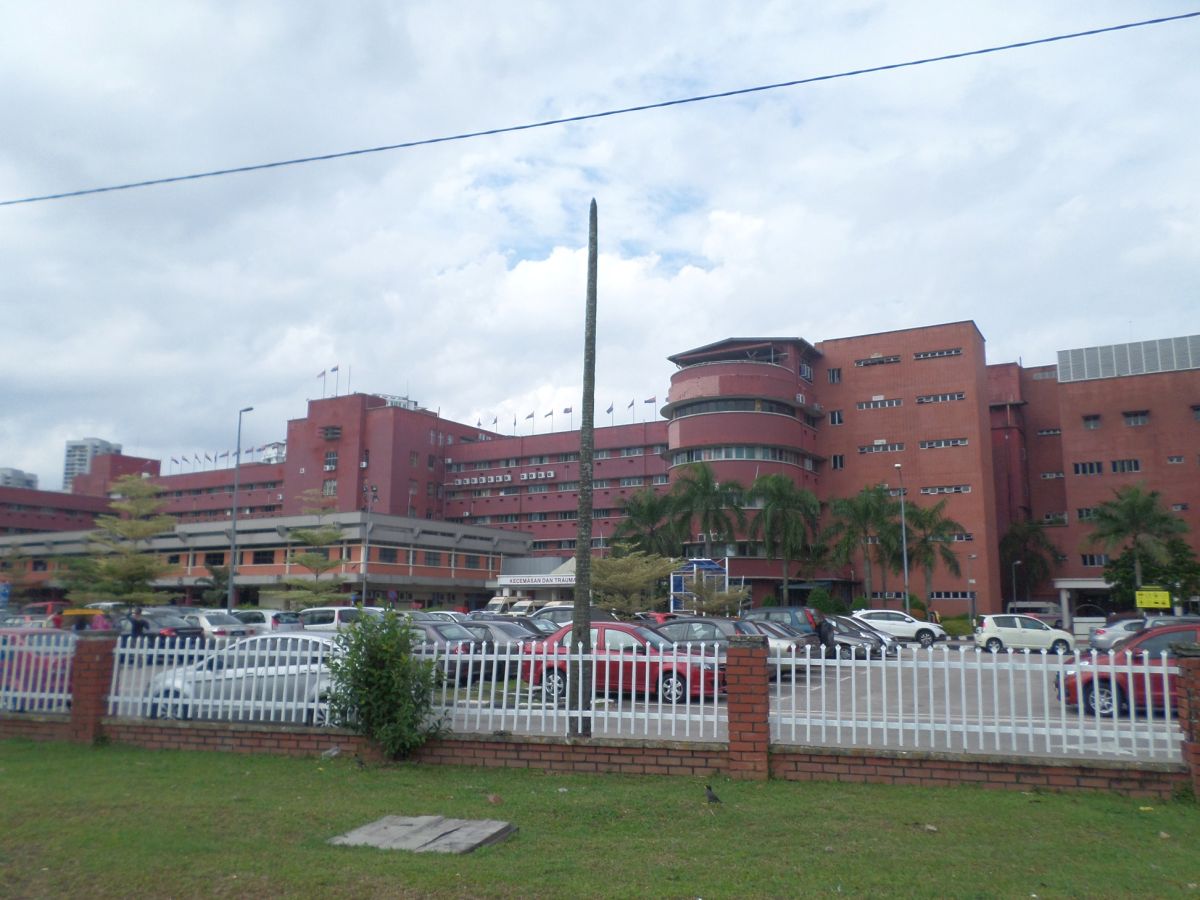
Hospital Sultanah Aminah Johor Bahru (HSAJB) is a major tertiary referral centre serving southern Malaysia.
While demand for medical services continues to rise, medical manpower has not kept pace. A closer examination of workforce deployment and admission data reveals a system operating beyond safe and sustainable limits, placing medical officers (MOs), and ultimately patients, at risk.
Medical Officer Numbers: Headline Vs Reality
The medical department currently lists 55 medical officers, comprising:
- 34 permanent MOs: Two have requested transfer, and one is on maternity leave.
- Five floating MOs.
- Nine postgraduate master’s trainees, with one applying for leave.
- Seven attached MOs from Hospital Pasir Gudang, scheduled to leave on January 12, 2026
In the near term, at least seven MOs will exit, with another four actively requesting transfer. These figures reflect ongoing attrition rather than temporary fluctuations.
More importantly, the figure of 55 represents a nominal headcount. It does not reflect actual daily availability once leave, post-call rest, training commitments, subspecialty rotations, and Emergency Department (ED) deployment are taken into account.
Scope Of Coverage: A Broad And Demanding Mandate
This same pool of medical officers is responsible for:
- 12 medical wards (439 inpatient beds).
- Medical outpatient clinics (MOPCs).
- Medical daycare services.
- Medical admissions in the Emergency Department.
- Seven medical subspecialties.
There is no separate ED medical team, as ED medical officers are drawn directly from the same medical MO pool, further reducing ward manpower.
Emergency Department: High Throughput, Limited Manpower
On a typical day:
- Two medical officers are stationed in the ED, who manage approximately:
- ~50 new medical admissions per day.
- ~30 pending medical patients daily, many stranded in ED >24 hours due to ward congestion.
- This has resulted in ~80 medical patients under ED care at any given time.
Per ED MO workload (daily):
- ~25 new admissions.
- ~15 boarded/pending patients.
- ≈40 patients per MO per day, excluding reviews, deterioration calls, referrals, documentation, and handovers.
These two ED MOs are not additional staff; they are removed from ward coverage, further thinning inpatient teams.
Subspecialty Rotations Further Reduce Ward Manpower
At any given time:
- Two to three MOs are rotated to subspecialty services.
- Combined with two MOs allocated to the ED, this removes four to five MOs daily from general ward coverage.
- This leaves medical wards functioning with minimal staffing.
Ward-Level Reality: Beds Per MO
The department covers:
- 439 beds across 12 wards.
- ~36–37 beds per ward.
After accounting for ED duties and subspecialty rotations, each ward is typically left with only two to three MOs. This translates to:
- Two MOs per ward → ~18–19 inpatients per MO.
- Three MOs per ward → ~12–13 inpatients per MO.
These figures exclude:
- New daily admissions.
- Unstable or high-dependency patients.
- Procedures, family discussions, and discharge planning.
- After-hours cross-cover and emergency calls.
When one MO is on leave or post-call, a single MO may temporarily cover an entire ward.
Admission Burden: Relentless Inflow
The department records 467 medical admissions per week, excluding haematology wards:
- ~67 admissions per day.
- ~8.5 admissions per MO per week (based on 55 MOs).
- ~9.7 admissions per MO per week if manpower drops to 48 following confirmed departures.
- In practice, admissions are unevenly distributed, with nights, weekends, and ED shifts carrying far higher per-doctor loads.
House Officers: Limited Buffer, Increased Supervision
There are currently 10 house officers (HOs), with five completing posting by January 5, 2026, and the remaining five HOs are first-posting in their first week.
Rather than reducing workload, this composition increases supervisory demands on MOs, particularly in high-acuity settings. Clinical decision-making remains MO-dependent.
A System Operating Beyond Safe Margins
The interaction of these factors creates a compounding cycle:
- Ward shortages delay admissions.
- Delayed admissions increase ED boarding.
- ED congestion overwhelms ED MOs.
- ED MOs are drawn from ward manpower, worsening ward shortages.
This is not surge capacity, it is baseline operation.
International evidence consistently links high patient-to-doctor ratios, prolonged working hours, and cognitive overload with increased medical errors, delayed care, and staff burnout.
The conditions described are therefore not merely uncomfortable; they are clinically consequential.
A System Failure, Not A Workforce Failure
Medical officers continue to absorb increasing workload out of professionalism and duty. However, professionalism should not be mistaken for infinite capacity.
The data from HSAJB demonstrates a clear mismatch between:
- Bed numbers.
- Admission volume.
- Service scope.
- Available medical manpower.
Conclusion
This is the present situation:
- Two MOs manage ~80 ED patients daily.
- Medical wards function with only two to three MOs for ~36 beds.
- Nearly 500 admissions occur weekly.
- Manpower attrition continues unchecked.
The question is no longer whether medical officers can “cope”, but how long patient safety can be maintained under these conditions.
The numbers are clear. What remains is whether structural action will follow.
This letter was written by a group of medical officers at HSAJB.
- This is the personal opinion of the writer or publication and does not necessarily represent the views of CodeBlue.


