


Malaysia is ageing faster than many of us care to admit. By 2030, one in six Malaysians will be aged 60 and above. This “Grey Wave” is no longer a future abstraction; it is already reshaping households, labour markets, and most critically, our health system.
Against this backdrop, the government’s newly released White Paper on the Base Medical and Health Insurance/Takaful (MHIT) Plan deserves close scrutiny, especially from the vantage point of senior citizens.
At first glance, the Base MHIT Plan appears well-intentioned. Positioned as a voluntary, standardised product under the Reset Strategy, it aims to offer “meaningful protection at affordable premiums” while taming runaway medical inflation.
For older Malaysians who have been priced out of private insurance through relentless premium hikes, the promise of greater stability is welcome. Yet when one examines the numbers more closely, a harder question emerges:
“Is the Base MHIT Plan genuinely affordable and accessible for seniors, or does it quietly accept that older Malaysians should fall back on an already overstretched public system?”
Affordability: Affordable For Whom?
Bank Negara Malaysia’s (BNM) White Paper proposes indicative monthly premiums of RM280 to RM350 for those aged 61 to 65, rising sharply to RM500-RM780 for those above 75, even for the Standard Plan.
On top of this, seniors face higher deductibles: RM1,000 per disability episode for the Standard Plan, and a hefty RM10,000-RM15,000 deductible for the Standard-Plus option.
For many retirees, these figures are sobering. Malaysia’s median retirement savings remain low, and a large proportion of older adults depend on Employees’ Provident Fund (EPF) withdrawals, family support, or informal work to get by. A monthly premium of RM500 to RM700 competes directly with food, utilities, and housing costs.
What deepens the sense of unfairness — and raises questions of regulatory oversight — is that many of these seniors are not new or high-risk entrants: they are long-standing policyholders who have paid premiums for decades, yet continue to face persistent annual or even monthly premium escalations once they approach or cross 60.
This pattern suggests that existing regulatory safeguards have thus far failed to meaningfully reward long-term participation or moderate age-based repricing, despite BNM’s stated objectives of fairness, stability, and risk pooling under the Reset Strategy.
Add deductibles to the equation, and the base MHIT plan begins to resemble catastrophic coverage that only works if one already has cash reserves.
The Missing Age Group: A Policy Blind Spot
One striking omission in the White Paper is the lack of clarity on premiums for those aged 66 to 75.
While the plan allows entry up to age 70 and coverage up to age 85, the absence of explicit premium targets for this large cohort fuels uncertainty.
Are these individuals expected to pay even higher premiums? Will insurers quietly discourage enrolment? Or are policymakers still grappling with how to price this risk group?
Subsidies: From Optional To Essential
The White Paper repeatedly emphasises that the base MHIT plan is not social insurance. Premiums are to be paid out-of-pocket, with the option of using EPF Account Sejahtera savings. Yet this framing may be inadequate in an ageing society.
If the state recognises that older adults face structurally higher health risks—and that the private insurance market systematically penalises age—then public subsidies are not charity; they are corrective policy tools.
Partial or full premium subsidies for those above 60, especially the lower-income and medically vulnerable, should be seriously considered.
Without them, the base MHIT plan risks entrenching a two-tier ageing experience: private care for the affluent elderly, and long queues for everyone else.
Should Seniors Be Left To Public Health Care?
Some may argue that seniors should simply rely on Malaysia’s public health care system, which remains heavily subsidised and universal in principle. But this argument ignores lived reality.
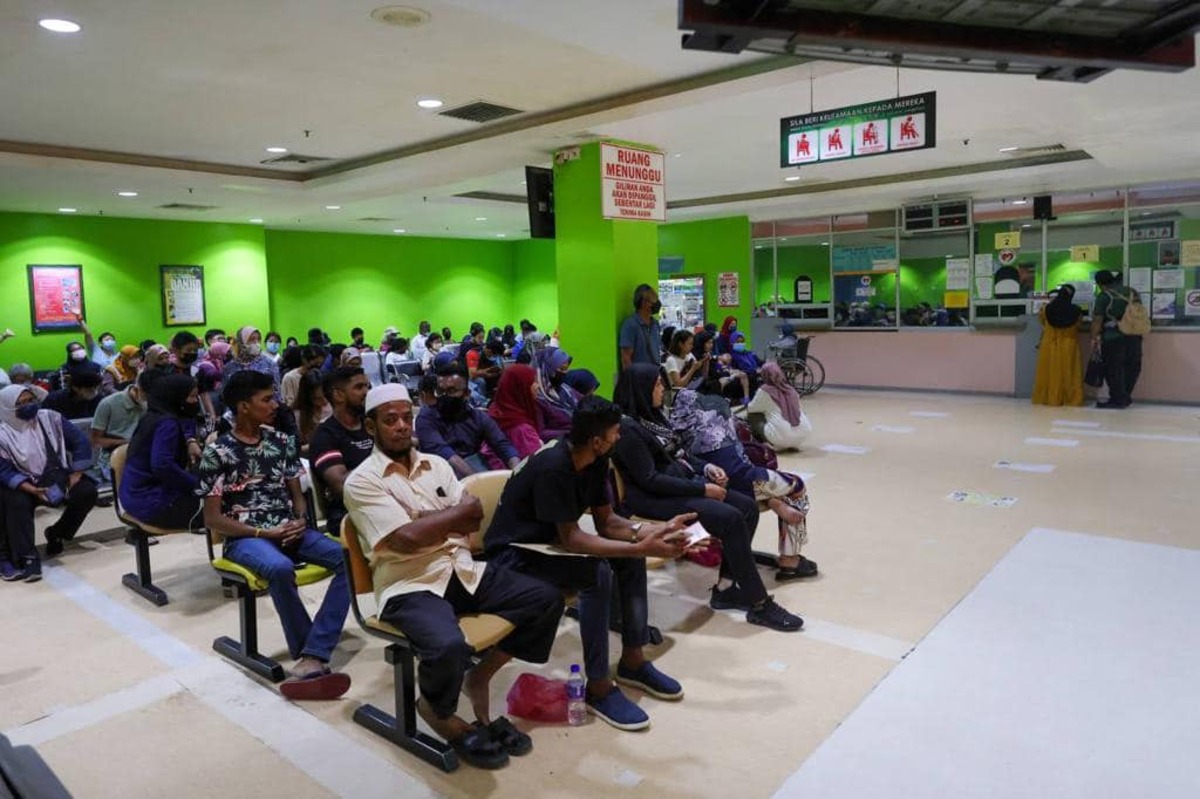
Public hospitals are already strained, with long waiting times for specialist care, diagnostics, and elective surgeries. For older adults, delays are not merely inconvenient—they can be dangerous.
Cancer progression, stroke recovery windows, and complications from chronic disease all worsen with time. Older bodies do not have the luxury of waiting.
If the base MHIT plan does not meaningfully absorb older adults into a parallel private financing stream, then the burden on public hospitals will intensify as the population ages. This is not cost containment; it is cost shifting — onto the public sector, families, and seniors themselves.
A Missed Opportunity For Age-Sensitive Design
To its credit, the base MHIT plan increases the annual coverage limit from RM100,000 to RM150,000 for those above 60, acknowledging higher utilisation. But this adjustment alone is insufficient.
What is missing is age-sensitive design:
- Lower deductibles for seniors.
- Capped premiums beyond a certain age.
- Guaranteed enrolment windows for retirees.
- Explicit government co-contributions for older age bands.
Such features would recognise that ageing is not a lifestyle choice, but a universal trajectory. If insurers “flatten the risk curve” only marginally while still charging seniors substantially more, the structural inequity remains intact.
The Bigger Question: What Kind Of Ageing Society Do We Want?
The Base MHIT Plan is framed as a complement to public health care, not a replacement. But complements matter. In an ageing nation, how we design insurance signals how we value older lives.
If the Base MHIT Plan merely offers a theoretical option that many seniors cannot afford, it becomes a missed opportunity, one that leaves insurers protected, younger policyholders reassured, and older Malaysians quietly sidelined.
The Grey Wave column demands more than actuarial balance sheets. It calls for moral clarity and policy courage.
As Malaysia prepares for 2027 and beyond, the question policymakers must confront is not whether seniors are “too expensive” to insure, but whether we are willing to build a health financing system that ages with dignity, fairness, and foresight.
Dr Zarihah Zain is a public health physician who retired from the Ministry of Health in 2012 and is now a part-time lecturer in community medicine and medical ethics. She is also vice-president of the Malaysian Women’s Action for Tobacco Control and Health (MyWATCH).
Dr Nabilla Mohsrin Al-Sadat is a public health physician with a Master’s degree in Health Economics. She is also auditor at MyWATCH.
- This is the personal opinion of the writer or publication and does not necessarily represent the views of CodeBlue.


