

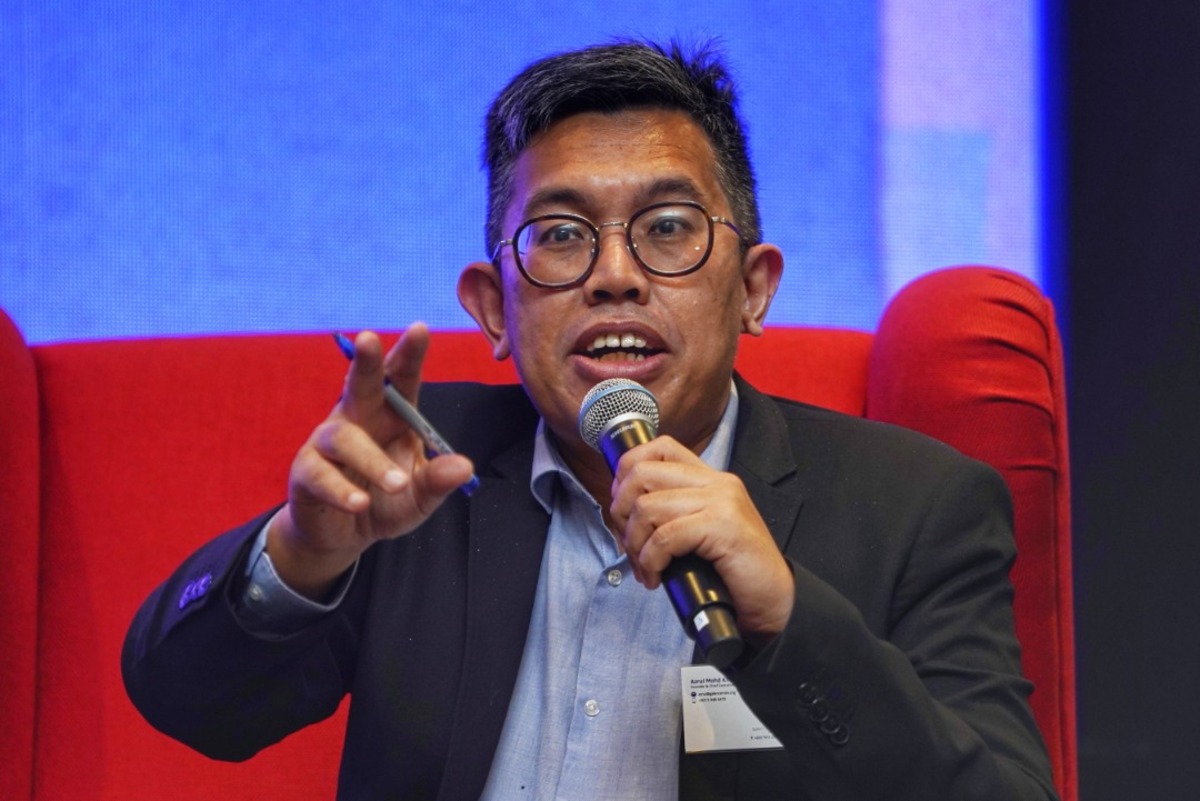
KUALA LUMPUR, Dec 8 — The Galen Centre for Health and Social Policy has recommended mandatory health screenings for purchase of medical and health insurance/takaful (MHIT) products.
Galen Centre chief executive Azrul Mohd Khalib noted that many insurance and takaful policyholders may be accused of not declaring their comorbidities or even acting in a fraudulent manner upon discovery of such pre-existing conditions during the course of treatment of another ailment.
This could lead to deferment of coverage or arduous investigations launched by insurers and takaful operators (ITOs).
“The brutal reality is that pre-screening would help with the medical underwriting process and disclosure requirements insurers use to assess an applicant’s health, determine risk, and set policy terms,” Azrul told CodeBlue.
“Screening helps the insurer decide whether to even offer coverage, the premium amount (often higher for higher-risk applicants), or any specific exclusions or waiting periods for pre-existing conditions.
“Full and honest disclosure is essential as the ITO may deny future claims related to an undeclared health condition, cancel policies, or even take legal action. However, such screening would be seen as unattractive, uncompetitive, and a major turnoff for prospective ITO clients. ‘No medical screenings required’ is actually a major ITO marketing angle.
“But in light of circumstances, it might be the right thing to do to re-introduce, encourage, or even require screenings prior to underwriting, as well as periodically during the course of the policy to ensure that it is updated accordingly.”
Malaysia does not have regulatory guidelines for private health insurance that require coverage of individuals with pre-existing conditions.
“However, based on Malaysia’s NCD prevalence and population health data such as the National Health and Morbidity Surveys (NHMS), it is very likely that many individuals signing onto insurance and takaful health plans may not be aware of their pre-existing conditions or comorbidities, such as hypertension and diabetes.
“It would be wrong to accuse or treat them as acting in a fraudulent manner,” said Azrul.
The Star reported recently that about 21 per cent of Malaysians have diabetes, the highest prevalence in Southeast Asia and 13th highest globally. According to the NHMS 2023, which reported 15.6 per cent diabetes prevalence among Malaysian adults, two in five were unaware of their diabetic status.
The NHMS 2023 also reported that 29.2 per cent of adults in Malaysia have hypertension, of which 11.9 per cent were unaware of their condition. About a third of the adult population have high cholesterol, but half of them don’t know that they have it.
According to the Ministry of Health (MOH) survey, two in five adults aged 18 and above did not undergo any health screening in the past 12 months for diabetes, hypertension, or high cholesterol. The top three reasons cited for not screening were 90 per cent felt healthy, 84 per cent had no symptoms, and 39 per cent cited time constraints.
ITOs Must Process Claims In A ‘Compassionate And Dignified Manner’
CodeBlue reported last week on the case of 57-year-old Ramu Krishnan Sinnamuthry, a stage four tongue cancer patient whose three cancer-related claims to Allianz Life Insurance Malaysia Berhad totalling some RM26,000 remain unpaid, over four months after a CT scan last July.
Allianz deferred all claims pending an investigation into a 2024 hypertension episode that he did not claim for at the time. The insurance company asked Ramu to provide medical records dating back to 2017. He has spent about RM69,000 out of pocket on diagnostic procedures and cancer treatment.
Azrul said although the process flow for health insurance claims should involve defined timelines and reasonable expectations, many factors may be out of an ITO’s control, like the time it takes to obtain medical reports or past records.
“What needs to happen is a compassionate and dignified manner in which the claims are processed, rather than an approach that is cold, inhumane and cruel,” he said.
“The financial assistance, protection and service that ITOs provide to support treatment and care are often critical, essential and for many, life-saving. However, it must place the individual patient at the centre of decision-making. It is more humane to say ‘no’ outright, rather string a person along for months or even years on end.”
Life Insurance Association of Malaysia (LIAM) chief executive Mark O’Dell said recently that insurance agents have “no formal role” in the claims process, adding that it was up to insurers to decide whether or not to meet claimants.
Azrul, however, noted that in reality, an insurance agent acts as a vital link between insurers and customers in identifying needs, recommending suitable life/takaful/general products, facilitating the proposal and sales, and “most importantly, providing post-sale support, especially during the claims process.”
“Insurance agents are often critical lifelines for patients who are trying to access the protection that they invested in. They are expected to have high standards of conduct and professionalism as their conduct and work reflect on the ITOs that they represent.”
Oncologists Say Some Cancers Develop Rapidly In Months

In Ramu’s case, a CT scan in July this year diagnosed him with cancer, a little over two years after his insurance policy took effect in April 2023. A third biopsy performed last September confirmed that the 57-year-old man had stage four tongue cancer with tumours in the throat.
Two oncologists – who did not review Ramu’s case – told CodeBlue that in general, cancer presentation differs between cancers and patients.
“Cancers vary in their presentation, from slow growing tumours to fast and aggressive cancers appearing in weeks to months. Nonetheless, most cancers are fast growing, developing from a single cell to a detectable one within months,” said consultant clinical oncologist Dr Mastura Md Yusof.
“It is unlikely from cancer to have developed for more than two years and lie dormant as such. Some cancers are totally unrelated to prior benign conditions. For example, many young women have breast cysts or lipoma or fibroadenoma, but these are benign lesions and don’t turn into cancers and should not be an exclusion condition for coverage.
“Many have high cholesterol or fatty liver when they are above 40, but to deny coverage when a minority of this group develop hepatocellular carcinoma much later in life doesn’t make sense.”
Senior consultant clinical oncologist Dr Mohamed Ibrahim A. Wahid, who has been in practice for over three decades, similarly said cancer growth varies between patients.
“I’ve had patients with very early cancers that progressed very quickly, while others have very big cancers that grow slowly,” Dr Ibrahim told CodeBlue. “Sometimes, the rate of growth can be a few months.”
He related how recently, a patient of his was on hormone treatment for prostate cancer that was well under control; a scan some eight to nine months earlier showed nothing. Then Dr Ibrahim did a CT scan for minor radiotherapy, not to stage cancer, as his patient’s PSA level had increased a little.
“It turned out he had a different cancer that grew within a few months, which was not detected in the earlier scan,” said Dr Ibrahim. “He developed a new cancer with lymphoma within a few months.”
The oncologist acknowledged that he has seen a “very small” percentage of patients who ask him to “hide” certain details when they want to claim from insurance, but Dr Ibrahim refuses to entertain such requests.
“If insurance finds out, then the whole hospital and the doctor will be blacklisted,” he told CodeBlue. “I openly tell the patient – ‘I will not do that for you. That is fraud. It’s wrong. I will not alter my report’.”
The oncologist stressed that most of his patients are genuine cases who don’t intend to defraud their insurance and that they have been paying their policy for a long time.
“Nobody wants to get cancer.”


