

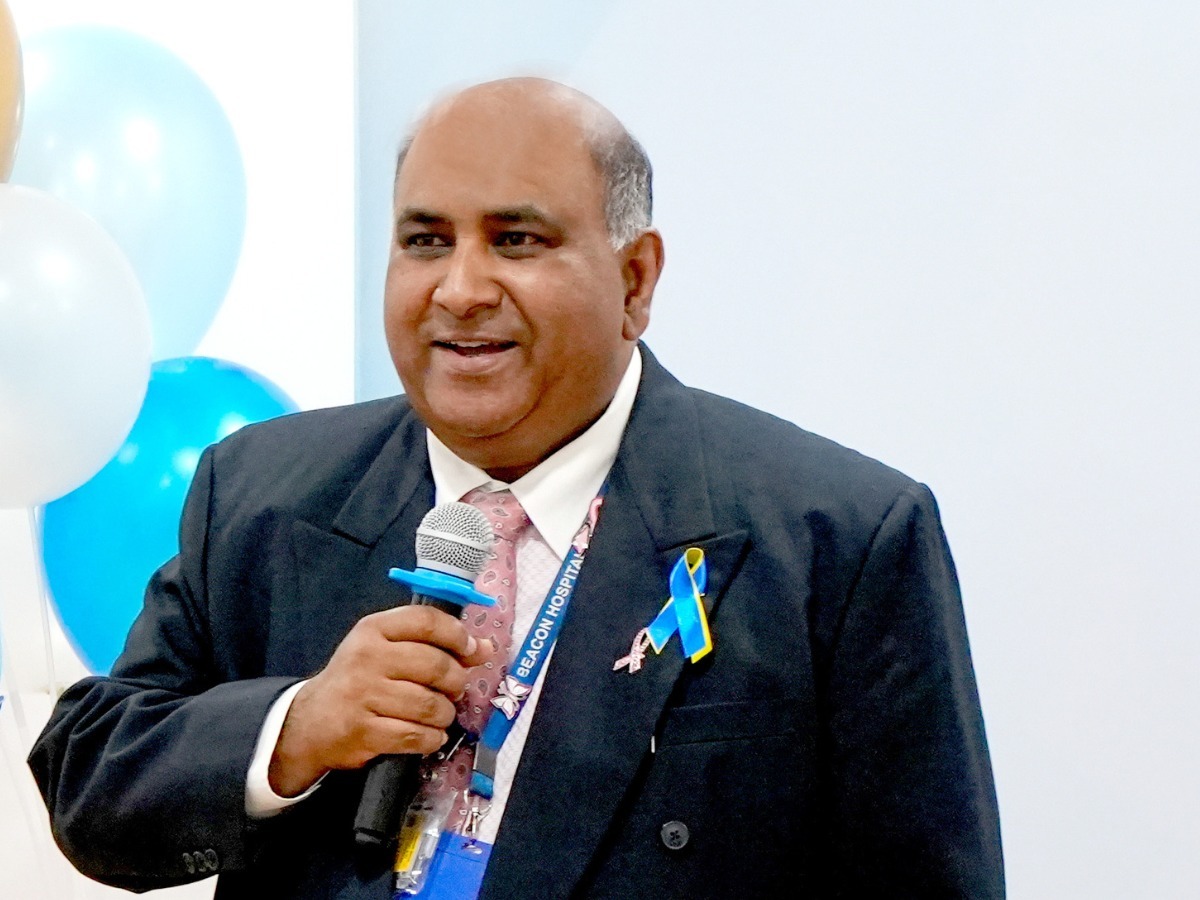
KUALA LUMPUR, Oct 22 — A senior oncologist has raised alarm over the growing interference of insurers and takaful operators (ITOs) in the medical decision-making process in private practice in Malaysia.
Dr Mohamed Ibrahim A. Wahid, a senior consultant clinical oncologist and medical director of Beacon Hospital, warned the country that such practices, if left unchecked, are putting patients’ lives at risk.
He said ITOs and third-party administrators (TPAs) have begun overstepping their roles by questioning clinical decisions and denying coverage for essential cancer drugs. One ITO has imposed “unreasonable” financial demands on private health care providers, all with the obejctive of curtailing medical claims.
“Insurance companies are crossing the line by interfering with patient care,” Dr Ibrahim told CodeBlue in an exclusive interview.
“They are not acting in the best interest of patients, who are their customers, and, in many cases, are harming patient clinical treatment outcomes.”
Unrealistic Discount Demands From ITOs, Withdrawal Of Cashless Facilities From Certain Doctors
Declining to name the ITO, Dr Ibrahim revealed that one insurer is demanding discounts as high as 30 per cent from private hospitals.
“Many hospitals cannot give that kind of discount because that essentially wipes out their entire profit margins. In some cases, that might even result in hospitals making net losses,” he told CodeBlue.
He explained that some hospitals are circumventing the situation by marking up prices to meet such demands, ultimately burdening other payers, particularly patients paying out-of-pocket.
Beacon Hospital, a cancer hospital in Petaling Jaya, Selangor, is part of the Asia OneHealthcare group that isn’t a listed company. Other listed hospital operators like IHH Healthcare Bhd and KPJ Healthcare Bhd recorded a 10 per cent decline and 34 increase in net profit respectively for the 2024 financial year.
Dr Ibrahim said an ITO even withdrew cashless facilities from doctors with high patient volumes, while retaining these for others, when the hospitals they practise at did not accede to the level of discounts demanded by insurers.
“There’s a widespread perception that doctors without cashless facilities are problematic — either overcharging or having questionable treatment practices.
“In reality, when an insurance company removes doctors in a hospital simply because the latter refuses unreasonable discount demands, it’s not just unfair; it’s a direct attack on the doctor’s professional integrity and years of earned trust with patients,” he said.
Dr Ibrahim expressed concern that such insurance practices could delay urgent care and restricting a patient’s basic right to access immediate treatment, let alone their freedom to choose the hospital or doctor of their choice.
“If I need to refer an existing patient with colon cancer for emergency surgery late at night, but the colorectal surgeon or the colorectal department doesn’t have a cashless facility, is that fair to the patient?” he asked.
He warned that insurance-imposed restrictions might force doctors to make decisions based on financial rules rather than clinical necessity, urging doctors and hospitals affected by such unjust policies to raise it to the relevant regulators.
Rising Hospital Costs: Escalating Prices Of Medical Equipment And Drugs, Utilities, Staffing Challenges
Dr Ibrahim explained that the cost of running a hospital in Malaysia has increased substantially due to inflation, rising energy tariffs, and surging prices of medical technology and drugs, besides health worker remuneration.
The senior consultant clinical oncologist pointed out that nearly three decades ago in 1997, he was able to purchase two linear accelerators, a CT scanner, a treatment simulator, two brachytherapy units, and a stereotactic unit for RM17.4 million to set up a radiotherapy unit in a university hospital.
“In 2019, upgrading just one machine cost nearly RM20 million.”
Tenaga Nasional Berhad’s new tariff scheme, which came into effect last July 1, caused a spike in the electricity bills of private hospitals, including Beacon Hospital.
Dr Ibrahim also highlighted a dramatic jump in the cost of cancer treatment in recent years.
“When I first started practising oncology, chemotherapy cost around RM6,000,” he told CodeBlue. “Today, RM6,000 is the cheapest chemo I can prescribe.”
He noted that modern cancer drugs can easily cost RM20,000 to RM30,000 per month; immunotherapy and targeted oral treatments for lung cancer are similarly priced.
The Beacon Hospital medical director also stressed fair remuneration for health care professionals, especially nurses, to ensure talent retention. “If we don’t pay them well, they will run to Saudi Arabia and Singapore. So how are we going to retain our nurses if we don’t pay them well?”
According to Dr Ibrahim, profits generated by private hospitals are typically reinvested to expand services, build new facilities in underserved areas, or purchase advanced medical equipment.
All these are to serve the community better, both in terms of treatment accessibility and higher precision to ensure better clinical outcomes.
Insurance Denial Of Lifesaving Drugs, Demanding Use Of Inferior Products To Cap Bills
Dr Ibrahim criticised insurers for questioning the use of standard-of-care drugs and denying coverage for established therapies.
“Everyone in the world has been using gemcitabine for stage four nasopharyngeal cancer. Yet they had the cheek to question, ‘Why are you using this drug?’.”
Dr Ibrahim, who is former president of the Malaysian Oncological Society, added that insurers have even refused to cover lifesaving medicines like Herceptin for HER2-positive breast cancer, despite decades of proven effectiveness.
“Insurance companies promise RM1 million or RM2 million coverage. Yet they refuse to pay for an RM100 drug like tamoxifen or hormone therapy for breast cancer,” he told CodeBlue.
“Without these therapies, cancer may return. This is not ‘maintenance treatment’; it is an essential part of the whole cancer treatment process.”
Dr Ibrahim further claimed that ITOs are pressuring health care providers to use cheaper medical products to cap the maximum size of a bill or bundled payments for certain common surgeries.
“Directly and indirectly, to achieve that, hospitals would need to substitute with cheaper inplants or consumables, so as not to exceed the insurer-self-imposed bill size, instead of using medical products that are otherwise clinically indicated in accordance to the patient’s condition,” he said.
“While other ITOs are still allowing claims according to patient’s insurance terms, these selective insurance companies are dangerously interfering with patient care. That is not acceptable.”
When a patient purchases their medical insurance and pays yearly premiums faithfully, they expect their insurance to function like a safety net during illness days. Instead, patients are often told that certain treatments are “not covered,” the hospital must “follow policy guidelines”, or that a treatment plan “requires insurer approval”, said Dr Ibrahim.
What this means, in practice, is that certain insurance administrators are starting to exert influence over clinical decisions — decisions that the oncologist said should be made solely between doctor and patient.
Call For Policy Reform, Patient-Centric Regulation
Dr Ibrahim urged policymakers and regulators to take decisive action to protect patients and doctors from insurance overreach.
“Countries like Singapore do not allow health insurers to interfere with medical treatment, unlike what is starting to happen in Malaysia,” he said, urging regulators to be more balanced and patient-oriented.
“Regulators must listen not only to insurers, but also to doctors and patients. As clinicians, we have a responsibility to provide the best possible care. It’s unfair to ask us to compromise treatment because insurers refuse to pay for lifesaving drugs or want to keep overall treatment cost low.”
Nonetheless, Dr Ibrahim emphasised that not all ITOs are bad actors. There are still insurance companies that stand by ethical practices — guiding patients responsibly, supporting their medical treatment needs, and ensuring they receive the care and entitlements promised under their policy terms.
“Clinicians, bound by ethical and professional obligations, frequently find their hands tied. A physician may recommend a certain course of treatment based on best medical evidence, but the insurer can deny coverage, limit access to specialists, or push for cheaper alternatives,” said Dr Ibrahim.
“In many cases, doctors are forced to adjust treatment plans not according to what is best for the patient, but according to what the insurance will approve.”
A nationwide CodeBlue poll among more than 850 specialists in private hospitals found that 99 per cent of respondents perceived insurer interference with their clinical decision-making.
Most specialist doctors described widespread “Deny, Delay, Revoke” insurance tactics used to deny or delay care, or revoke guarantee letters (GL) after treatment has begun.
Malaysia’s umbrella specialist body, the Academy of Medicine of Malaysia (AMM), has described the CodeBlue survey findings as illustrating perennial and possibly even “systemic” insurance interference with medical practice.
“This interference doesn’t just undermine patient care — it undermines trust in the entire medical system. It leaves patients wondering: if my doctor isn’t in charge, who is?” said Dr Ibrahim.


