

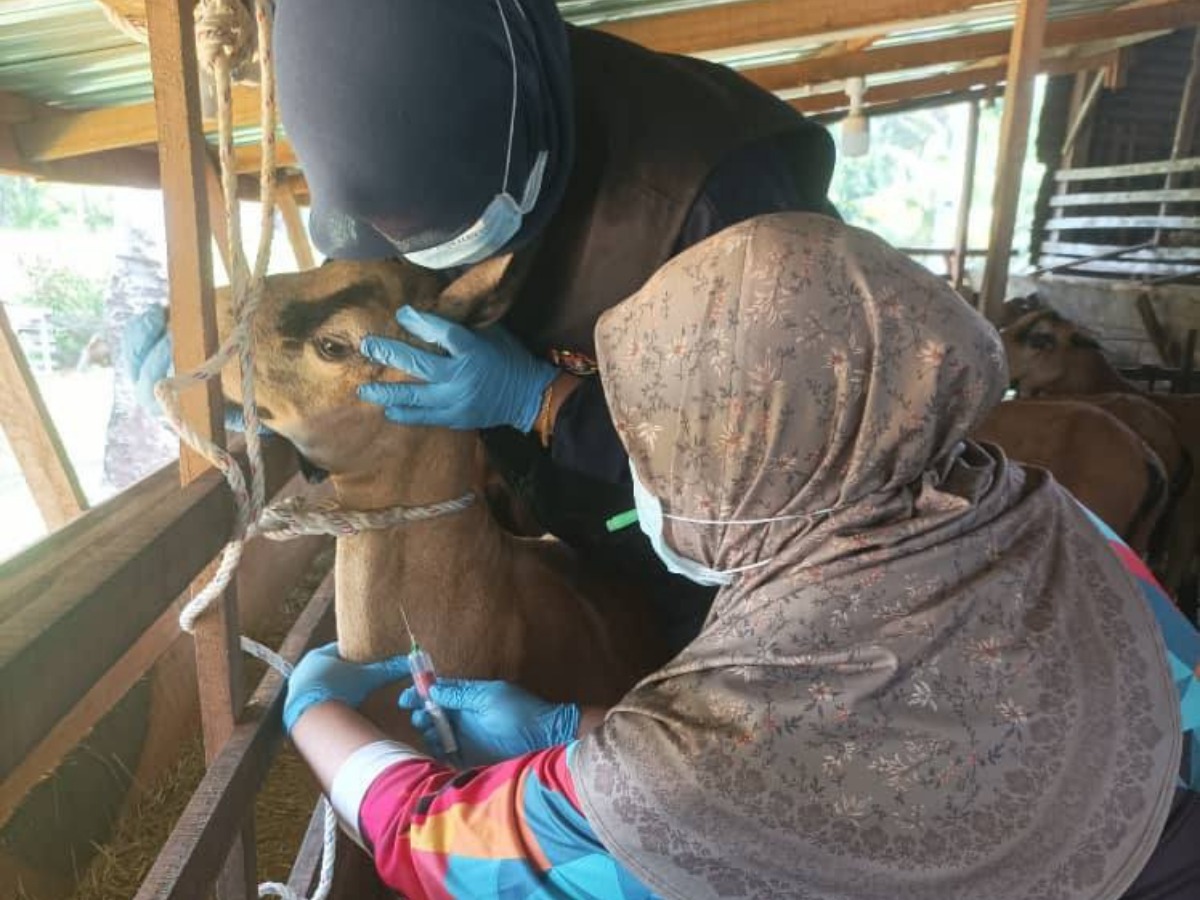
KUALA LUMPUR, August 25 — The Department of Veterinary Services (DVS) has confirmed that livestock transfer permits take between 28 and 42 days for unvaccinated animals to undergo foot and mouth disease (FMD) immunisation.
DVS explained that ruminants without livestock health records and whose source is unclear must undergo FMD vaccination, due to the risk of infection during the transfer process.
“Infectious disease can cause a huge impact on the livestock industry, particularly in Terengganu and in Malaysia generally,” said DVS in a statement last Friday.
Under the Animals Act 1953, unvaccinated livestock are quarantined and given two doses (P1 and P2) of the FMD vaccine between 28 and 35 days apart. These livestock can only be transferred 14 days after the P2 dose to ensure the highest level of immunity in the animals.
“This procedure is compulsory and has been mandated under the Requirements of Transfer of Animals and Animal Products Between and Within States in Peninsular Malaysia, Including the Federal Territory of Labuan that was enforced on December 1, 2023,” said DVS.
“During the period between P1 and P2 vaccination, livestock are kept at the owner’s premises until the livestock are suitable for movement to their destination.”
FMD is a severe and highly contagious viral disease of livestock, affecting cattle, swine, sheep, goats, and other cloven-hoofed ruminants.
DVS was responding to news reports about dozens of livestock farmers and traders who held a peaceful assembly at the Terengganu state DVS headquarters in Kuala Terengganu last Tuesday against a new eVetPermit system.
A cattle farmer told Kosmo! that a 42-day period was too long for blood tests and vaccination, saying that excessively long quarantine increased operational costs at about RM10 per day per cow, besides causing some of his livestock to die.
He claimed that previously, interdistrict livestock transfers only took a day, whereas interstate transfers took a week.
DVS explained that its new eVetPermit 3.0 system – which issues transfer permits for livestock and animal products and came into force on August 3 across the peninsula – simplified a few processes, but generally maintained the procedures, issuance period, and validity period of the permit as previously established.
Applicants are now able to apply for livestock transfer permits and submit supporting documents for verification online.
“This improved system can reduce the risk of transfer of livestock whose source and health status are unknown, therefore helping with infectious disease control among livestock at the state and national level,” said DVS.
The department said under the eVetPermit 3.0 system, which follows current livestock transfer requirements in the peninsula, transfer permits are issued between one and three working days for applications that fulfill the stipulated conditions.
A total of 424 permits were issued through the eVetPermit 3.0 system as of August 17, including 385 permits involving livestock transfers within Terengganu and 39 involving interstate transfers.
“Therefore, allegations about delays are baseless.”
The Terengganu state DVS conducts FMD vaccination at between 15,000 and 16,000 doses a year. Until last July, a total of 11,098 FMD vaccine doses were given to local ruminant livestock in Terengganu.
“Therefore, the transfer of local livestock that have already been vaccinated for rearing purposes no longer need to undergo P1 and P2 vaccination that usually takes between 28 and 42 days before livestock transfers can be conducted,” said DVS.
The department urged industry players to comply with vaccination programmes to ensure expeditious livestock transfers when necessary, in line with transfer requirements aimed at reducing the risk of livestock infection.
Many livestock farmers criticised DVS’ statement, accusing the department of making their lives difficult. One wrote in a Facebook comment that farmers could only make a profit of RM200 to RM300 from selling cattle. “If costs are RM10 per day, multiplied by 42 days, that amounts to RM420. So where is our profit? Where are our rights as farmers?”


