

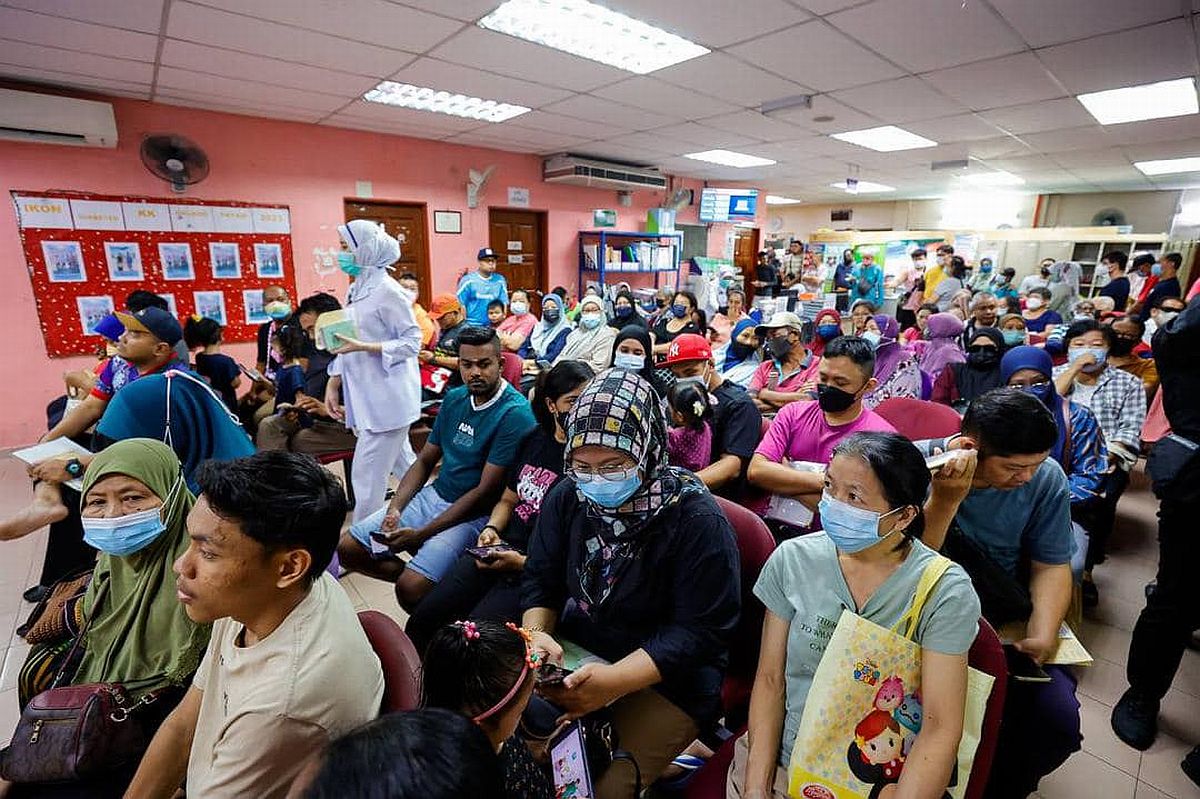
KUALA LUMPUR, March 21 — A total of 91 government health clinics (klinik kesihatan) in Malaysia are operating beyond their designated capacity, with some handling patient loads meant for higher-tier facilities, Health Minister Dzulkefly Ahmad said.
Malaysia has 1,100 government health clinics, classified into tiers based on patient volume. While the highest-tier facilities are designed to accommodate the largest caseloads, Dzulkefly said 91 clinics are now seeing more patients than they were built for. Some lower-tier clinics, he added, are functioning at capacities similar to higher-tier facilities.
Government health clinic tiers:
- Type 1: More than 800 daily visits (73 clinics)
- Type 2: 500 to 800 daily visits (103 clinics).
- Type 3: 300 to 500 daily visits (138 clinics)
- Type 4: 150 to 300 daily visits (239 clinics)
- Type 5: 100 to 150 daily visits (158 clinics)
- Type 6: 50 to 100 daily visits (158 clinics)
- Type 7: Fewer than 50 daily visits (231 clinics)
Of the 91 clinics operating over capacity, 13 Type 2 clinics, built for 500 to 800 daily patient visits, are now handling patient volumes comparable to Type 1 facilities, which see more than 800 visits per day.
Meanwhile, 67 Type 3 clinics, meant for 300 to 500 patient visits, are operating at workloads similar to Type 1 and Type 2 clinics. Several Type 4, 5, 6, and 7 clinics are also facing higher-than-expected demand.
“The construction of older health clinics did not follow standard guidelines but was based on local population needs and the available services at the time,” Dzulkefly said in a written Dewan Rakyat reply last February 13 to Puchong MP Yeo Bee Yin. Malaysia’s earliest health care facilities were hospitals, with Penang General Hospital established in 1854.
“Since 1999, the construction of new government health clinics with standardised designs has been implemented under the Seventh Malaysia Plan (RMK7). The classification of health clinics under standard design plans, from Type 2 to Type 7, is based on set criteria, including local population size, average daily patient visits, and scope of services,” Dzulkfely said.
Under the RMK7 model, 221 new clinics have been built nationwide, but many still face capacity issues.
To address this, the Ministry of Health has introduced the Health Facility Master Plan 2023-2045 to guide the development of new facilities based on projected health care needs.
The government’s strategy includes replacing outdated clinics that are no longer viable for upgrades, constructing additional blocks at clinics with available land, and building new clinics in underserved areas. These measures take into account population growth, existing clinic workload, and infrastructure accessibility, Dzulkefly said.


