

KUALA LUMPUR, Feb 17 — A coalition of Sarawak-based civil society organisations (CSOs) has called for the decentralisation of health care governance to regional and district levels and proposed revitalising primary health care to address the state’s unique challenges.
The Sarawak CSO-SDG Alliance Health Thematic Group, in its report “Making Healthcare Reform Work for Sarawak”, argued that decentralising health care from federal to regional, divisional, and district levels would empower local authorities in Sarawak to design services that cater to the needs of their communities.
This is key to achieving universal health coverage (UHC) and the United Nations Sustainable Development Goals (SDGs) by 2030.
“Health care governance should be decentralised from the central government to regional, divisional, and district levels closer to the people,” the report stated.
“This shift involves granting more power and authority to local levels while ensuring strong cooperation in implementing national policies.”
The Sarawak CSO-SDG Alliance is a coalition of civil society organisations working to advance the UN SDGs in Sarawak. The report was prepared by their Health Thematic Group, which includes experts, non-governmental organisations (NGOs), community organisations, and advocacy groups focused on health.
The report noted that Sarawak’s vast landmass, nearly the size of Peninsular Malaysia, combined with its low population density of 23 people per square kilometre, compared to the national average of 99, creates logistical challenges for health care delivery.
Poor road infrastructure, limited internet connectivity, and a high percentage of rural residents – 45.3 per cent compared to the national average of 24.4 per cent – exacerbate these difficulties.
“People in rural areas face high travel costs, adding to their financial burden, especially those with low incomes and chronic conditions. The poorest residents bear the highest out-of-pocket (OOP) expenses due to long travel distances, paying extra for food and accommodation, and the greater loss of income compared to urban residents.”
The report cited research from India indicating that indirect health care costs often overshadow direct medical expenses, with about 96 per cent of OOP cancer-related spending being non-medical, covering transportation and other logistical expenses.
Strengthen Primary Health Care, Revitalise Village Health Promoter Scheme
Of Sarawak’s 272 health clinics, 206 are in poor condition. More than half lack reliable internet access, 30 per cent have no treated water, 26 per cent are not accessible via tarred roads, and 12 per cent lack 24-hour electricity, the report noted.
Rural clinics are also often understaffed and have no resident doctors. In one example cited in the report, a clinic serving 2,000 people spread across seven settlements and two schools is managed by just two medical assistants.
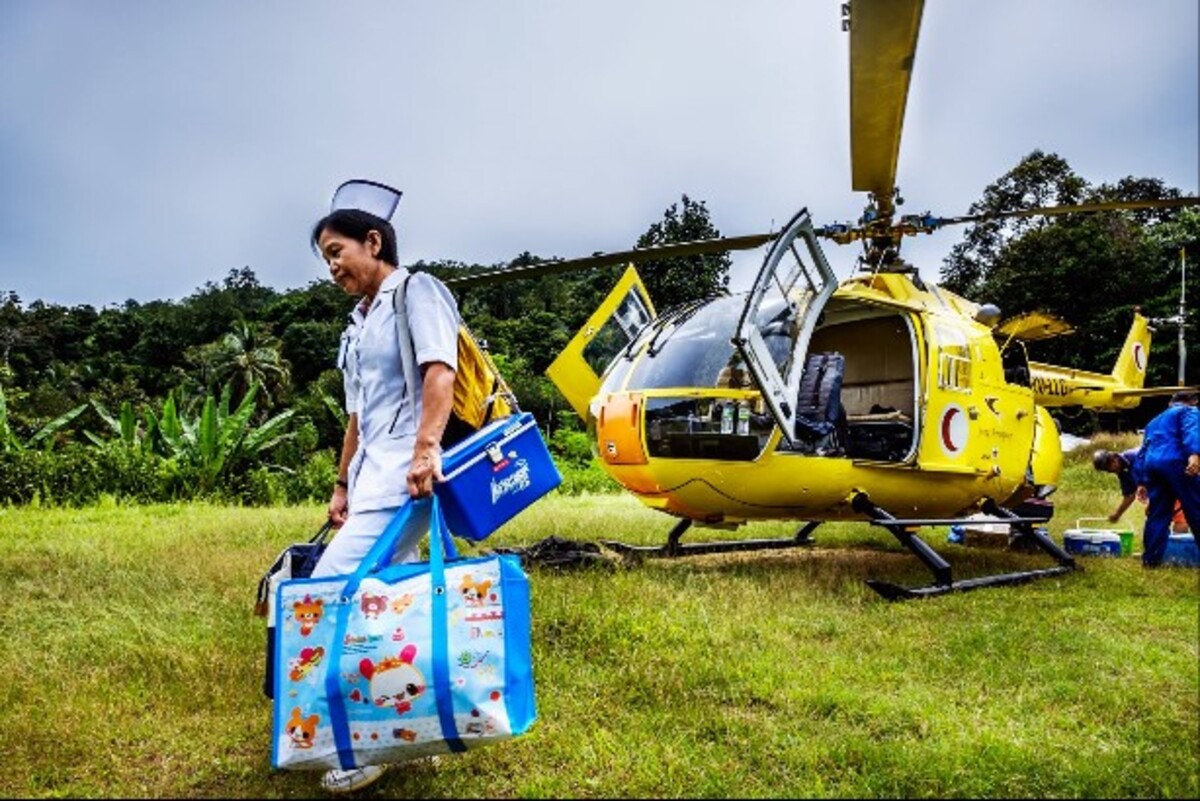
The coalition further flagged the decline of vital services such as the Flying Doctor Service, which provides medical care and emergency evacuation to remote villages. Budget cuts and safety concerns have compromised this service, leaving underserved communities at risk.
The Sarawak CSO-SDG Alliance Health Thematic Group recommended revitalising the Village Health Promoter (VHP) programme, a community health initiative introduced in 1983 by the Sarawak State Health Department.
The programme, which once delivered basic health care in remote areas, has been severely scaled back due to funding constraints. “Villages with VHP scheme saw improved health outcomes, including lower disease incidence and better immunisation coverage,” it said.
The group proposed transforming the VHP scheme into a modern Sarawak Community Health Worker (CHW) programme tailored to contemporary needs.
By recruiting community health workers from within their communities, the programme could ensure cultural understanding and foster acceptance. This model, the report suggested, could even be adapted for urban settings, such as Kuching, where certain neighbourhoods share social dynamics with rural areas.
The group also recommended increasing and ring-fence funding for mobile health teams and CHWs. “In Sarawak, some district hospitals function as primary health care centres in the absence of clinics. Therefore, it is essential to ring-fence funds for travel and training to ensure accessible health care, elevate standards, and monitor implementation.
“These funds, often the first to be cut during budget reductions, are vital for reducing health care inequalities and must be safeguarded,” the report stated.
Decentralisation To Regional And District Levels
The coalition proposed a two-tiered decentralisation approach. At the regional level, it recommended granting Sarawak greater health autonomy, including control over budget decisions, resource allocation, and infrastructure development.
“This framework should promote both vertical and horizontal integration of health services,” the report states. It added that seamless communication and coordinated planning between hospitals and primary health care providers will enable timely delivery of care and smooth transitions for patients.
“For instance, granting state health departments the autonomy to manage human resource allocation, as well as control over budget decisions for repairs, renovations, and asset acquisitions at health facilities, would greatly improve operational efficiency.”
At the divisional and district levels, the report suggests leveraging Sarawak’s administrative structure, which divides the state into 12 divisions and numerous districts. This model, the group noted, proved effective during the Covid-19 vaccination campaign, which saw Sarawak achieve an 80 per cent vaccination rate ahead of schedule in 2021.
“This model can be leveraged to extend services beyond central hubs like Kuching through inter-agency collaboration and transparent data sharing,” the report added. It also proposed designating district hospitals as training centres for medical officers to alleviate pressure on Sarawak General Hospital (SGH).
The doctor-to-population ratio in Sarawak is significantly below the national average, with one doctor for every 682 people compared to one for every 454 people in Malaysia overall. A quarter of Sarawak’s districts lack dental clinics, while half do not have hospitals equipped with specialist services.


