

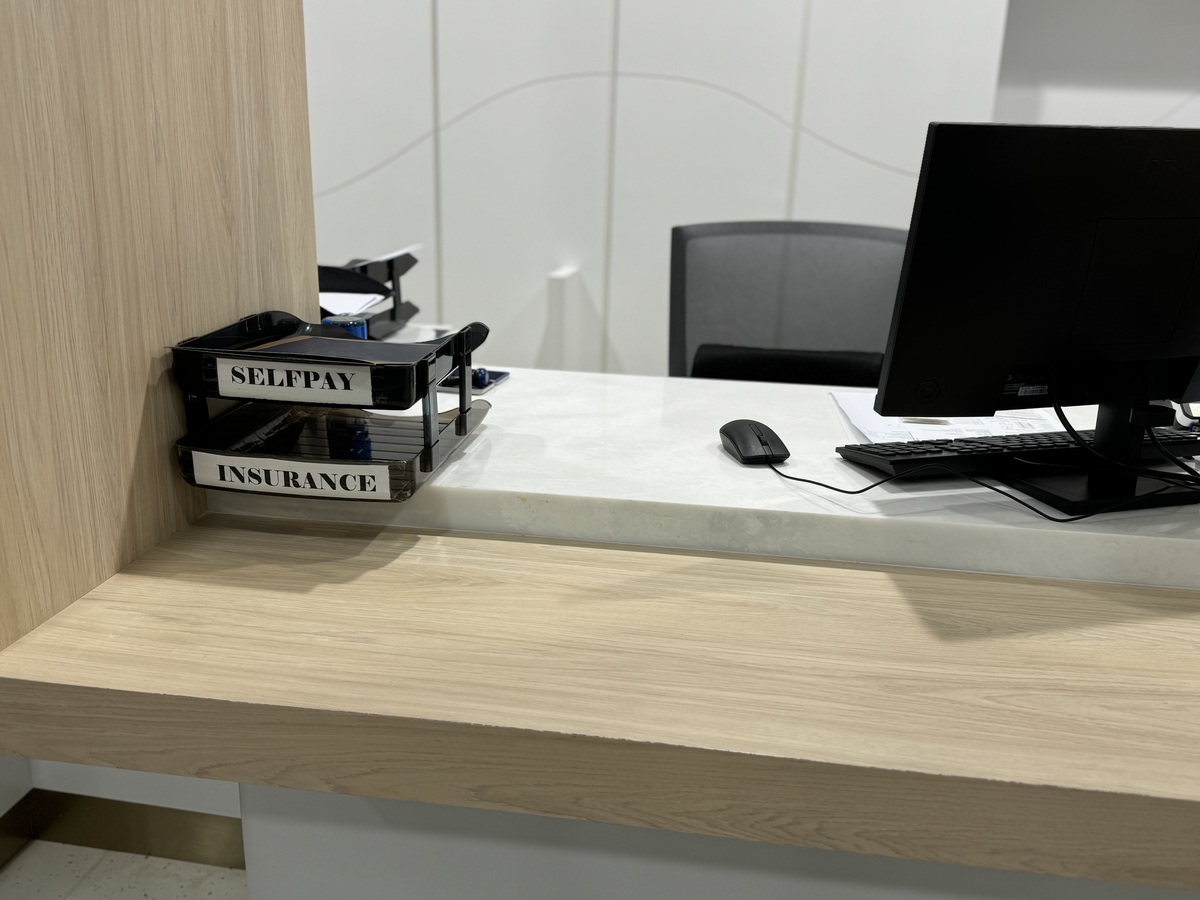
As the Ministry of Health (MOH) mulls plans to roll out the Diagnosis-Related Groups (DRG) system, it would be pertinent to first assess whether the quality, safety, efficiency, timeliness, and cost-effectiveness of health care of the paying Malaysian public (whether out of pocket or insurance) will be adversely compromised and shortchanged.
First and foremost, we must remember that the typical Malaysian only opts to see the specialist in private medical practice as their last resort. This is because an appointment with a specialist in the MOH would probably mean a few months of waiting, unless one knows a VVIP who can help them jump the queue.
Patients usually would have earlier sought medical care with the private General Practitioner (GP), private Family Physician (FP), or the Emergency Room (ER) doctor on call in the public health care facilities. They would only consult at a private hospital when their symptoms persist, and their condition is not improving.
That is why specialists in private medical practice are valuable partners in the health care system, complementing the MOH’s services in the public sector.
Their expertise is earned through decades of money-can’t-buy experience and wisdom, underscored by a dedication to their line of expertise through continuous learning of advancements in investigation techniques down to the molecular level and new modalities of treatment, promising better outcomes and oftentimes cures.
One case in point is a pair of twins who were born extremely premature (three months early) and with extremely low birth weight (less than 1,000 grams).
The sicker twin was managed in our private hospital Neonatal Intensive Care Unit (NICU), since she was too sick to be transferred. The more stable and bigger twin was transferred to the nearby NICU of an MOH hospital.
The smaller and sicker twin managed at our centre is now a 24-year-old graduate in entrepreneurship. She is temporarily assisting her father in retailing kebaya, cheongsam, batik etc in Malacca.
Sadly, her initially healthier twin in the MOH hospital acquired a nosocomial, multiple drug resistant (MDR) infection in the overcrowded NICU. She developed necrotising enterocolitis (NEC) and died soon afterwards.
This real-life example underscores how patients who undergo treatment by specialists are often grateful when specialists accurately diagnose an illness, leading to proper care and cure, preventing further injury to vital organs or maybe even saving their lives, despite a higher cost.
The Value Of Value-Based Care (VBC)
The reality for most private hospitals is that patients often present with complex conditions, and a plethora of comorbidities (non-communicable diseases [NCDs] and re-emerging communicable diseases). mandating a more thorough, time-consuming history taking, examination and thoughtful investigations by the private specialist.
Thanks to the training, expertise, exposure, and experience of the specialists in private medical practice, it is not uncommon to detect an undiagnosed disease or pick up a malignant tumour early to offer a potential cure. Unfortunately, late diagnosis is still a prevalent issue, with organ injury suffered in the interim.
The ideal situation is an increase in health literacy, as early and exact diagnosis would put in place the correct and appropriate treatment strategies, which in turn would enhance the likelihood of best health outcomes for the private out-of-pocket (OOP) paying or insured patient.
Currently, many government-linked companies (GLCs) – e.g. FGV Holdings, Telekom Malaysia Berhad, FELCRA Berhad, and Tenaga Nasional Bhd – and government-linked investment companies Companies (GLICs) – e.g. Employees Provident Fund (EPF), Khazanah Nasional Bhd, Kumpulan Wang Amanah Pencen (KWAP), Lembaga Tabung Angkatan Tentera (LTAT), Lembaga Tabung Haji (LTH), and Permodalan Nasional Bhd (PNB) – utilise the services of medical insurance providers (MIP) or Medical Health Insurance Takaful (MHIT) for their employees.
This enables their employees to enjoy the privileges of the 3Cs of Value-Based Care (VBC) provided by private specialists, which include:
- Capability to perform normal duties prior to hospitalisation.
- Comfort levels encompassing management of pain, distress levels and anxiety.
- Calm when receiving care, knowing that their health care provider has their best interests at heart.
Enhancing Work Processes Towards VBC
Despite the obvious benefits, it would be daunting to implement VBC in MOH public facilities due to chronic issues of “understaffed, underpaid, overworked, and overcrowded (UUOO Syndrome)”.
This is where Rakan KKM could possibly be a game-changer towards VBC. It is our earnest hope and prayer that Rakan KKM would be part and parcel of the remedial actions of a wholesome blueprint to reset and transform MOH, as envisaged by the minister and his preceding Health Advisory Council in the Sihat Bersama 2030 programme.
In the quest for quality, safety, efficiency and cost-effectiveness, virtually all major private hospitals are either fully accredited by the Malaysian Society for Quality in Health (MSQH) and/or the Joint Commission International (JCI), the worldwide leader in quality health care improvement, which includes over 350 standards.
It would be a positive direction towards VBC if the MOH considered accreditation by the MSQH or the JCI to ensure its processes meets the benchmarks of best health care ambience, to enhance best medical practices and achieve best health outcomes captured in VBC and Universal Health Coverage (UHC).
DRG And Insurance
The DRG system emerged recently as a possible option to mediate medical inflation when insurance companies announced plans to increase medical premiums.
Insurance firms hike their insurance premiums virtually every year, raking in billions of dollars from paying clients. From a bird’s eye view, they would be the only stakeholder who will gain a financial windfall from the DRG system.
Medicine is neither a perfect art nor science. Insurance firms have abused this unpredictability of disease to refuse or terminate insurance cover for both medical and surgical patients. These antics are commonly known as the 3Ds:
- Delay: Citing reasons such as insufficient evidence, missed deadlines, or policy exclusions to delay the processing of claims to frustrate policyholders into abandoning their claims.
- Deny: To save money by denying legitimate insurance claims.
- Defend: If the claimant is undeterred, the MIP resorts to defend against the claims in court.
DRGs would inadvertently result in private hospitals focusing on less complex cases to optimise efficiency, leaving more complicated and resource-intensive cases to public hospitals. This could increase the pressure on Malaysia’s public health care system.
Sick and complex patients with multiple comorbidities who might immediately benefit from the services of a highly competent private specialist, would likely be shunted to MOH, where it will take time to see the appropriate government specialist, risking the patient’s short and long-term outcomes.
Worse, patients may be treated halfway and, due to the time framing of DRG packages, are then transferred to the MOH or university hospitals when the DRG package duration is busted or when complications set in.
The biggest losers would again be the MOH, who would be burdened with chronic and complex cases in patients with multiple NCDs. This happens when their condition does not fall within any DRG, and private hospitals hesitate to accept their case in the event their insurance is being declined due to the higher risks of complications, potential for litigation, and poor financial returns.
In our humble opinion, mandating private hospitals to abide by the presently ill-thought, un-customised, and data-lacking DRG system will be playing into the hands of insurance firms. Unless coupled with robust VHC components, the current DRG system will also backfire on the maiden Rakan KKM project.
In their genuine efforts to tackle medical inflation and the sufferings of the rakyat due to exorbitant hikes in insurance premiums, the government, Bank Negara Malaysia, and the MOH must take a more holistic overview of the health care system and not skew towards benefitting insurance companies alone.
Dr Musa Mohd Nordin is a paediatrician, Chan Li Jin is a health activist, Dr Ahmad Faizal Mohd Perdaus is a chest physician, and Dr Rajeentheran Suntheralingam is a urologist.
- This is the personal opinion of the writer or publication and does not necessarily represent the views of CodeBlue.


