

KUALA LUMPUR, Nov 15 — Ordinary citizens and medical experts say that paying for dengue vaccination is worth the investment to prevent hospitalisation and loss of work productivity or school absenteeism.
Dengue fever remains a significant public health challenge in Malaysia, particularly in states like Selangor that account for over half of the country’s dengue cases and nearly a quarter of deaths from dengue.
A dengue vaccine, Qdenga, is available in private health care facilities around the country, with prices ranging from about RM400 to RM500 for two doses that are given three months apart.
The dengue vaccine has been approved by regulators in the Ministry of Health (MOH) for all individuals aged four years and older.
Dengue Vaccine ‘Affordable’, Trust In MOH And Science
Galen Centre for Health and Social Policy chief executive Azrul Mohd Khalib, who took the first dose of the dengue vaccine last September, said he got vaccinated to protect himself from the possibility of getting infected with dengue and coming down with serious illness and needing to be hospitalised.
“Dengue is endemic in Malaysia. It might not be widespread in the area you are living in, but you cannot be sure about the areas that you visit, work, or go to,” Azrul, who lives in Kuala Lumpur, told CodeBlue.
“If I can use a vaccine to prevent from being seriously ill due to a vaccine-preventable disease, I am going to get it. The vaccine has been proven to work, and is safe and available in Malaysia.”
Azrul also characterised the RM400 he paid for the dengue vaccine as an “investment.”
“Pragmatically, RM400 when compared against the direct cost of treatment and hospitalisation, which could run in the thousands of ringgit and the indirect cost of loss of productivity and earnings, is a bargain.”
CodeBlue also spoke to five parents, all of whom got their children vaccinated with the dengue shots that they deemed affordable.
Sharm Ragunathan, who lives in the Klang Valley, got her two teenage sons immunised against dengue. She related how her 15-year-old son was down with high fever a few months ago and had to be tested to rule out dengue infection. Coincidentally, there was an increase in dengue and influenza cases at the time.
“I observed that both my kids had friends who recently had dengue,” Sharm told CodeBlue, when asked why she opted to have her adolescent children vaccinated against dengue.
“[The vaccination is] to help prevent any other mishaps and admissions again. Especially being school-going kids, we thought it is best to take precautions and safety measures. I also noted that thus far, the vaccine seems safe and it helps to reduce the chances of being infected and transmitting to another. I came across an article some time back.
“Both my sons (age 15 and 13) had taken the vaccine on the same day, i.e. some time in September 2024. Thankfully, both appear to be fine.”
Zulaikha – who lives in Petaling Jaya, Selangor – said she chose to vaccinate her five-year-old son because it was essential to prevent dengue, especially when living in a tropical country.
“The vaccine has been approved by the MOH, an institution I trust for its credibility,” Zulaikha, who only provided her first name, told CodeBlue.
“I want the best for my child. With medical science continually advancing, it’s important to make informed decisions that align with these developments,” she said.
Chong Ai Yee – the mother of a six-year-old boy in Damansara – said the price of the dengue vaccine is affordable and acceptable for its benefits, so she had her son vaccinated following the advice of his doctor.
Sarina from Kuala Lumpur, who vaccinated her four-year-old daughter, shared the same sentiment.
“I was strongly advised by my doctor to get the dengue vaccine.”
Low Yong Fu, the father of a nine-year-old son in Petaling Jaya, explained why he got his child vaccinated: “This can help my child have a higher chance to avoid dengue.”
But there are also suggestions for government assistance to make the dengue vaccine more affordable for all Malaysians.
“While I recognise the value of the vaccine, the price point is relatively high for the average individual,” said Zulaikha.
“It would be beneficial if federal funds could be allocated towards subsidising this cost, making the vaccine more accessible to a wider population. Such support would not only benefit individuals but also contribute to the overall wellbeing of the country.”
CodeBlue also spoke to two Malaysians who were recently admitted for dengue in private hospitals in Selangor.
A 62-year-old man, who was hospitalised last June for four days, said his hospital bill for dengue ran up to more than RM7,500; it was fully covered by insurance. Three-day hospitalisation of a 34-year-old man for dengue last October cost him about RM5,000, also fully covered by insurance.
Study Shows ‘Substantial’ Economic Impact From Dengue
A 2022 systematic literature review by Sazaly Abu Bakar et. al on the epidemiology and costs of dengue in Malaysia found “substantial” economic impacts from dengue, including the societal impact of lost work (7.2 to 8.8 days) and school days (3.2 to 4.1 days) due to dengue.
“The rising incidence and high cost of dengue, coupled with overlapping diseases, will likely result in further pressures on the health care system. To appropriately mitigate and control dengue, it is critical to implement integrated strategies, including vaccination, to reduce the burden of dengue,” researchers wrote.
According to the latest MOH dengue epidemiology report, a total of 111,250 cases were reported this year up till the 44th epidemiological week (October 27 to November 2), up 10 per cent from 100,936 cases reported in the same period in 2023.
A total of 102 deaths from dengue fever complications were reported this year up till Epid Week 44, an increase of 31 per cent from 78 fatalities recorded in the same period last year.
Prof Dr Sharifa Ezat Wan Puteh from Universiti Kebangsaan Malaysia (UKM) – one of the co-authors of the 2022 paper on dengue in Malaysia – noted that approximately 40 per cent of the annual US$8.9 billion (RM39 billion) global economic burden from dengue is due to productivity costs.
Productivity costs are the costs associated with productivity loss from both paid and unpaid work that results from illness, treatment, or premature death.
“The average reported number of days lost from a dengue episode occurring in a child ranged between 3.9 and 11.4 days for hospitalised episodes, and 0.7 to 4.3 days for outpatient episodes.
“The reported number of days lost from a dengue episode occurring in an adult ranged from 5 to 31.9 days for hospitalised episodes, and 4.0 to 7.2 for outpatient episodes,” Dr Sharifa Ezat told CodeBlue.
On the cost of dengue vaccination, Dr Sharifa Ezat said: “This cost borne by the consumer is considered the cost that he or she must forgo, in the anticipation that the benefits (avoidance of disease, death, loss of productivity, and risk of catching the disease) are higher than this capital cost paid out.”
She, however, expects the government to possibly provide either partial or full subsidies for dengue vaccination to protect those who are most at risk, namely children.
Dengue Vaccine 84% Effective Against Hospitalisation
Dr Zulkifli Ismail, chairman of the Dengue Prevention Advocacy Malaysia (DPAM), said the highest incidence of disease (morbidity) and death (mortality), especially mortality, from dengue in Malaysia occurs in the productive working ages of 20 to 40.
The current dengue vaccine has been shown to be 84.1 per cent efficacious against hospitalisation at 54 months.
“All individuals, unless there are specific contraindications, are encouraged to get two doses of this dengue vaccine,” Dr Zulkifli told CodeBlue.
“The dengue vaccine protects against getting severe dengue and admission to hospital due to dengue. These events result in loss of productivity, school absenteeism, affect overall activity and wellbeing, and disrupt school and learning. Admission into hospital predisposes one to hospital-acquired infection.
“It’s not just children who need the vaccine; young adults need it too because they are currently the most affected statistically in our country and neighbouring Thailand.”
Economic Cost Of Dengue In Malaysia Estimated At RM456 Million Annually
Dr Musa Mohd Nordin, a consultant paediatrician at KPJ Damansara Specialist Hospital, said a reduction in dengue cases would alleviate pressure on the health care system and reduce overall economic costs associated with the disease.
“A conservative estimate of the national cost of dengue illness in 2009 was RM196 million per year (i.e. RM7 per capita),” Dr Musa told CodeBlue.
“The cost of dengue prevention and control in 2018 was RM260 million per year. The economic cost of dengue is approximately RM456 million per year, which is burdensome.
“From the individual perspective, the dengue vaccine would help prevent one from getting dengue and if there is a breakthrough dengue illness, the vaccine protects one against the more severe forms of dengue which may threaten one’s life.”
According to Dr Musa, Selangor bears the highest dengue burden in the country, accounting for 51 per cent of total cases and 23 per cent of deaths nationwide.
About 75 per cent of Malaysia’s dengue hotspots are located in the country’s most developed state, as well as 47 per cent of active dengue outbreak localities.
“Adolescents and young and mature adults between 11 and 40 years old are the most susceptible groups for contracting dengue infection in Selangor. These groups account for 50.2 per cent of the total estimated population in Selangor in 2023. They are the economically productive age group and are among the most vulnerable for dengue infection,” said the paediatrician.
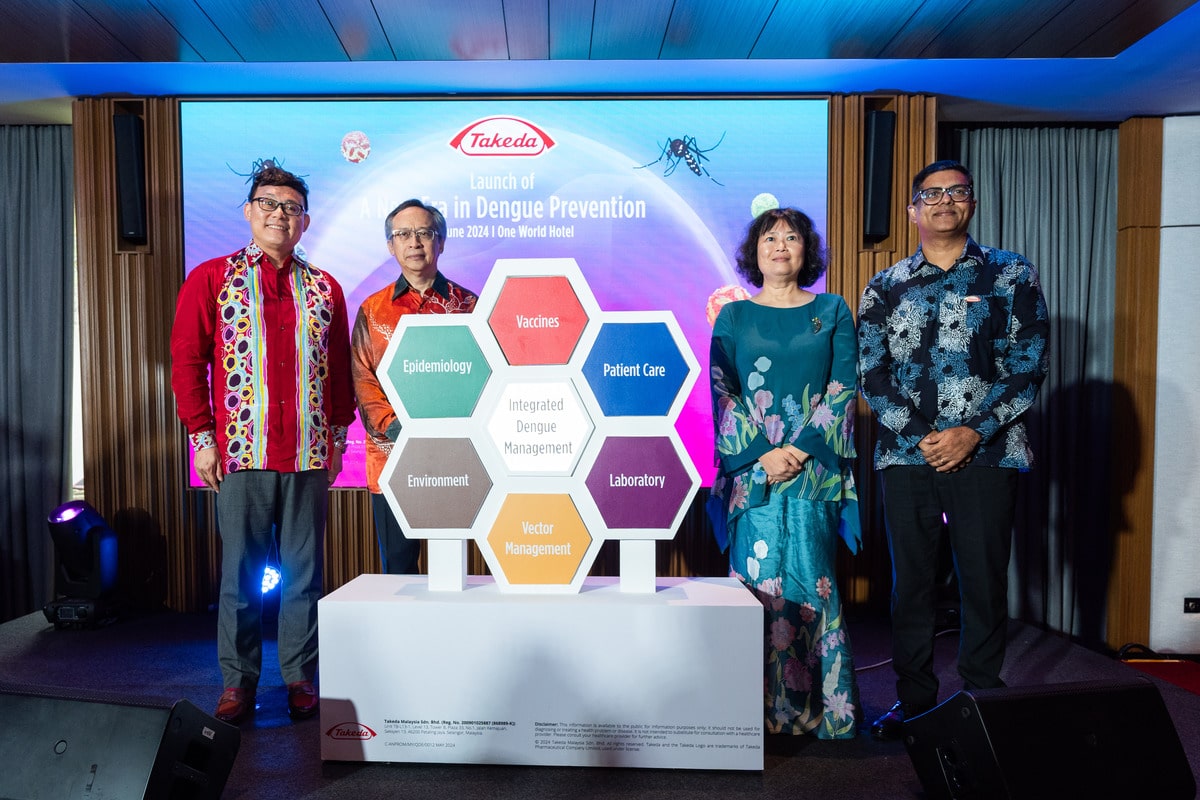
He said health policies that incorporate vaccination as part of the integrated management strategies (IMS) for dengue prevention and control would be economically valuable and sustainable.
“In combination with other components of the IMS, the dengue vaccine would effectively prevent and control dengue, reduce the burden of dengue-related hospitalisations, and is the right direction towards zero dengue deaths.”


