

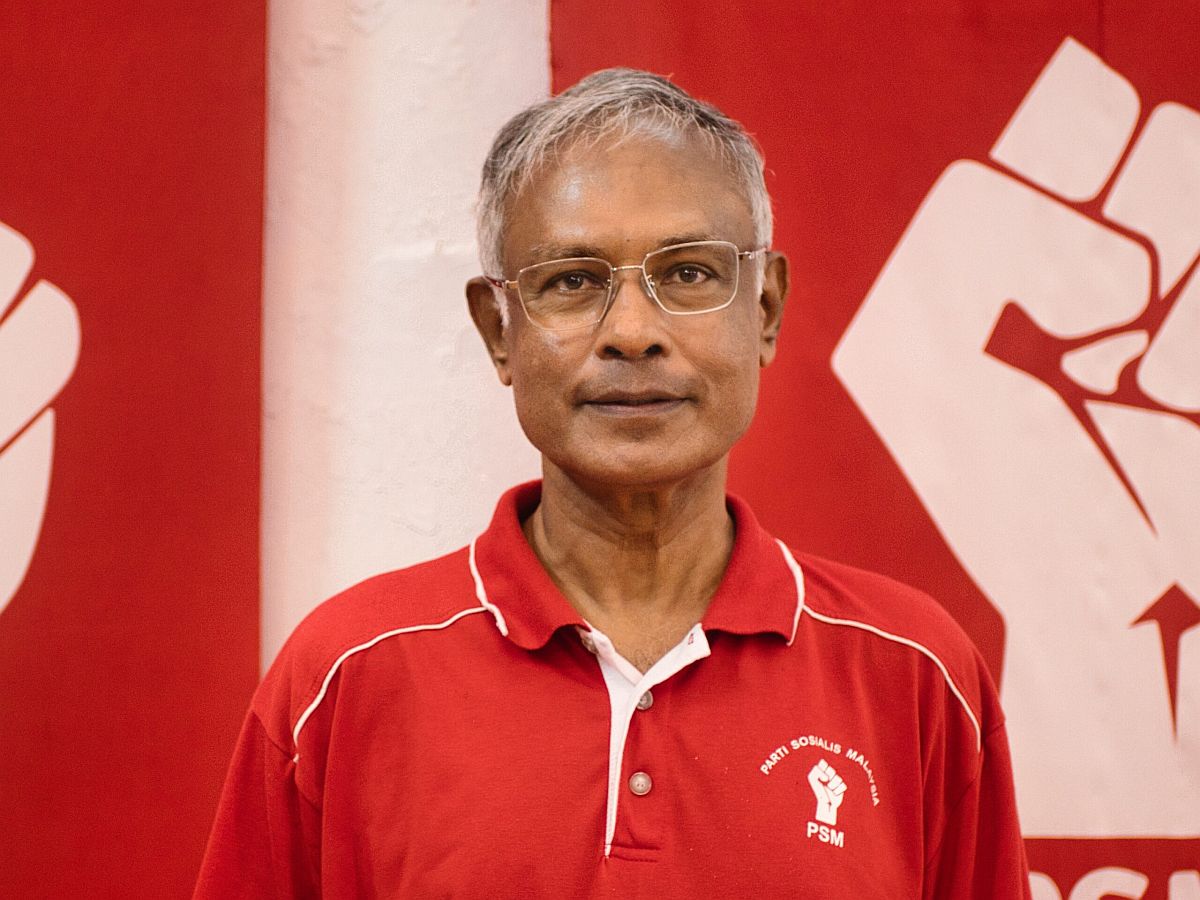
Parti Sosialis Malaysia (PSM) is extremely disappointed to hear from the Health Minister Dzulkefly Ahmad that the Madani government is thinking of opening private wings in government hospitals around the country under a new programme termed RakanKKM.
The previous avatar of this retrogressive plan – then termed the Full Paying Patient (FPP) scheme – was first announced by the then Barisan Nasional government in 2007.
PSM then rallied a coalition of NGOs and activists to object to this plan by organising a series of protests, including at the four government hospitals (in 2011) that were selected to expand this scheme.
These PSM-civil society protests resulted in the deferment of any further implementation of the FPP scheme for a couple of years, but after that, the government implemented the scheme without fanfare in 11 general hospitals across the country.
PSM rallied people against the FPP scheme because we genuinely felt that it would be detrimental for the ordinary citizen. The problem with government hospitals is that we do not have enough senior and experienced specialists to treat more complicated cases and to train younger specialists.
Approximately 75 per cent of the specialists with more than 10 years of experience post specialisation are in private hospitals that have mushroomed across the country, leaving only 25 per cent of this group of senior specialists in government hospitals where, until now, more than 75 per cent of the in-patients are being treated, and the new generation of specialists are being trained.
The chronic lack of experienced specialists translates into very long waiting times for patients with complicated conditions, delays in diagnosis and treatment, misdiagnoses, inadequacy of training programmes for younger doctors trying to specialise, and more stress for junior doctors who have to handle heavy patient loads without adequate backup.
This is why we protested against the FPP scheme in 2011.
Its surreptitious implementation in 11 hospitals in the years that followed has demonstrated very clearly that our apprehensions about the FPP scheme are largely correct.
The FPP scheme allows senior doctors to see private patients after office hours in government hospital premises, and charge them private rates.
Many senior government specialists partook in the FPP judiciously, and limited their private patient time to less than 10 hours per week. But there were a significant number who expended excessive time to seeing their private patients.
These over-enthusiastic specialists were able to earn more than twice their government salaries through this scheme. But this had a deleterious effect on the morale of the other specialists who had to bear the responsibility of looking after ordinary, “non-paying” patients. It also affected training of young specialists.
If you dig a little deeper, the FPP scheme actually creates a serious conflict of interest for the specialists who participate in it. Patients will only come to the FPP clinics if the waiting list in the free public clinic is too long and the service there is a little “suspect”.
One of the responsibilities of senior government specialists, who are mostly heads of their respective departments, is to improve their unit’s performance – in terms of waiting time, competence of the junior specialists in their department, etc.
But a better-run and more efficient public clinic would mean less patients for the FPP clinic.
We know, with certainty, that the Ministry of Health (MOH) has asked the hospitals implementing the FPP scheme to carry out internal audits regarding the impact of the scheme on patient care, junior doctor training, and the morale of doctors. We have heard that many of these internal audits are quite critical of the scheme, having identified numerous shortcomings.
Has the current Health Minister taken a look at these internal audits? Perhaps he should, and if they aren’t as bad as PSM has been told, release them for public viewing before implementing the “avatar” of the FPP scheme, namely the Private Wings scheme.
PSM would like to remind the Madani government that they came in with the promise of reforms that will benefit the man on the street. We totally understand that they are concerned about the RM1.2 trillion sovereign debt that the government is burdened with, and their desire to reduce the budget deficit from its current 5 per cent of GDP to 3 per cent or lower. We get that.
But what we strongly disagree with is any measure that will in effect transfer resources away from the man on the street. The public health care system is struggling with a shortage of senior specialists. Any measure that reduces the availability of specialists for the rakyat is totally unacceptable. We consider it extremely irresponsible.
Why irresponsible? Because you, Madani, are the government. You have much more power that we had when we were together in opposition criticising the BN government.
You must use your position and power to address such difficult questions like, how is it, in a country whose GDP in real terms has increased 25-fold in real terms (i.e. after discounting for inflation) in the past 50 years, government revenue has dropped from about 30 per cent of GDP 50 years ago to its current 14 per cent.
For this is the crux of the problem, isn’t it? An increasingly smaller portion of the income this country is generating is accrued by the government.
That is why the government does not have enough funds to spend on health care, start an old-age pension scheme, accelerate the transition to green energy, rehabilitate our rivers and forests, and upgrade the management of municipal waste.
All of these are not profitable ventures, and thus will not be undertaken by the private sector. In a properly functioning economy, a reasonable proportion of the wealth collectively generated by society must be channelled to the government to fund the programmes and services that the private sector is not interested in.
Unfortunately, in Malaysia, as well as in many other countries, the proportion of societal wealth that is being allocated to make life better for all the citizens is diminishing over time. Why is this so? Can it be reversed?
These are the crucial and important issues that the government must look into? Is the Madani government even addressing these issues? That would be a responsible exercise of the powers that the people have entrusted to you.
If, instead of looking to address the misallocation of the income of the country, the Madani government persists in poorly thought-out policies that affect the wellbeing of the rakyat, do not expect the PSM to look the other way.
The public health care system is a concrete expression of our people’s desire to create a caring inclusive society premised on the solidarity of everyone living in this country.
The public health care system, in a very real way, defines the “soul” of the nation. Any measure that degrades the public health care system is a red line for not only PSM, but also for many civil society groups. Please do not cross it.
Dr Jeyakumar Devaraj is the chairperson of Parti Sosialis Malaysia.
- This is the personal opinion of the writer or publication and does not necessarily represent the views of CodeBlue.


