

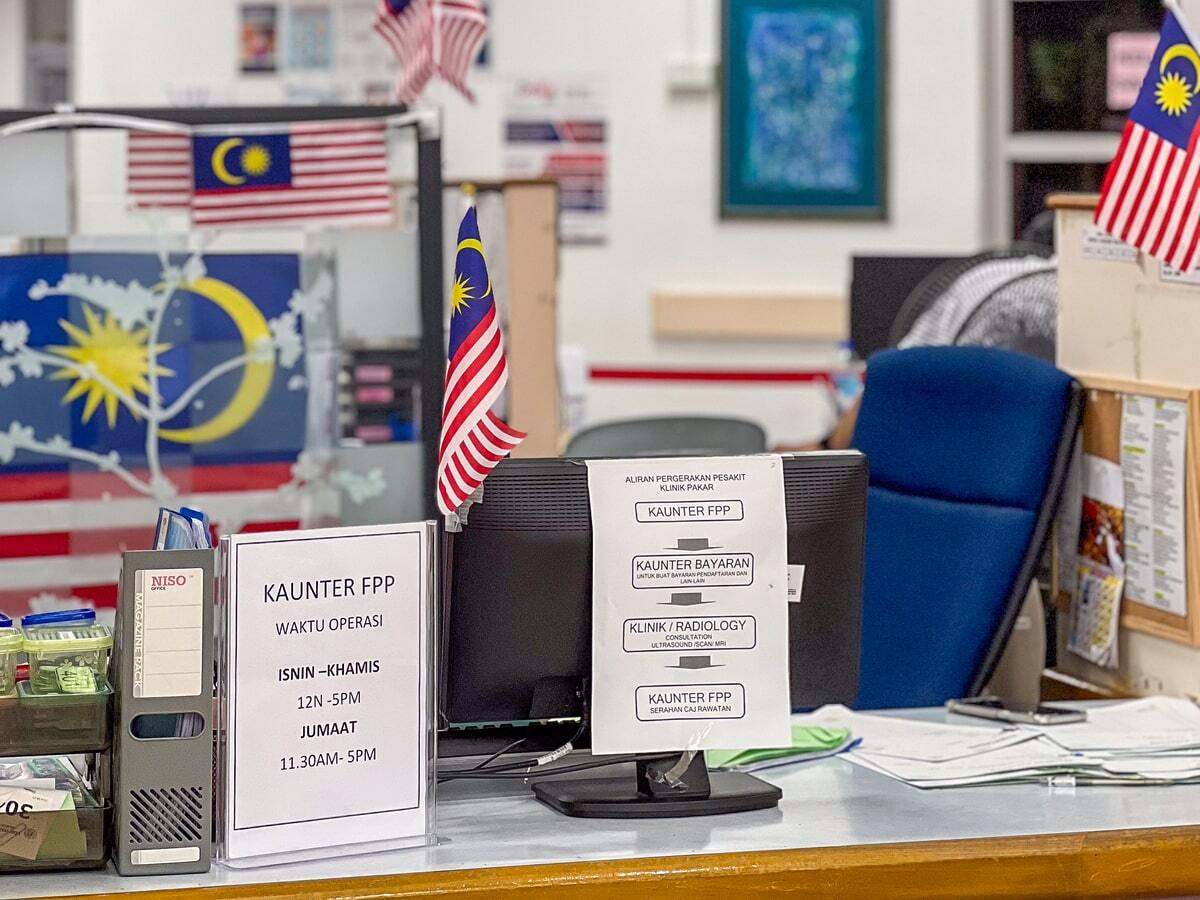
KUALA LUMPUR, Sept 19 — Bukit Gasing state assemblyman Rajiv Rishyakaran has expressed support for the planned expansion of “private wings” in Ministry of Health (MOH) hospitals.
The Selangor DAP lawmaker – who previously called for the construction of an MOH hospital in Petaling Jaya, as health care is significantly more expensive in a university hospital – said he had no issues with the new Rakan MOH programme.
“I support the effort to retain specialists in public service through this hybrid,” Rajiv told CodeBlue yesterday.
“This would be the biggest, if not only, reason to do it. However, this is assuming there is no change to the public side.”
CodeBlue reported Health Minister Dzulkefly Ahmad’s announcement at the World Cancer Congress (WCC) 2024 in Geneva, Switzerland, last Tuesday about his plans to expand private wings in government hospitals to raise revenue and improve specialist retention in the public sector, as part of health financing reform.
This new programme expanding private wings in government hospitals via a special-purpose vehicle (SPV) is called Rakan MOH.
Currently, the full-paying patient (FPP) service is available in 10 MOH hospitals, offering patients an option to choose their specialist doctors, access to first class or executive wards, and services at more competitive rates than private hospitals. However, these services are limited by the availability of resources, expertise, and facilities.
“In my opinion, this is, in no way, health care financing reform,” Rajiv said about Rakan MOH. “The amounts raised have been puny.”
Former Health director-general Dr Noor Hisham Abdullah wrote in 2019 that the government collected RM22 million in revenue in 2018 from the FPP service in the 10 MOH hospitals.
RM22 million is just a fraction (0.05 per cent) of MOH’s RM41.2 billion budget for this year. At the WCC, Dzulkefly did not provide an estimate as to how much revenue Rakan MOH is expected to generate.
Rajiv said what would truly “move the needle” in health care financing reform was the introduction of a payroll-funded national health insurance scheme that could begin on a voluntary basis.
Some health care professionals have questioned the proposed expansion of private wings in MOH hospitals, highlighting the current lack of capacity of both human resources and also medical equipment in the public health service.
One posted on X that medical officers would end up having to “split themselves into three” to help staff the Rakan MOH programme, while another questioned Dzulkefly’s claim of “excess capacities” in MRI and CT scan equipment in government hospitals.
In his remarks at WCC 2024, the health minister said public-private partnership was necessary to enable health care coverage for all: bottom 40 per cent (B40) in public hospitals, middle 40 per cent (M40) in MOH hospitals’ private wings, and top 20 per cent (T20) with private health insurance.
According to MOH figures, resignations of specialist doctors from MOH rose by 57 per cent from 229 resignations in 2019 to 359 in 2023. Last year’s 359 resignations were more than double the 168 resignations in 2022 and the highest in the past five years since 2019.


