

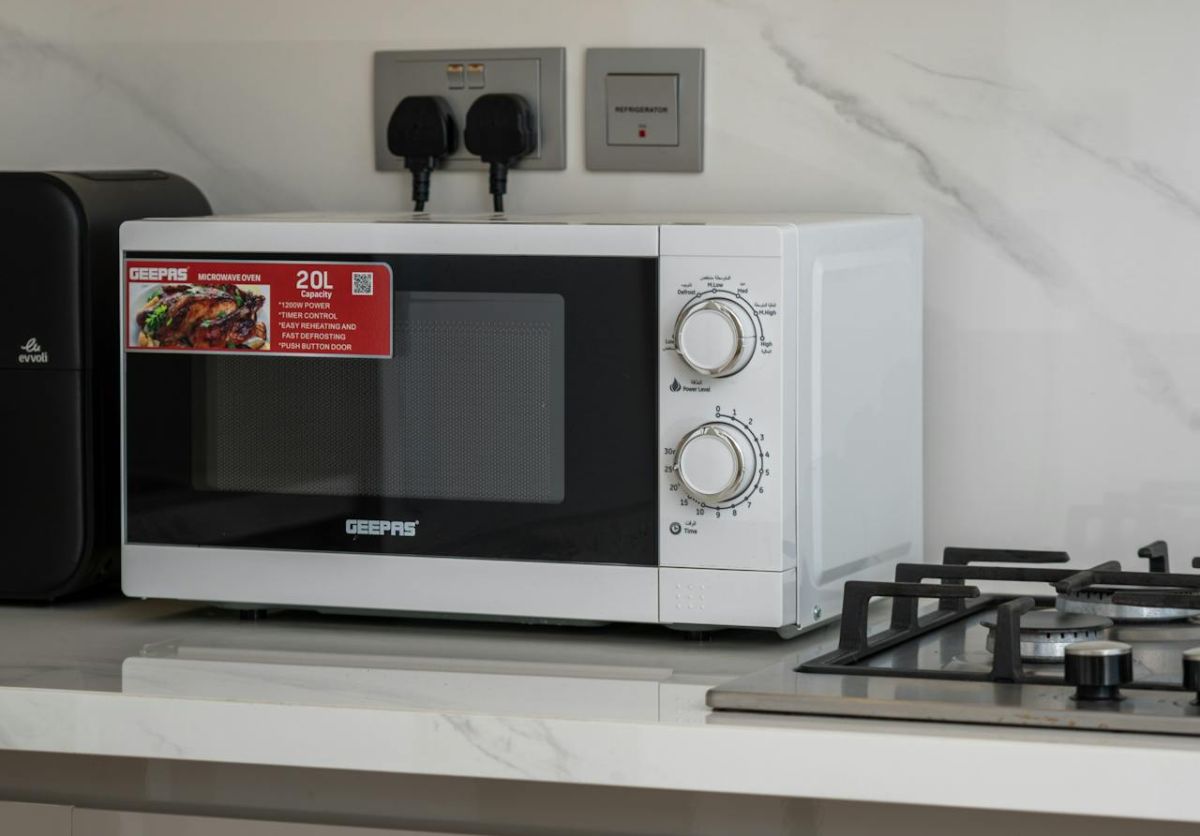
Be honest: when you hear the word “microwave,” do you picture mysterious radiation, destroyed nutrients, or food that somehow becomes “less healthy”?
For years, microwaves have been blamed for everything from ruining food to harming humans, earning an unfair reputation in kitchens everywhere.
But the truth is far less dramatic: the microwave is not the enemy. When used properly, it is safe, efficient, and can even support healthier eating habits.
Microwave ovens work by using non-ionising electromagnetic waves to excite water molecules in food, causing them to vibrate and generate heat.
Unlike ionising radiation, such as X-rays or gamma rays, microwave radiation lacks sufficient energy to damage DNA or human cells.
According to the United States’ Food and Drug Administration (FDA), microwave ovens are designed with metal shielding and safety systems that keep radiation contained during normal use. Once the microwave stops operating, it no longer produces microwaves, and the food itself does not become radioactive.
One of the microwave’s most overlooked benefits is nutrient preservation. Because microwaves cook food quickly and often require little to no water, they may retain more nutrients than some traditional cooking methods.
Water-soluble vitamins such as vitamin C and certain B vitamins are especially vulnerable to long cooking times and boiling. Harvard Health Publishing notes that microwave steaming can preserve nutrients better than boiling vegetables, mainly because fewer nutrients are lost into the cooking water.
In some cases, microwaved vegetables may actually be nutritionally superior to overboiled ones.
Microwaves also make healthy eating more practical.
When preparing meals is quick and convenient, people are more likely to cook at home instead of relying on fast food or ultra-processed meals.
Properly reheating leftovers can also reduce food waste and support portion control. However, microwaves are known for uneven heating, so food should be stirred and allowed to stand for a time after reheating to eliminate cold spots that may allow bacteria to survive.
There is also the energy efficiency factor. Microwave ovens generally use less energy than conventional ovens because they heat food directly instead of heating the surrounding air.
This means shorter cooking times, lower electricity use, and a smaller environmental footprint for everyday meals.
Of course, microwaves should still be used responsibly. Microwave-safe containers are important, as certain plastics may release harmful chemicals when exposed to high heat.
Damaged microwave doors or faulty seals should also never be ignored, as proper shielding is essential for safe operation.
So the next time your microwave beeps, maybe stop treating it like a scientific villain. The microwave is simply a modern kitchen tool designed for speed, convenience, and efficiency.
Scientific evidence continues to show that when used correctly, microwaves are safe and can even help preserve nutrients better than some conventional cooking methods.
Turns out, the microwave is not dangerous after all, just misunderstood.
Both authors are registered nurses.
- This is the personal opinion of the writer or publication and does not necessarily represent the views of CodeBlue.


