

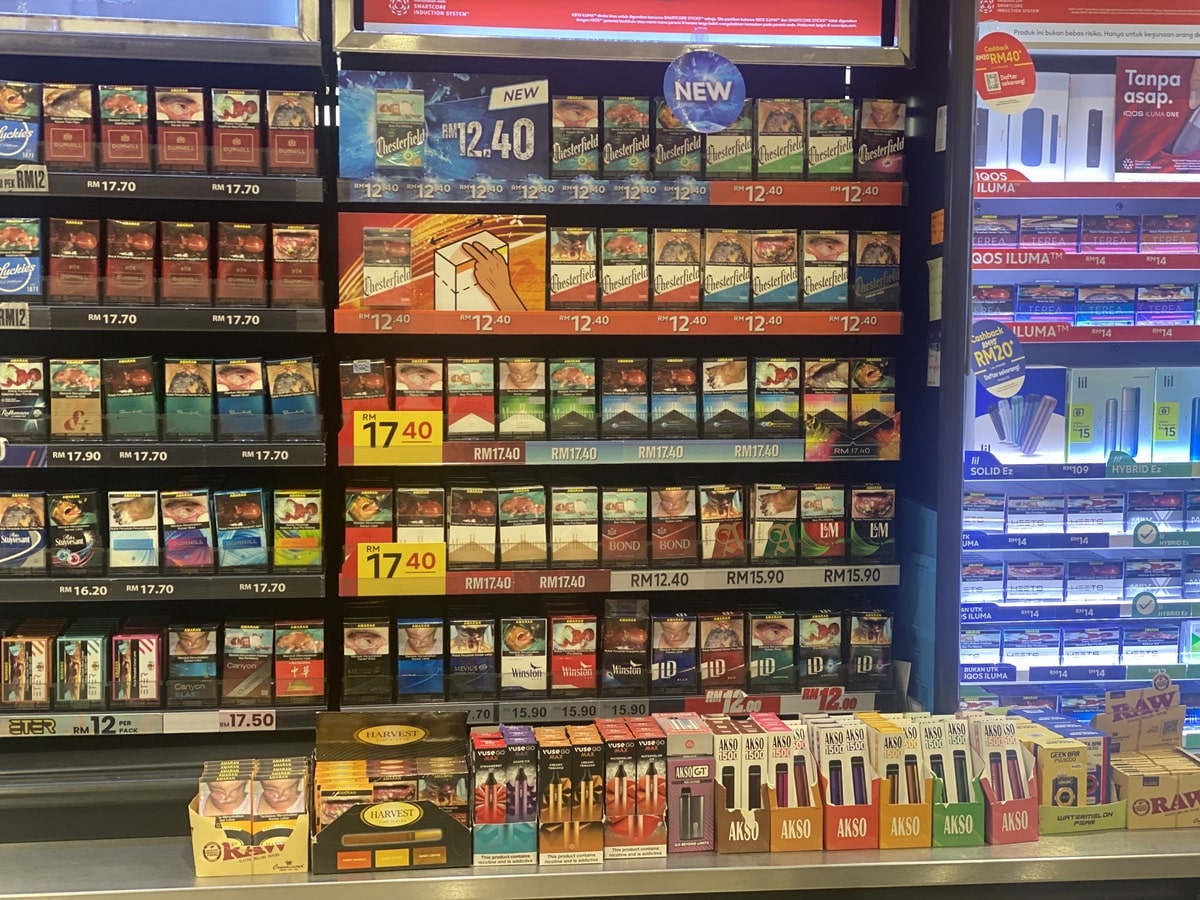
KUALA LUMPUR, Oct 7 — The Galen Centre for Health and Social Policy today launched a new briefing note, “Year 2027: Raise and Restructure Cigarette Excise Duty,” calling on the government to use Budget 2027 and the upcoming year to introduce a substantial corrective increase in cigarette excise duty and establish a predictable five-year tax pathway to 2031.
The briefing note recommends increasing cigarette excise duty from the current RM0.42 to RM0.65 per stick in 2027, followed by scheduled increases to RM0.72 in 2028, RM0.80 in 2029, RM0.88 in 2030 and RM0.95 by 2031. The proposed 2027 increase would add RM4.60 in excise duty for a 20-stick pack.
“Malaysia went for a decade without increasing cigarette excise duty. The two-sen increase introduced in Budget 2026 was an important first step, but it did not restore the real value of the tax after years of rising prices, incomes and healthcare costs,” said Azrul Mohd Khalib, Chief Executive of the Galen Centre.
“Budget 2027 should therefore not deliver another token increase. There should be no further two-sen increase. Instead, the Budget should mark the beginning of a structured and predictable tobacco-tax reform in 2027 that strengthens commitment towards a nicotine-free generation, discourages smoking and gives government greater certainty over future revenue.”
The briefing note argues that tobacco taxation remains one of the most cost-effective tobacco-control measures available to government. Higher prices can reduce consumption among current smokers and discourage initiation, particularly among younger people. It can also strengthen federal revenue.
Adult smoking prevalence remains at about 19 per cent, and the proposed tax pathway could potentially generate more than RM2 billion in additional annual revenue by 2031.
However, the Galen Centre stresses that higher excise duty should not be treated as a standalone fiscal measure. The briefing note calls for a coordinated package involving the Ministry of Finance (MOF), the Ministry of Health (MOH), and the Royal Malaysian Customs Department.
This should include allocating a defined share of additional tobacco-tax revenue to health, including tobacco-control enforcement, smoking cessation services and treatment of major non-communicable diseases.
It also recommends stronger joint Customs–MOH action against illicit cigarettes, improved tax-stamp integrity and supply-chain enforcement, and adjustments to the minimum retail price alongside future excise increases.
“Concerns over illicit cigarettes should no longer be used as a reason or excuse to keep tobacco taxes low.
“Unfortunately, Malaysia’s illicit cigarette market remained very large even during the decade when excise duties were frozen. Tax restraint did not solve the problem.
“The appropriate response is to raise excise duties while strengthening enforcement at the same time. This means better coordination between Customs and MOH, stronger border and supply-chain controls, improved tax-stamp integrity and independent monitoring of the illicit market,” said Azrul.
The briefing note also recommends an annual independent, non-industry-funded assessment of illicit cigarette trade, continued expansion of affordable cessation support, and publication of consistent annual data on tobacco excise revenue and illicit-trade indicators.
Is An Increase In Tobacco Tax Anti-Poor?
This measure should not be characterised as anti-poor or discriminatory towards lower-income households. Lower-income smokers are generally more price-sensitive.
This means higher tobacco taxes are more likely to encourage reduced consumption or quitting among these groups, delivering proportionately greater health benefits over time.
The greater inequity would be to allow lower-income families to continue bearing a disproportionate burden of tobacco-related disease, health care costs, out-of-pocket costs, and lost household income.
That is why the proposed tax increase should be paired with affordable cessation support, including nicotine-replacement therapy and accessible quit services, so that people who want to stop smoking are supported rather than simply penalised.
The briefing note explicitly recommends expanding cessation support, particularly for lower-income smokers who are most responsive to price changes.
Year 2027: The End Of Inaction
The government should use Budget 2027 to make a clear and decisive break from a decade of inaction on cigarette taxation. The MOF should increase cigarette excise duty to RM0.65 per stick, announce the full pathway to RM0.95 by 2031, and commit part of the additional revenue to tobacco control, cessation services and the treatment of non-communicable diseases.
At the same time, Customs and the MOH must be given the resources and mandate to intensify action against illicit cigarettes.
“Budget 2027 should not be another missed opportunity. The government has the evidence, the regulatory framework and now a clear policy pathway. It should act.
“A meaningful increase in cigarette excise duty will save lives, reduce future health care costs and strengthen public revenue. After ten years of delay, another token adjustment would simply prolong the problem.
“We urge the Prime Minister and the finance minister to make tobacco tax reform one of the defining public-health measures of Budget 2027,” said Azrul.

