

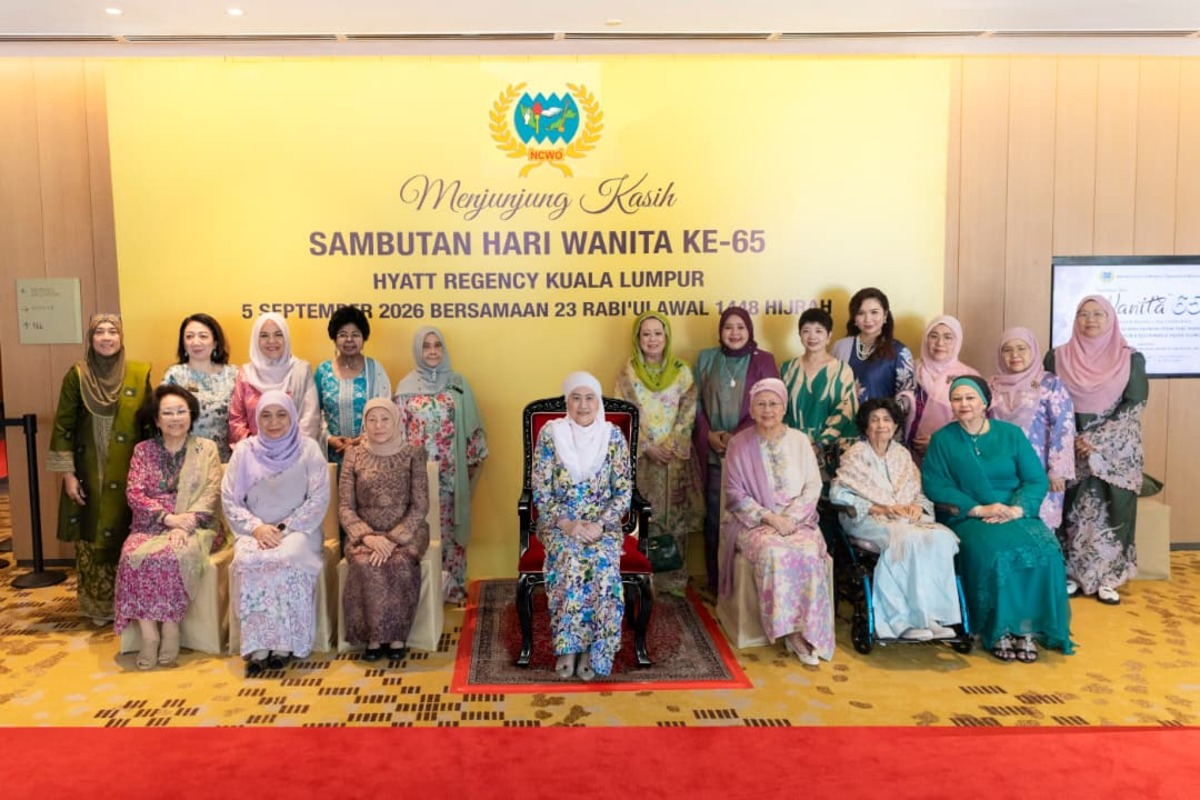

Yesterday, the National Council of Women’s Organisations Malaysia (NCWO) marked its 65th National Women’s Day Celebration with a theme that could not have been more timely: “Healthy Ageing for Women in a Sustainable Silver Economy”.
The luncheon at Hyatt Regency Kuala Lumpur was graced by Her Royal Highness Tuanku Aishah Rohani Tengku Besar Mahmud, the Tunku Ampuan Besar of Negeri Sembilan.
It was both a celebration and a glimpse of what healthy ageing can look like. Talented performers from different generations brought warmth and vitality to the stage, with many also distinguished by their academic achievements.
Especially cherished was the presence of Malaysia’s beloved centenarian, Dr Siti Hasmah Mohamad Ali. Her violin performance delighted the audience, while her continuing public engagement embodied active ageing, lifelong contribution and service with grace.
After lunch, the programme moved naturally from celebration to preparation through a financial literacy seminar focused on women, longevity and financial security. The transition was fitting. Longer life is one of society’s greatest achievements, but longevity without health, income, protection or choice can become an extended period of insecurity.
Participants were asked to imagine themselves at 80: Where would we live? Who would share our days? What decisions would still be ours to make? These are financial questions, but they are also questions of dignity, agency and peace of mind. As emphasised during the seminar, financial security is not simply about what a woman possesses. It is also about retaining the freedom to choose.
The figures deserve attention. A Malaysian woman reaching 60 may expect another 21.6 years of life, compared with 18.8 years for a man. Yet women’s healthy life expectancy is about 65 years, suggesting that many may spend more than a decade living with illness, disability or reduced mobility.
Women’s financial journeys are also rarely linear. Women spend, on average, more than six hours daily on unpaid domestic and care work. Career interruptions, lower earnings and informal employment reduce their retirement contributions and the benefits of long-term compounding. Women may therefore live longer while facing greater health and care needs with fewer accumulated resources.
Practical guidance matters: build emergency savings separately from retirement funds; maintain Employees Provident Fund contributions where possible; understand inflation, investment fees and diversification; review insurance or takaful coverage, debt, nominations and estate arrangements; and ensure that important assets and accounts are known and accessible.
Protection must also evolve through marriage, parenthood, career changes, divorce, widowhood and illness. Scam awareness is now part of retirement protection too, particularly when fraud can erase a lifetime’s savings within minutes.
These lessons echo arguments advanced in CodeBlue’s Grey Wave column. In “Growing Old Without Growing Poor”, we argued that retirement adequacy must stand alongside health care, housing and long-term care as a national priority.
In “The Business of Growing Old in Malaysia”, we cautioned that the silver economy must balance innovation and profit with affordability, quality and public safeguards.
Older women should not be viewed merely as consumers or dependants. They are workers, entrepreneurs, caregivers, mentors, innovators and leaders whose knowledge and experience remain valuable to society.
The event also affirmed another recurring Grey Wave message: personal responsibility is necessary, but insufficient. Financial literacy cannot restore years of retirement contributions lost to unpaid caregiving. Budgeting cannot correct low wages, insecure employment, or unaffordable long-term care.
Insurance cannot protect dignity if premiums become prohibitive precisely when age and illness increase risk. Women need supportive families, care-sensitive workplaces, accessible financial services and strong social protection throughout the life course.
Care must therefore be recognised as shared social and economic infrastructure, not an invisible duty assigned mainly to daughters, wives and mothers. Our article titled “When Care Breaks Down at Home” described carers as the real frontline of dependent ageing.
When caregivers leave paid employment, exhaust their savings or damage their own health, the consequences eventually return to families, hospitals and the wider economy. Flexible employment, continued retirement contributions, caregiver training, respite services and affordable community-based care are economic investments, not welfare extras.
Healthy ageing must also begin long before old age. It is not simply the absence of disease, but the preservation of functional ability: being able to move safely, think clearly, meet basic needs, maintain relationships, make decisions and continue contributing.
These capacities are built through education, nutritious food, physical activity, tobacco control, mental wellbeing, meaningful work, social connection, appropriate screening and effective management of chronic diseases.
Financial capability should follow the same life-course approach. We should not wait until someone approaches retirement before discussing health risks and the savings, protection and care costs that may accompany them.
The attention given to ageing at this important national gathering reflects the cumulative work of many: women’s organisations, older persons’ groups, researchers, professionals, government agencies, advocates, families and communities.
Together, they have steadily brought longevity and preparedness into wider public discussion. The Grey Wave column is only one contribution to this broader national conversation.
NCWO’s celebration demonstrated how ageing can be discussed without making it grim: honour longevity, showcase continuing contribution and equip people for the realities ahead.
The grey wave is no longer an abstract forecast. It is visible in our homes and communities, and it concerns every generation. Events such as this help turn awareness into confidence, conversation and action.
Public policy must now keep pace, so that every Malaysian woman can grow older not merely with more years, but with health, protection, purpose, financial dignity and the freedom to choose how those years are lived.
Dr Zarihah Zain is a public health physician who retired from the Ministry of Health in 2012 and is now a part-time lecturer in community medicine and medical ethics. Roslizawati Ali is president of the Malaysian Women’s Action for Tobacco Control and Health (MyWatch).
- This is the personal opinion of the writer or publication and does not necessarily represent the views of CodeBlue.


