

Every nation must choose how to pay for the health of its people. That choice is not merely technical, but a reflection of national values, political realities, and fiscal capacity. Get it wrong, and the system crumbles. Get it right, and generations prosper.
The health care system is breaking. And the solutions on offer fall into predictable, well-worn categories that, if applied to Malaysia, would either fail or provoke political backlash. Let us examine them and see what might actually work.
The Beveridge Model: The State As Sole Guardian
Named after British economist Sir William Beveridge, who designed the United Kingdom’s National Health Service in 1948, this model funds health care through general taxation. The government owns most hospitals and employs most staff. Services are provided at zero or minimal cost to all citizens.
The appeal is obvious. Universality and equity are the model’s defining strengths. Access is disconnected from individual health risk or employment status.
Administrative costs are low. The government, as the single purchaser, possesses monopoly power to negotiate lower prices for drugs and services.
Taxation, especially direct taxation, is the most progressive form of health care financing: the wealthy bear a greater share than the poor.
The weakness is equally obvious. The Beveridge model is susceptible to political capture and fiscal contraction. Health care competes with education, defence, infrastructure, and fuel subsidies for scarce public funds. During economic crises, health budgets are often the first to feel the axe.
Malaysia’s reality? Our public health care system is Beveridge-inspired and operates on a dual-tier structure, combining a tax-funded public system with a private, out-of-pocket fee-for-service model.
Its primary funding relies on general taxation rather than a mandatory social health insurance scheme, and it is underfunded to the point of collapse.
Malaysia’s 2.4 per cent spent on public health care and 4.7 per cent total health care expenditure is grossly insufficient. Without a dramatic increase in public spending — which the Treasury has repeatedly resisted — the Beveridge model cannot function.
The Bismarck Model: Employment As The Gateway
Named after Prussian Chancellor Otto von Bismarck, who introduced social health insurance in Germany in 1883, this model is financed through mandatory payroll contributions.
Contributions flow into non-profit “sickness funds”. Hospitals and doctors are typically private providers. Coverage is tied to employment.
The appeal is clear. It reduces free-riding: those who can pay are compelled to contribute. It creates a counterbalance to state power, with patient organizations and sickness funds advocating for services.
It typically offers shorter wait times, wider provider choice, and high-quality care. It mobilises additional domestic resources. This model is used in countries like Germany, France, Japan, and Belgium.
The weakness is equally clear. It is employment-centric – those without formal employment can fall through the cracks. It is administratively complex due to multiple payers. Job loss can threaten coverage.
On average, social health insurance financing is more expensive than tax financing and yields no better health outcomes. It can perpetuate inequality, as those with higher contributions may expect superior care.
Malaysia’s reality? The government has explicitly rejected the Bismarck model. The health minister has described mandatory contributions as a “double war” on taxpayers: compulsory premiums on top of income tax.
The political opposition is insurmountable. With an estimated 14.5 million workers (85 per cent of the workforce) earning below the income tax threshold, a payroll-based model would face significant implementation challenges.
The National Health Insurance Model: The Single-Payer Compromise
The National Health Insurance (NHI) model combines elements of both Beveridge and Bismarck. It is a single-payer system, like Beveridge, but financed through mandatory insurance contributions, like Bismarck, or funded through a blend of general government taxes, payroll deductions, or specific individual contributions/premiums paid into a national fund.
A single government-run agency collects premiums and purchases services from a mix of public and private providers. Taiwan, Canada and South Korea are classic examples.
The appeal is undeniable. It achieves universal coverage equitably and efficiently. It controls health expenditure growth. It ensures equal access to covered services. From a social perspective, it can bring better health at lower cost to more people.
The weakness – both Taiwan and South Korea struggle with rising costs, fee-for-service fragmentation, and the political difficulty of sustaining generosity without bankrupting the treasury. Waiting times are long. Workforce shortages are endemic.
Malaysia’s reality? The government has rejected the NHI model for the same reason it rejected Bismarck: mandatory contributions on top of existing taxation constitute a “double war” on taxpayers.
After 45 years of discussions and 15 policy papers, Malaysia has consistently failed to implement mandatory health insurance. The political and institutional barriers appear insurmountable.
The Out-Of-Pocket Model: The Default Of Failure
When no formal financing system exists, patients pay directly at the point of service. This is the default in the poorest countries. It is also the de facto model for those without insurance in otherwise structured systems.
There are no advantages. Out-of-pocket spending is the most regressive and destructive form of health care financing. It pushes households into poverty.
In low and middle-income countries, it is associated with increased catastrophic health spending and reduced health care utilisation.
Malaysia’s reality? Private household out-of-pocket spending constitutes 76 per cent of private health care financing.
Private insurance comprises only 17 per cent. This is not a financing model; it is a failure of financing.
The Malaysian Hybrid: Forging A New Path
Malaysia’s problem is well stated: 2.4 per cent of GDP in public health spending, 76 per cent of private health care financed out-of-pocket, 2.7 million taxpayers funding a system for 33 million people. The Beveridge model is underfunded.
The Bismarck and NHI models are politically rejected. The out-of-pocket model is devastating families.
The path forward lies in a hybrid model – a complementary financing mechanism that strengthens rather than replaces the existing tax-funded public system.
This hybrid model should include increasing public health expenditure to 5 per cent of GDP, and introducing a publicly-administered health insurance option that offers community-rated premiums, guaranteed coverage for pre-existing conditions, and genuine competition to private insurers.
There is a necessity to ring-fence health care funding to protect it from annual budget negotiations and political volatility through multi-year funding commitments in five-year Malaysia Plans.
And finally, strengthening the private sector as a partner, not a competitor. Strategic engagement with private general practitioners for screening and preventive care, and private hospitals to absorb overflow cases, would ease fiscal pressure and improve both access and quality of care.
Conclusion: The Architecture Of Our Values
Malaysia’s health care system has been built on a foundation of inadequate public spending, excessive out-of-pocket payments, and political paralysis. It is a house that cannot stand.
The architecture of a nation’s health care system is not merely a technical choice. It is a reflection of what that nation values. Do we value the health of our people enough to fund it properly?
Do we value equity enough to ensure that no Malaysian is denied care because of their inability to pay? Do we value solidarity enough to pool risk across the entire population?
The answer, for now, is no. The Beveridge model is underfunded. The Bismarck and NHI models are politically rejected. The out-of-pocket model is devastating families.
The hybrid model offers a way forward — a complementary financing mechanism that strengthens rather than replaces the existing system, introduces a public option without mandating participation, diversifies funding sources, and protects health care from the whims of annual budget negotiations.
The question is whether we have the courage to build it.
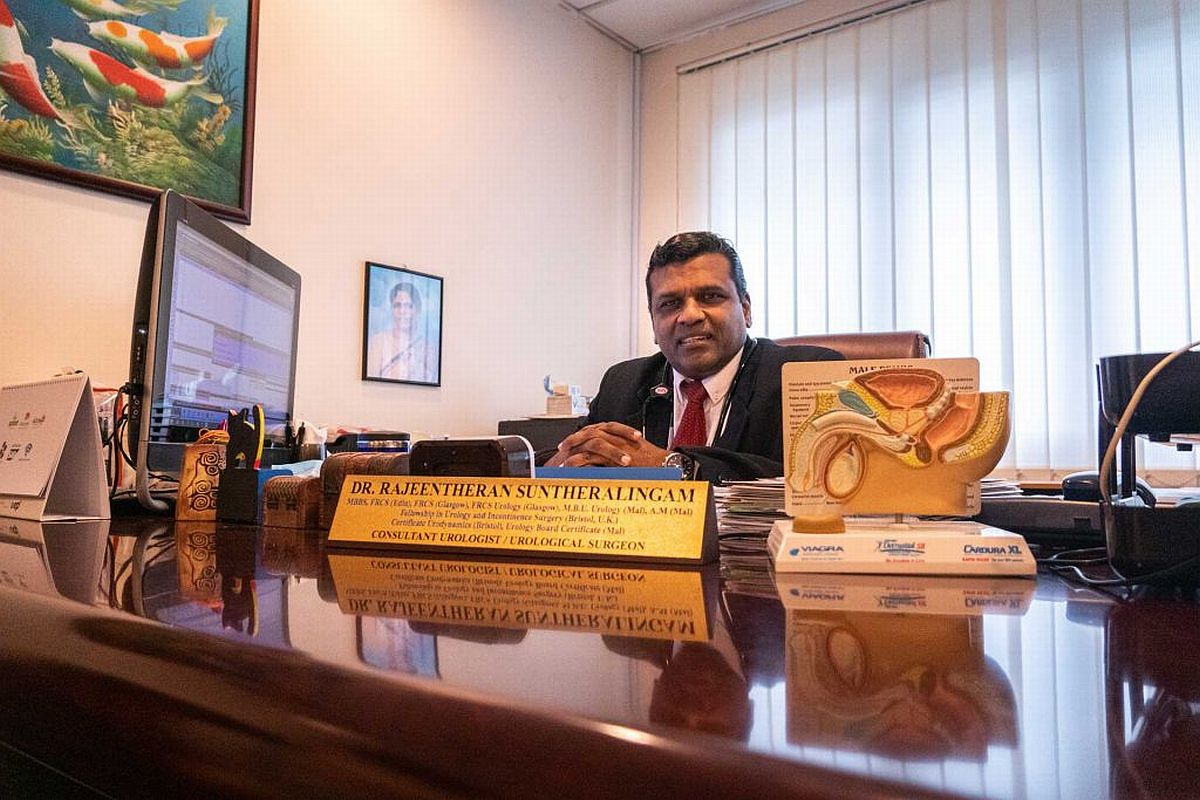
The author is a senior consultant urologist and urological surgeon at Damansara Specialist Hospital.
- This is the personal opinion of the writer or publication and does not necessarily represent the views of CodeBlue.


