

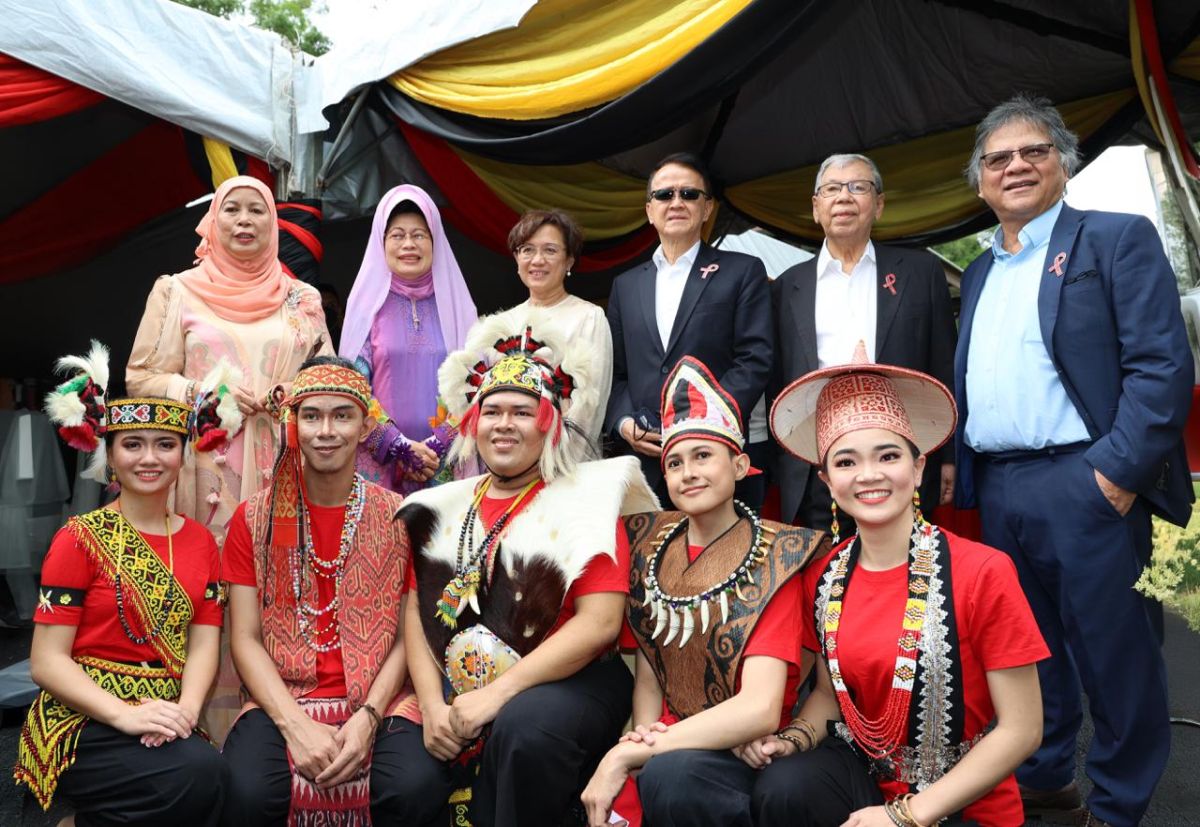
KUCHING, August 20 — Sarawak is expanding community-based HIV services beyond Kuching to Miri and Bintulu as part of broader efforts to improve access to health care and support across the state.
The expansion will bring treatment and practical assistance closer to people living with HIV, their families and other vulnerable communities.
The state government has prioritised equitable access to health care, stronger social resilience, and improved quality of life under the Post Covid-19 Development Strategy 2030 (PCDS 2030), alongside economic transformation. This reflects a more inclusive approach to development that considers community wellbeing and dignity alongside economic growth.
At the centre of this effort is Teratak Kasih Tok Nan, a community-based initiative providing holistic support to people living with HIV, their families, and other vulnerable communities.
More than a halfway home, Teratak Kasih Tok Nan offers temporary accommodation, counselling, treatment support, psychosocial services, welfare assistance and community outreach. It addresses not only health care needs, but also the social and economic challenges that can limit access to and continuity of treatment.
In 2025, the Sarawak state government announced a three-year allocation of RM2.25 million to strengthen TKTN and support its expansion beyond Kuching to Miri and Bintulu. The funding will enable more Sarawakians to receive quality HIV care closer to their communities.
“Sarawak’s development agenda has always centred on improving the quality of life of our people. While we continue to strengthen our economy and embrace innovation, we must also ensure that progress is inclusive and no one is left behind.
“Health care is a fundamental investment in our human capital, and initiatives such as Teratak Kasih Tok Nan demonstrate our commitment to accessible, compassionate and people-centred healthcare for every Sarawakian,” said Sarawak Premier Abang Johari Openg.
“By strengthening partnerships and expanding community-based health care, we are improving health outcomes while contributing to Malaysia’s commitment to ending AIDS by 2030,” he added.
Today, Teratak Kasih Tok Nan is more than a place of temporary shelter. It has become a trusted community resource where individuals receive holistic care, reconnect with treatment, regain confidence and rebuild their lives with dignity.
The initiative supports Malaysia’s National Strategic Plan Ending AIDS 2030, which recognises that ending AIDS as a public health threat requires more than medical treatment.
The plan calls for a comprehensive approach encompassing prevention, early diagnosis, uninterrupted treatment, psychosocial support, community participation and the elimination of stigma and discrimination.
Sarawak’s community-based HIV response has also been strengthened through partnerships with the Malaysian AIDS Foundation, the Ministry of Health Malaysia, Sunway Group and Yayasan Petronas.
Together, these collaborations bring government support, healthcare expertise, community networks and corporate resources to extend care beyond clinical settings and closer to the communities that need it.
Complementing these efforts is the Sarawak Health Access Programme (SHAPE), implemented in collaboration with the Ministry of Health (MOH) and the Sarawak state government.
Since its introduction in 2018, SHAPE has provided financial assistance to people living with HIV and individuals with other chronic illnesses who must travel long distances for treatment, helping ensure that financial hardship does not become a barrier to essential healthcare.
Together, SHAPE and Teratak Kasih Tok Nan reflect Sarawak’s holistic approach to healthcare, combining access to medical services with practical support and compassionate community care.
As Malaysia works towards ending AIDS as a public health threat by 2030, Sarawak’s experience demonstrates how state policy, cross-sector partnerships, and community-based services can remove barriers to treatment, improve continuity of care, and ensure that no one is left behind.


