

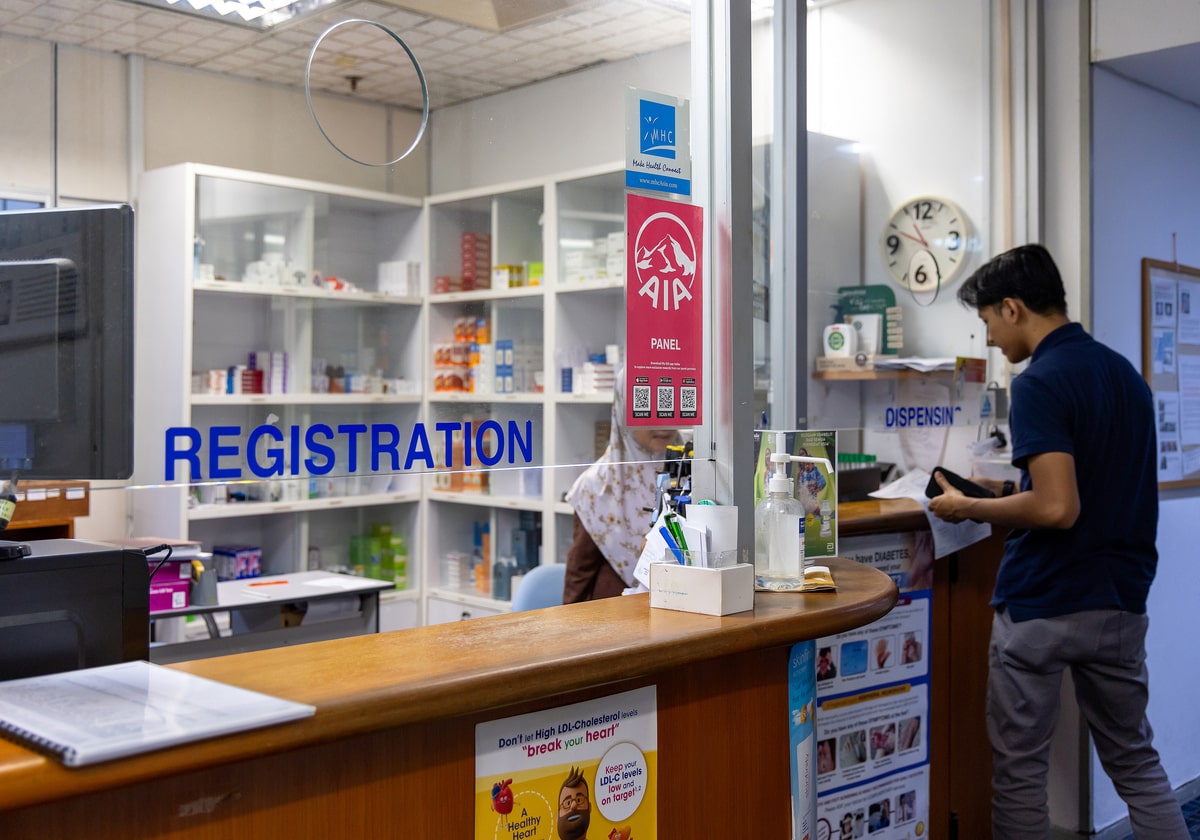
KUALA LUMPUR, July 9 — A doctors’ association has protested against a proposal for community pharmacists to participate in the Ministry of Health’s (MOH) new emergency triage system.
The Private Medical Practitioners’ Association of Selangor and Kuala Lumpur (PMPASKL) said the Malaysian Pharmacists Society’s (MPS) suggestion for community pharmacists to be formally recognised as Primary Care Triage Partners mustn’t become a “backdoor” to clinical assessment, diagnosis, or treatment.
“Community pharmacists play an important role in medicine counselling, dispensing, medication safety, and public health education; their role should be respected.
“But a pharmacy is not a clinic and a pharmacist is not a doctor,” said PMPASKL president Dr Eugene Chooi Yuo Hao in a statement today.
“‘Non-critical’ does not mean ‘safe’. Fever may be dengue. Nausea and vomiting may be heart disease. Abdominal pain may be surgical. A cough may be asthma, pneumonia or worse. The danger in primary care is not only treating simple illness; it is recognising a serious disease before it is too late.
“This is the reason why medical practice is regulated. Anyone who wants to practise as a doctor must go through the lawful route: recognised medical qualification, registration with the Malaysian Medical Council, and a valid practicing certificate. No other title, profession or rebranding exercise should be allowed to create public confusion.”
MPS president Prof Amrahi Buang recently proposed the integration of community pharmacies into the new Malaysian Triage Scale (MTS) 2022 at emergency departments in government hospitals.
He said patients assessed under MTS 2022 as Level 4 (less urgent) or Level 5 (routine), “where clinically appropriate”, might be referred to participating community pharmacies for assessment and management.
Health Minister Dzulkefly Ahmad’s July 2 written Dewan Rakyat reply to Sembrong MP Hishammuddin Hussein on MTS 2022 did not recommend referrals of non-critical emergency cases to pharmacists, but public health clinics or private medical clinics instead under the Madani Medical Scheme or Peka B40 scheme).
PMPASKL pointed out that blood-taking services were previously conducted unlawfully in community pharmacy settings.
“If community pharmacies want to support emergency reform, they can do so lawfully: advise on medication, promote health education, identify obvious danger signs, and direct patients to registered medical facilities – that is collaboration. But assessing, diagnosing and managing patients belongs within a properly regulated clinical framework,” said Dr Chooi.
“MOH must be clear. Any triage diversion pathway must define who examines the patient, who diagnoses, who treats, who documents, who follows up, who carries indemnity, and who answers when something goes wrong.”


