

During the Covid-19 pandemic, many Pakatan Harapan (PH) lawmakers accused Prime Minister Muhyiddin Yassin’s government of being slow in procuring and delivering vaccines.
In just five years, the world is grappling with another crisis – oil and gas shortages caused by the Iran conflict that is now a month long and shows no signs of stopping. High prices will outlive the war even if military action ended today.
While health was the key focal point during the pandemic, the ongoing Persian Gulf conflict poses a serious threat to multiple sectors simultaneously, with food security emerging as a main concern due to fertiliser shortages.
The United Nations’ Food and Agriculture Organization (FAO) reportedly warned last week that a prolonged conflict could have a serious impact on food prices, affecting agricultural input costs and disrupting the next planting season with longer-term consequences.
According to a March 19 report by the FAO, the Persian Gulf accounts for roughly 30 to 35 per cent of global urea exports and around 20 to 30 per cent of ammonia exports. Overall, up to 30 percent of internationally traded fertilisers normally transit the Strait of Hormuz.
The FAO estimated that global fertiliser prices could average 15 to 20 per cent higher during the first half of this year if the crisis continued, attributing this to a rise in energy prices because nitrogen fertiliser production relies heavily on natural gas as a feedstock.
Yet, Agriculture and Food Security Minister Mohamad Sabu has remained largely silent about the impact of the war on Malaysia’s food security.
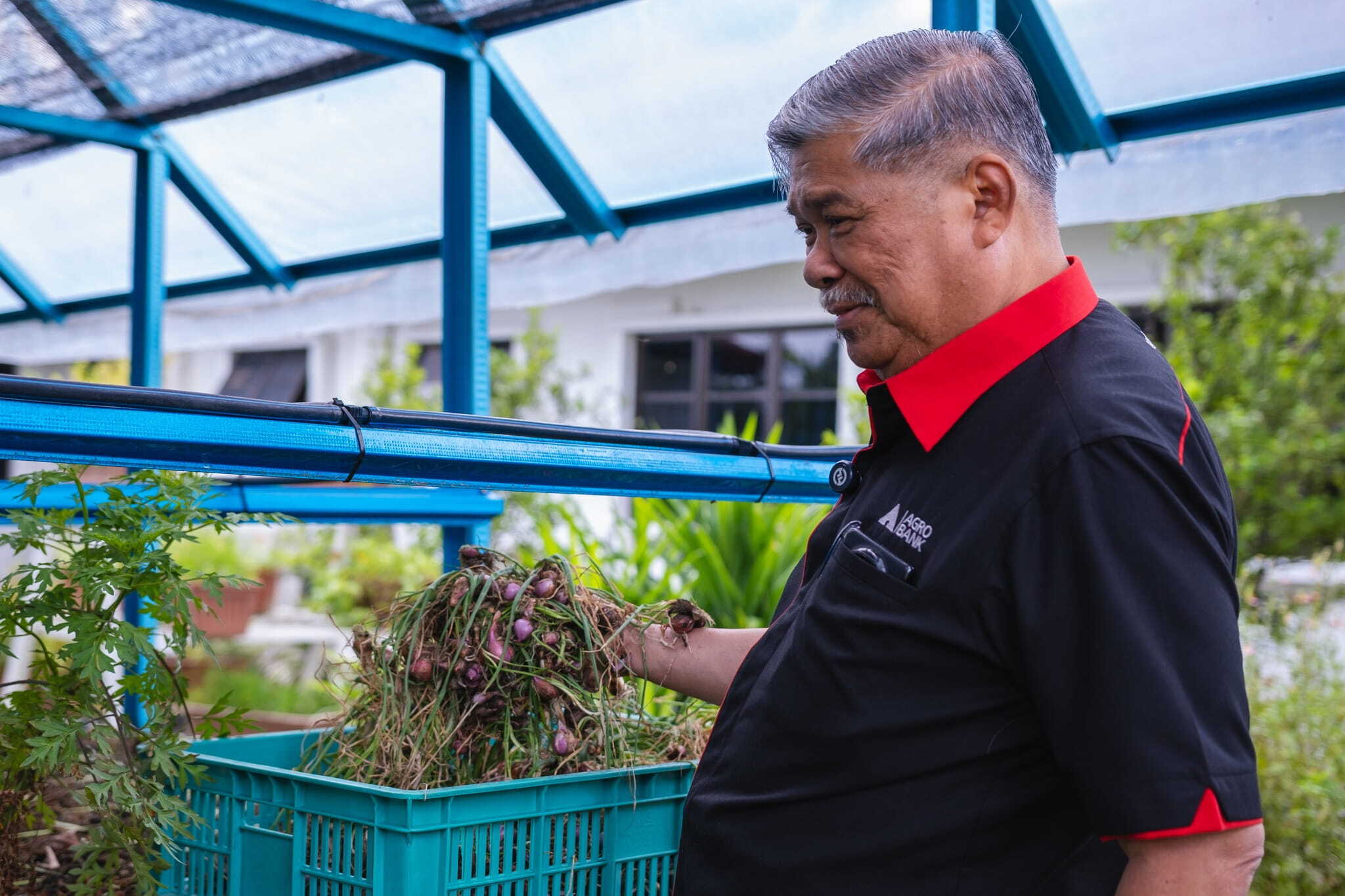
At a March 13 press conference, he told Malaysians to plant vegetables at home, sounding just like how then-Health Minister Dr Adham Baba told people to drink warm water to prevent Covid-19 infection.
Russia and China, which collectively comprised 53 per cent of Malaysia’s fertiliser imports in 2025, have restricted fertiliser exports to prioritise domestic supplies. Malaysia is a net fertiliser importer, having imported RM5.69 billion and exported RM3.75 billion in 2025.
Malaysia has limited domestic fertiliser production capacity that can only meet 39 per cent of its annual fertiliser use, according to Singaporean think tank S. Rajaratnam School of International Studies (RSIS).
Malaysia’s local fertiliser industry has also warned of supply disruptions. Malaysian fertiliser producers like Union Harvest and FGV Fertiliser have halted new orders, as the prices of some raw materials reportedly increased by 100 per cent to 150 per cent within a fortnight.
Yet, all Mohamad seems to care about is sufficient food supplies during Hari Raya Aidilfitri, even though he should know how planting seasons operate and how crop yields will be affected later in the year by shortages of widely used nitrogen fertilisers like urea. Farmers “can’t skip a season of nitrogen”, CNBC reported.
Mohamad hasn’t publicly mentioned fertilisers at all throughout the West Asia conflict, even though the Agriculture and Food Security Ministry (KPKM) reportedly held an emergency consultation meeting with fertiliser suppliers before Hari Raya.
Farmers’ associations previously warned of sharp increases in the prices of fruits and vegetables in Malaysia, potentially as high as 50 per cent, due to fertiliser shortages and diesel price hikes.
The price of diesel in Peninsular Malaysia saw another 80 sen hike to RM5.52 per litre yesterday. With a 77 per cent surge in peninsular diesel prices from RM3.12 to RM5.52 in just three weeks, food prices are almost certain to spike.
Mohamad and most other ministers who have remained silent on the impact of the West Asia conflict on their respective sectors should learn from Health Minister Dzulkefly Ahmad, who issued a detailed statement specifying Malaysia’s medicine supplies.
Tourism, Arts and Culture Minister Tiong King Sing has requested temporary financial support for the tourism transport sector, unlike Mohamad who did not publicly call for targeted subsidies for farmers despite suggestions by poultry producers and agriculture experts.
In a statement yesterday, KPKM simply talked about the paddy industry; its only reference to fertilisers was about the continuation of agricultural input subsidies like seeds, fertilisers, and pesticides amid global fertiliser price hikes, while omitting mention of fertiliser supply. The agriculture ministry not talking about fertiliser would be like the health ministry not talking about medicines.
Mohamad probably never expected his portfolio to be the highlight during a global crisis. KPKM, which received less than RM7 billion for Budget 2026, is generally considered to be a minor ministry.
But Mohamad needs to step up at this critical moment. Any other time would be a good time to boast about your onion plants or fish breeds at home, but not during a literal war when ministers need to take decisive and urgent action for millions of citizens.
While Malaysia may have nine months’ worth of rice stockpiles, other food sources like proteins and fruits and vegetables, which are crucial for a “Suku-Suku Separuh” diet, may become increasingly unaffordable. Carbohydrates form only a quarter of Malaysia’s healthy plate model.
Nations around the world are scrambling to secure fertiliser supplies to prevent a food crisis, mirroring the global rush for Covid-19 vaccines at the height of the pandemic.
“Everyone is on the hunt,” a grains analyst said. Not Malaysia, it seems. By the time KPKM’s new special committee gets around to “formulating comprehensive follow-up actions”, other countries would probably have snapped up all the fertilisers already.
DAP’s Liew Chin Tong, who is deputy finance minister, told Muhyiddin in 2021 that “doing nothing, not being bold, and not doing enough are not the options. The government’s current response is akin to sitting still while watching a runaway train go off track.”
Ironically, Prime Minister Anwar Ibrahim’s government is now doing (or not doing) exactly what it accused the Muhyiddin administration of.
Anwar announced yesterday a reduction of the Budi95 quota for subsidised RON95 petrol, priced at RM1.99 per litre, from 300 to 200 litres a month, effective April 1, while noting that nearly 90 per cent of Malaysians use less than 200 litres. The majority use 100 litres.
So why bother reducing the quota at all if a 200-litre ceiling won’t substantially cut the government’s fuel subsidy bill?
If Madani was going to do something meaningless, then Anwar should also have announced cutting the fuel allowances of ministers, MPs, senators, and Jusa-level senior civil servants as a symbolic sacrifice on the government’s part to at least show that we’re all in this together.
All government vehicles (including those for the PM himself, ministers, and ministry secretary-generals and their deputies) should be subject to fuel rationing with an alternative plate number system, where cars with even-numbered plates drive on even-numbered calendar dates and those with odd-numbered plates drive on odd-numbered calendar dates. Cut police escorts for VIPs too. Only ambulances, Bomba, and police performing essential services would be exempt.
Putrajaya’s reluctance to impose a blanket work-from-home (WFH) mandate across the public sector, rather than “selected and in stages”, or to produce official WFH guidance for the private sector is also puzzling. The government can easily repurpose Covid-19 movement restriction advisories for essential and non-essential services.
Anwar’s special address yesterday did not state how many days of Malaysia’s petroleum product supply are left. On March 11, he said supplies were sufficient until May. We have 34 days until May 1.
So we don’t know the scale of our problem, unlike other countries. At least during the Covid-19 pandemic, the government then was more transparent and everyone knew the daily number of cases reported.
Then-Health director-general Dr Noor Hisham Abdullah repeatedly said during the pandemic to “prepare for the worst and hope for the best”.
Madani seems to be hoping for the best without preparing for anything.

Boo Su-Lyn is the co-founder and editor-in-chief of CodeBlue.


