

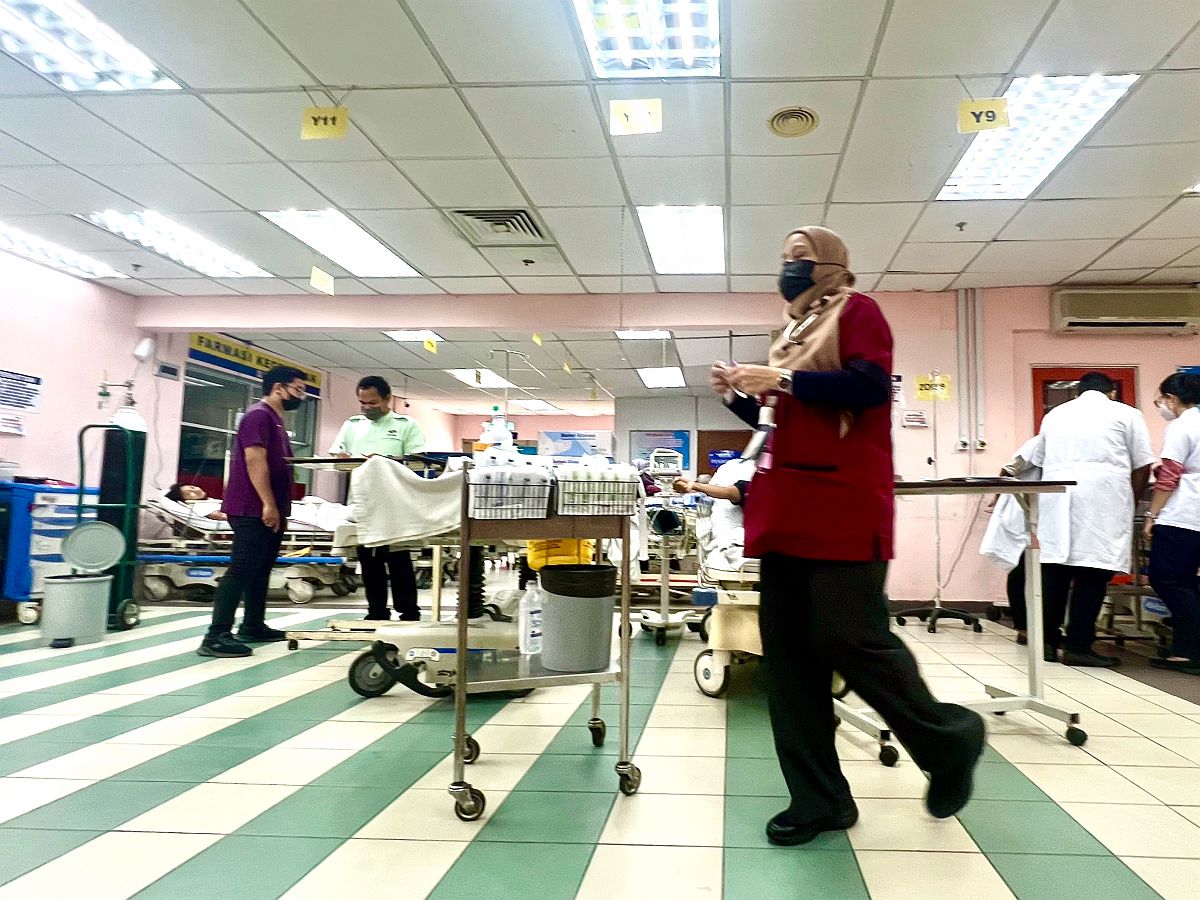
KUALA LUMPUR, Feb 16 — Just 53 per cent of house officer (HO) slots in 48 training hospitals (HLS) nationwide were filled as of this month, or 6,500 out of 12,198 slots, said the Ministry of Health (MOH).
This means there is a shortage of 5,698 trainee doctors throughout the country.
The MOH revealed that the first housemen intake this year saw appointments for all 579 medical graduates who applied, but these could only fill about 10 per cent of national vacancies.
“The reduction in the filling of house officer slots has directly impacted systemic capacity to supply sufficient manpower,” said the MOH in a statement shared by Health Minister Dzulkefly Ahmad yesterday.
However, the MOH stressed that placements of housemen are intended to complete trainee doctors’ clinical competency through structured training.
“House officers do not function as an ‘extra pair of hands’ to fill vacancies or bear the burden of service.”
In posting the MOH’s statement on X, Dzulkefly said he took note of the “recent conversation” on social media regarding human resource constraints in public health care facilities.
“Admittedly, I have been addressing this perennial problem of Human Resource in MOH, namely supply shortage – a decline in medical graduates entering the system – and maldistribution, an uneven spread of workforce across the nation.”
CodeBlue recently published three separate letters by medical officers reporting severe shortages of housemen or medical officers at Kinabatangan Hospital (Sabah), Hospital Tengku Ampuan Rahimah Klang (Selangor), and Hospital Sultanah Aminah Johor Bahru (Johor).
The health minister said the MOH was transitioning from “stop-gap measures” to “comprehensive structural reforms”, including phasing out the contract system for medical officers, mandatory mobilisation to ensure fair workforce distribution, streamlining house officer training for faster integration, and enhancing health care workers’ welfare.
According to the MOH’s statement, the ministry will mandate “strategic” placements of doctors during their compulsory service to fill critical needs in states or health care facilities with high workloads.
Housemen training will focus on learning outcomes to produce safe and competent doctors, not to fill medical officer quotas.
“The MOH is increasing efforts together with the central agency to improve financial incentive structures, as well as facilities, for workers involved in mobilisation and placements in high-workload areas or the interiors,” said the MOH.
“This includes reviewing allowance rates to remain competitive, as well as continued commitments to improve living quarters and working conditions to safeguard the comfort and motivation of workers.”
A younger generation of doctors have begun speaking out, as various housemen in Johor and Perak wrote letters to CodeBlue to demand protection of their leave entitlements.
Dzulkefly recently told the Dewan Rakyat last Monday that reinstating the progressive structure of the Regional Incentive Payment (BIW) allowance for health care workers – which was cut to a fixed monthly RM360 rate from December 2024 – was under the central agency’s jurisdiction.
In defending the relevance of the colonial-era administrative and diplomatic service (PTD), the Administrative and Diplomatic Service Association (PPTD) said in a statement last Friday that in the health sector, PTD officers are “directly involved in budget planning, procurement management, infrastructure development, human resource management, and the formulation of strategic policies”.
The MOH has more than 700 positions for PTDs this year. Many on social media questioned the need for so many PTDs, saying that officers in the elite generalist cadre assigned to the health service should be replaced by doctors, nurses, or other health care workers instead.


