

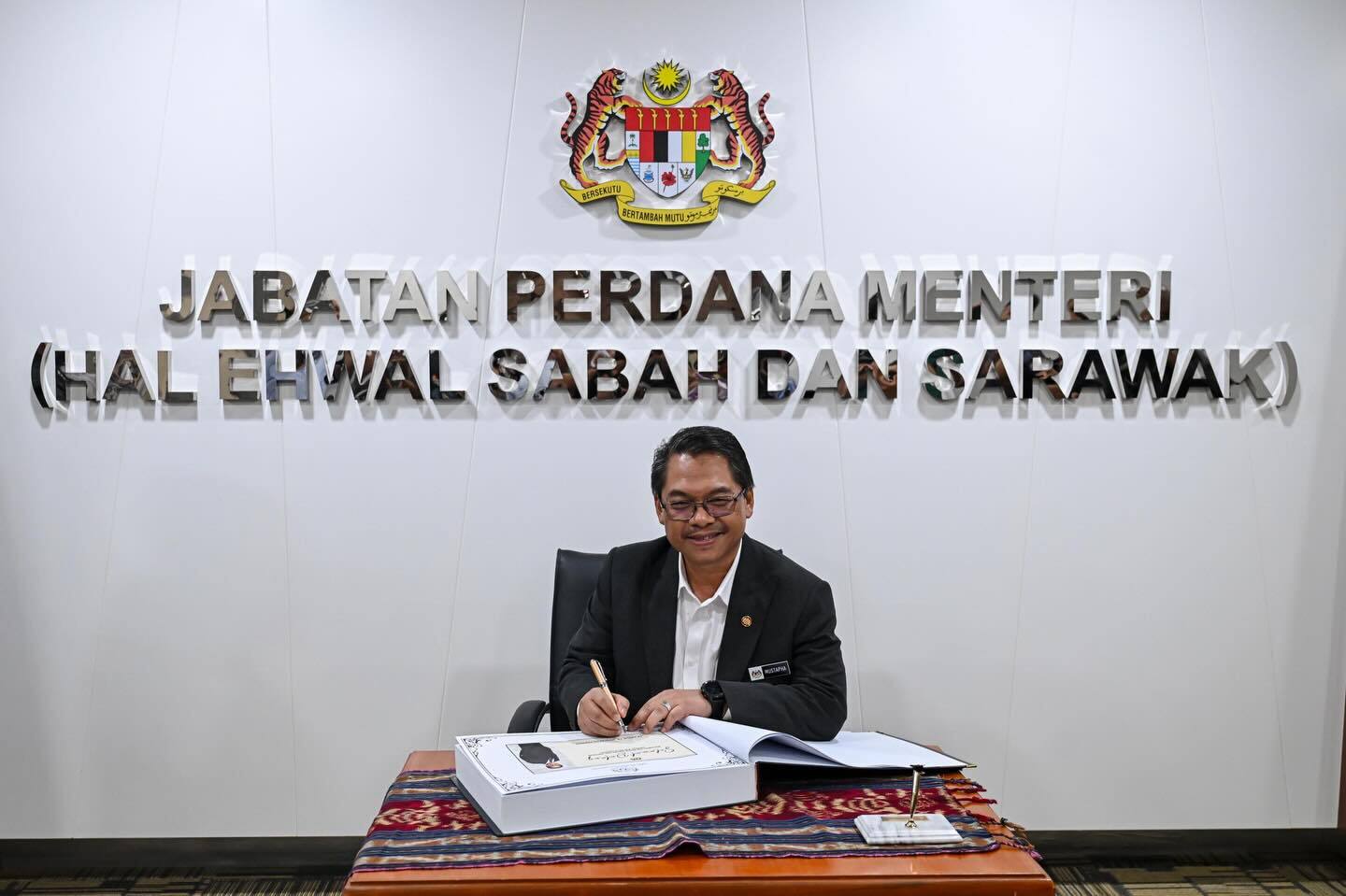
KUALA LUMPUR, Jan 21 — Minister in the Prime Minister’s Department Mustapha Sakmud has described the Regional Incentive Payment (BIW) allowance as a “privilege”, not an “entitlement”.
The minister in charge of Sabah and Sarawak affairs, who is also Sepanggar MP from PKR, said like other allowances for federal civil servants, BIW is subject to principles, criteria, and conditions for the provision of allowances.
“The granting of BIW is not an entitlement of civil servants; rather, it is a privilege conferred by the government as an addition to the salary received, to help defray the cost of living for civil servants originating from Sabah, Sarawak, and the Federal Territory of Labuan, as well as officers who are transferred between regions,” Mustapha told Dr Ahmad Yunus Hairi (PN-Kuala Langat) in a written Dewan Rakyat reply yesterday.
“This implementation is in line with the following principles for the granting of allowances:
- Non-universal: allowing allowances to be granted to specific groups or services based on the unique nature of the functional duties performed;
- Non-regular: stipulating that allowances are granted only under certain circumstances based on duties carried out beyond the usual scope by a particular service, group or job grade;
- Non-permanent: providing that allowances are paid on a fixed-term or temporary basis and may be withdrawn or discontinued at any time or upon the expiry of the approval period; and
- Fairness: ensuring that the granting of allowances is equitable and not restricted solely to specific services, groups, or job grades.”
The “non-universal” and “fairness” principles quoted by the minister seem to contradict each other.
“To encourage officers to serve in rural and interior areas in Sabah and Sarawak, including in Peninsular Malaysia, officers may receive the Location- and Hardship-Based Incentive Payment (BIMLTK) or the Rural Area Incentive Payment (BIP), based on the locality of the officer’s posting in challenging interior areas,” said Mustapha.
Dr Yunus had asked for the Public Service Department’s (JPA) rationale in interpreting BIW as a privilege instead of an entitlement, pointing out that the allowance has long been given to health care workers serving Sabah, Sarawak, and Labuan.
In a separate parliamentary question, Oscar Ling Chai Yew (PH-Sibu) asked about the government’s immediate measures to resolve the issue of medical officers rejecting postings to Sabah and Sarawak, following BIW cuts under the Public Service Remuneration System (SSPA).
The DAP lawmaker also asked about the possibility of restoring BIW as a progressive allowance based on a percentage of an officer’s salary to avoid a crisis of doctors’ shortage in East Malaysia.
However, Mustapha merely cited the mandatory Sabah/Sarawak option in the ePlacement system for contract medical officers offered permanent appointments, noting that last year, Sarawak (650) and Sabah (310) placements comprised 43 per cent of 2,248 permanent positions offered.
He also reiterated existing allowances for health care workers posted to Sabah and Sarawak.
“The increase in disposable income (take-home pay) through salary adjustments under the implementation of SSPA has taken into account the rising cost of living and the government’s current financial capacity,” said Mustapha in a written reply to Ling.
“In addition, from time to time, the government continues to implement initiatives to further strengthen human resource management across all health care facilities, including in Sabah and Sarawak, in order to provide the best possible health care services to the people.”
In a written reply to Dewan Negara last month, Health Minister Dzulkefly Ahmad revealed a 43 per cent no-show rate among 764 contract medical officers reporting for duty for permanent placements in Sarawak last year as of November.
Over the past year, doctors and pharmacists in the national health service faced a major blow from BIW allowance cuts for postings to Sabah, Sarawak, and Labuan.
Officers newly appointed from December 2024 received a fixed BIW rate of RM360 monthly, whereas the BIW allowance for existing officers was frozen at the last drawn amount before SSPA came into effect. Previously, BIW was a progressive allowance set at a percentage of one’s basic salary.
Despite outrage from doctors’ and pharmacists’ groups last month, who highlighted the loss of close to RM8,000 a year from the fixed-rate BIW allowance for medical and pharmacy officers, the health minister did not issue a response.
Mustapha made his statement in the House yesterday only because two MPs had asked about the BIW issue in the Dewan Rakyat.


