

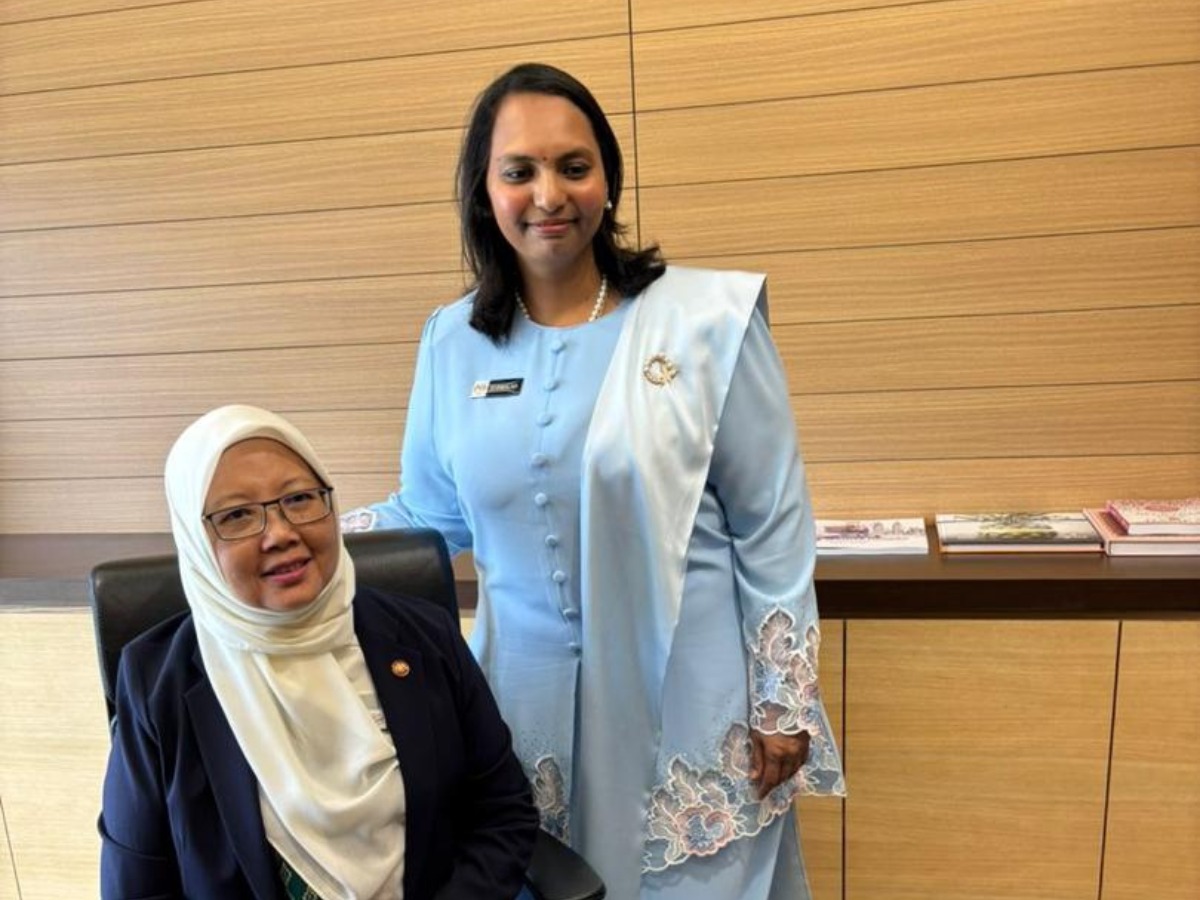
KUALA LUMPUR, Dec 22 — In what appears to be Malaysia’s first attempted corruption case involving legislation, a political aide alleges that a whopping RM50 million bribe was offered to then-Health Minister Dr Zaliha Mustafa to scrap the tobacco generational end game (GEG) policy.
G. Sivamalar, who served as an aide to Dr Zaliha when the latter was health minister from December 2022 to December 2023, wrote in an op-ed for Malaysia Gazette that Dr Zaliha had turned down the RM50 million offer.
“At the Ministry of Health (MOH), she had long shown her principles. She stood firm when facing tobacco companies and large corporate interests,” wrote Sivamalar in Bahasa Malaysia in her article published last Thursday.
“She was once offered RM50 million to drop the generational end game policy. She rejected it without hesitation and asked them to leave. I was there. I witnessed it myself.”
That account was also posted on Sivamalar’s Facebook page.
When CodeBlue asked whether she or Dr Zaliha had lodged a report with the Malaysian Anti-Corruption Commission (MACC) or the police, Sivamalar said they did not.
“No one could stop us that time. We didn’t want to waste time. We were just focusing on what we were supposed to do,” Sivamalar told CodeBlue last Saturday.
In response to CodeBlue’s question about which company or companies had made the bribe offer, Sivamalar replied, “So many people — through brokers. Random calls. We rejected outright even before talking about it. She refused to even meet anyone regarding that.”
Sivamalar said the RM50 million bribe offer happened at “the initial stage, way before” the tobacco bill was tabled in Parliament.
When CodeBlue further questioned when and where the RM50 million bribe offer was made, and which companies the intermediary claimed to represent, Sivamalar said initially, “Already two years. Can’t remember. Definitely not in person.”
CodeBlue pointed out that Sivamalar’s article indicated that the offer was made at an in-person meeting — “beliau menolak tanpa ragu dan meminta mereka keluar” — to which she then said: “That time, so many calls on this, meetings on this. Can’t remember exactly the details. Already two years.”
“What I remember clearly,” Sivamalar told CodeBlue. “We didn’t budge to any threat or offer. That’s the point I was trying to make. She was so principled.”
Sivamalar is a PKR central leadership council member, who previously served as political secretary to Dr Zaliha when the latter was federal territories minister from December 2023 until she was dropped in a Cabinet reshuffle last Tuesday.
Sivamalar’s anecdote about the RM50 million bribe offer to Dr Zaliha to scrap the GEG was mentioned in the former’s op-ed titled, “Dr. Zaliha, keberaniannya tidak berbunyi” (Dr Zaliha’s courage was quiet), that extolled her former boss’s virtues in public office as health and FT minister, and in party politics in PKR.
Despite Dr Zaliha’s alleged rejection of the purported RM50 million bribe offer, the Madani government ended up decoupling the GEG anyway from the tobacco bill tabled in the Dewan Rakyat in November 2023 when she was health minister.
The Control of Smoking Products for Public Health Act 2024 (Act 852) merely prohibits tobacco and vapes for minors below the age of 18, instead of banning these smoking products for anyone born from 2007 under the GEG.
When CodeBlue asked Sivamalar what had happened, she said: “All I know is a lot of MPs didn’t agree to our draft and we were told eventually, it will be passed and need to fine-tune.”
During a fractious and combative debate in the House of Representatives in November 2023, many MPs from both government and Opposition roundly condemned the decoupling of GEG from the tobacco bill, attributing it to Big Tobacco and vape industry influence.
Two years later, public discourse has shifted from GEG to a total prohibition of vape, though not tobacco. Dr Zaliha’s successor, Health Minister Dzulkefly Ahmad, recently told reporters that the government would ban e-cigarettes and vape by the end of 2026.
Dr Zaliha didn’t respond to CodeBlue’s request for comment last Saturday on the alleged RM50 million bribe offer to her; she posted on social media later that night that her mother had died.
Section 25 of the MACC Act 2009 legally requires people to report bribe offers made to them. Failure to report bribery transactions, including offers, is a serious criminal offence, subject to a fine not exceeding RM100,000, jail for up to 10 years, or both upon conviction.
It’s unclear if the MACC Act’s reporting obligation extends to witnesses, beyond the person offered a bribe.
Dr Zaliha, who remains a Pakatan Harapan backbench lawmaker, is Sekijang MP from Johor. The freshman MP was Malaysia’s first woman health minister.
Sivamalar’s bombshell revelation of a bribe offered to a Cabinet member – RM50 million no less – is the most extreme alleged example of tobacco industry interference at the highest levels of the Malaysian government and legislature.
Then-Deputy Health Minister Lukanisman Awang Sauni told the Dewan Rakyat in March 2024 that tobacco and vape industry influence had killed the GEG policy, noting that industry representatives had met with MPs in Parliament.
Dzulkefly later defended meetings between tobacco/vape lobbyists and Members of Parliament as “appropriate in any mature and civil democracy”.
The health minister also denied claims that the tobacco and vape industry had influenced the government and Cabinet, maintaining that the reason the GEG was dropped from the tobacco bill was because the Attorney-General’s Chambers (AGC) considered the generational tobacco/vape ban to be unconstitutional. Terrirudin Mohd Salleh was the attorney-general then.
According to the Global Tobacco Industry Interference Index 2025 by the Global Center for Good Governance in Tobacco Control, Malaysia’s score worsened to 77 this year from 66 in 2021 (a higher score means greater interference). The exclusion of GEG provisions from the tobacco bill was highlighted in the Malaysia report.
Roslizawati Md Ali, president of local anti-tobacco group MyWatch, told a press conference last September that Malaysia’s upward trend in tobacco industry interference undermined public trust. “Citizens deserve to know that policy decisions are based on health and science — not industry influence.”
Malaysia has been a party to the World Health Organization Framework Convention on Tobacco Control (WHO FCTC) since 2005.


