

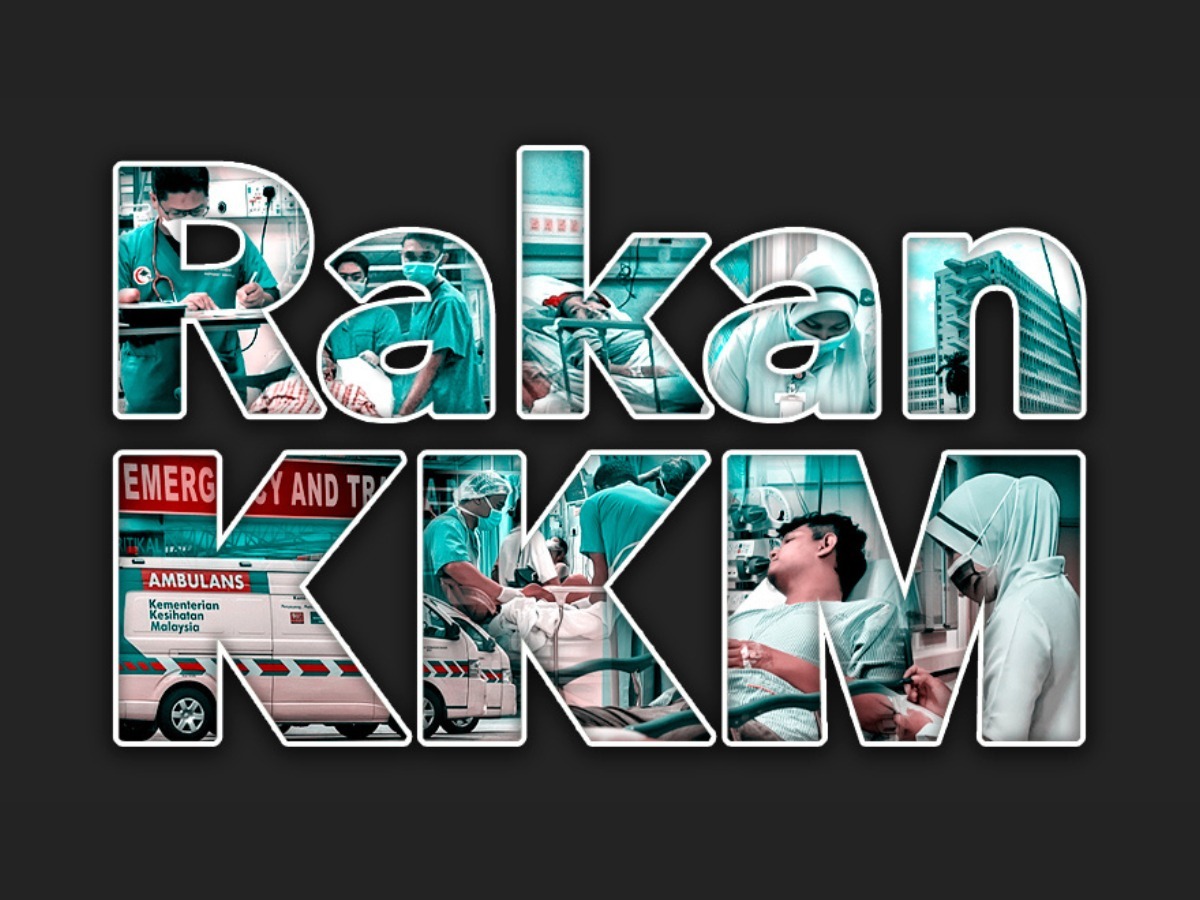
The Madani government is preparing to roll out the Rakan KKM scheme at several selected government hospitals, starting with Cyberjaya Hospital, Putrajaya Hospital, Sultan Idris Shah Serdang Hospital, and the National Cancer Institute (IKN).
On paper, the idea looks attractive: patients who can afford to pay extra will get faster access to elective surgeries and specialist care, while the money collected is promised to be channeled back into upgrading hospitals and rewarding health care workers.
Officials claim this is not privatisation, but merely a way to give “faster options” to those who want them. Yet beneath the polished rhetoric, the scheme carries worrying implications for the very foundation of Malaysia’s public health care system.
At its core, Rakan KKM risks creating a two-tier system inside what was once the last bastion of fairness: government hospitals. And if history has taught us anything, once the principle of equal access is broken, the slope toward silent privatisation becomes very steep.
Your Place In Line Now Depends On Your Wallet
Public hospitals used to operate on a simple principle: treat the sickest first. It didn’t matter if you were a CEO or a factory worker; if your medical need was urgent, you would be prioritised.
With Rakan KKM, that principle collapses. Suddenly, money becomes a ticket to jump the queue. If you can afford to pay, you’ll see a specialist sooner. If you can’t, you wait and in Malaysia’s overstretched system, waiting could mean months, even years.
Imagine a patient with worsening knee pain, unable to work properly, waiting for an elective surgery. Right now, he is in line with thousands of others. Under Rakan KKM, if someone with deeper pockets comes along, they simply pay and move ahead.
The poorer patient? He just stays in line, possibly for months to years while his condition deteriorates.
This is not just a matter of inconvenience. For many, delayed treatment means permanent disability, prolonged suffering, or even death.
The End Of Public Service Equality
Government hospitals were once the great equaliser in Malaysia’s health care landscape. Rich or poor, everyone was treated the same. That was the moral promise: if you walked into a public hospital, your wallet did not define the care you received.
Rakan KKM breaks that promise. Now, there will be two classes of patients: those who can pay more, and those who cannot.
The wealthy will get faster surgeries, shorter waiting times, and quicker access to specialists. The rest will be told to wait, sometimes indefinitely. The principle of equality that everyone deserves care on the basis of need, not wealth is quietly being dismantled.
And once this principle is lost, it may never be recovered.
More Pressure On An Already Struggling System
Malaysia’s public hospitals are already stretched to the breaking point. By the Ministry of Health’s own figures, the system is short of more than 11,000 specialists, operating at only 44 percent of what is needed.
Doctors are leaving for the private sector or migrating overseas because of burnout, low pay, and lack of career pathways. Nurses and support staff are overwhelmed. Patients wait months for basic consultations, sometimes over a year for surgeries.
Instead of fixing these systemic shortages, the government is now adding a new burden: doctors must split their time between regular patients and premium paying patients.
Which group do you think will get more attention?
Critical And Semi-Critical Patients Will Suffer
Supporters of Rakan KKM argue that it only covers “elective” care, not emergencies. But the line between elective and critical care is not always clear. A semi-critical patient today can become critical tomorrow.
Every hour a doctor spends on a paying patient is an hour not spent on someone else. The reality is simple: time is finite, and specialist attention is already stretched thin.
The risk is that even semi-critical patients, those who might deteriorate without timely intervention, will now wait longer because specialists are tied up serving those who can pay extra.
In other words: the sick may be left waiting, while the rich move ahead.
The Risk Of Abuse
The scheme also opens the door to abuse. Who decides how much time is spent on paying patients versus public patients? How will hospitals ensure fairness?
There are already fears that junior doctors and contract officers will be pushed to handle the regular load, while specialists devote themselves to the more lucrative paying patients. This could mean overworked juniors carrying the bulk of the system while seniors chase extra income.
The system is already fragile. Adding a profit motive into the heart of public service risks making it collapse entirely.
Government’s Defence: ‘This Is Reform’
Health Minister Dzulkefly Ahmad and DAP MP Young Syefura Othman have defended Rakan KKM. They argue it is not privatisation, but a reform needed to generate more revenue, both to upgrade hospital facilities and to improve the welfare of health care workers.
In theory, this sounds reasonable: more money means better equipment, better pay, and better services. But here’s the catch, once a public hospital starts selling privileges, it crosses a line.
The money may help in the short term, but the long-term cost is trust. Patients will no longer believe that the system is fair. Health care workers may become divided between those serving “premium” patients and those left to handle the rest.
This is how privatisation starts, not with a bang, but with subtle policies that slowly create two classes of care.
The Bigger Question: Where Is The Money?
Beyond the debate about fairness, there is a bigger question: why is Malaysia’s government resorting to this in the first place?
Over the past two years, Malaysians have faced dozens of utility hikes, new taxes, and expanded tax schemes. The government has boasted about securing “trillions in potential investment.” If all this is true, why is there still not enough money to properly fund public health care?
Why are hospitals so underfunded that they now need to charge patients for faster care?
And if the government can raise billions of ringgit in taxes, why can’t those billions go to hiring more specialists, upgrading equipment, and ensuring equal care for all?
A Slippery Slope Toward Silent Privatisation
Defenders of Rakan KKM say it is just an option, just a way to generate revenue, just a small reform. But “just” is dangerous.
Because once money becomes the deciding factor for access in public health care, the principle of equality is lost. Over time, the “premium” queue gets longer, the normal queue gets slower, and the gap between rich and poor patients grows.
This is how a system meant to serve all becomes a two-class affair. If you have money, you are king. If you don’t, you just keep waiting.
The Final Question For Madani
The Madani government claims to stand for fairness, compassion, and inclusivity. But Rakan KKM raises a haunting question:
Madani, do you realise what you are doing to Malaysia’s last safety net?
Once public health care is divided by wealth, the damage is irreversible. Equality, once broken, cannot simply be restored.
The people trusted the government to protect public hospitals as the great equaliser of society.
Instead, they now risk watching them turn into a place where wallets decide who lives with dignity and who suffers in silence. That is not reform; it’s betrayal.
Dr Carollyn Kek Chee Yen is president-elect of the Private Medical Practitioners’ Association of Selangor and Kuala Lumpur (PMPASKL).
- This is the personal opinion of the writer or publication and does not necessarily represent the views of CodeBlue.


