

KUALA LUMPUR, Oct 29 — Patients can take insurers and takaful operators (ITOs) or third-party administrators (TPAs) to court if they were affected by health insurance denials or delays, said a lawyer.
Raja Eileen Soraya Raja Aman, a management partner at Raja, Darryl & Loh, explained that litigation could be filed for breach of contract.
“An injured patient should hold accountable any party that the patient can prove has caused that injury,” Raja Eileen Soraya told CodeBlue on the sidelines of the Medico-Legal Society of Malaysia’s (MLSM) National Conference 2025 here last Saturday.
“So if that injury was caused by a wrongful denial of coverage or a delay in coverage, hence resulting in some harm, that patient should consider holding that insurer or third-party administrator (TPA) accountable by going to court.”
When CodeBlue asked if ITOs or TPA could still be sued, despite an unclear statutory framework governing health care payers in Malaysia, Raja Eileen Soraya said lawsuits could be filed under common law, beyond Acts in Parliament.
“We have a wealth of common law doctrine, not only in Malaysia, but we’re also guided by other common law jurisdictions to tap into that will then give rights and remedies to those in particular incidents that may be not covered by particular legislation.”
Raja Eileen Soraya, who practises in civil and commercial litigation, explained that if an insurer wrongly denied coverage of a policyholder, the cause of legal action would be breach of contract.
“That’s what the contract was supposed to cover; it was a bargain struck between parties, so why are they not covering it?”
Essentially, ITOs or TPAs can be held liable if insurance denials or delays lead to worsening of a patient’s condition or losses.
Raja Eileen Soraya added that if a patient sued a clinician and there was basis to assert that it was the insurer that had caused the harm, the clinician could issue third-party proceedings against the insurer.
From a legal perspective, she urged doctors to “stay in their lane” by recommending the best treatment plan to their patients, instead of considering the cost of care or insurance coverage in the practice of medicine.
“Extraneous considerations (which may or may not be accurately perceived) will not generally be accepted as justifiable grounds for departing from best practices and not recommending treatment or an approach that would be in the patient’s best interest,” Raja Eileen Soraya told CodeBlue.
The senior lawyer said she was not aware of any test case yet against ITOs or TPAs in Malaysia over health insurance denials or delays.
At a session at MLSM’s conference about whether the hospital-doctor relationship has been redefined, Raja Eileen Soraya’s presentation included CodeBlue’s nationwide survey among more than 850 private specialists that showed 99 per cent perceiving interference from insurance companies or TPAs with their clinical decision-making.
Payer interference in medical practice was described by the lawyer as a “current threat”.
“When things go south, who will be responsible for a poor patient’s outcome?” said Raja Eileen Soraya in her slides, as shared with CodeBlue, in reference to health insurance tactics of “delay, deny, revoke” in Malaysia.
Her presentation cited four court rulings in India, Canada, and the United States on cases involving insurance companies and managed care organisations:
- Dr A.M. Muraleedharan v. The Senior Divisional Manager, LIC of India & Another (2025, India)
- Clarfield v. Crown Life Insurance Co., [2000] O.J. No. 4074 50 O.R. (3d) 696 (2000, Canada)
- Aetna Health Inc. v. Davila, 542 U.S. 200 (2004, US)
- Wilson v Blue Cross of Southern California [222 Cal. App. 3d 660 (1990)] (1990, US)
Test Case May Be Necessary To Explore Payers’ Role In Health Care Delivery
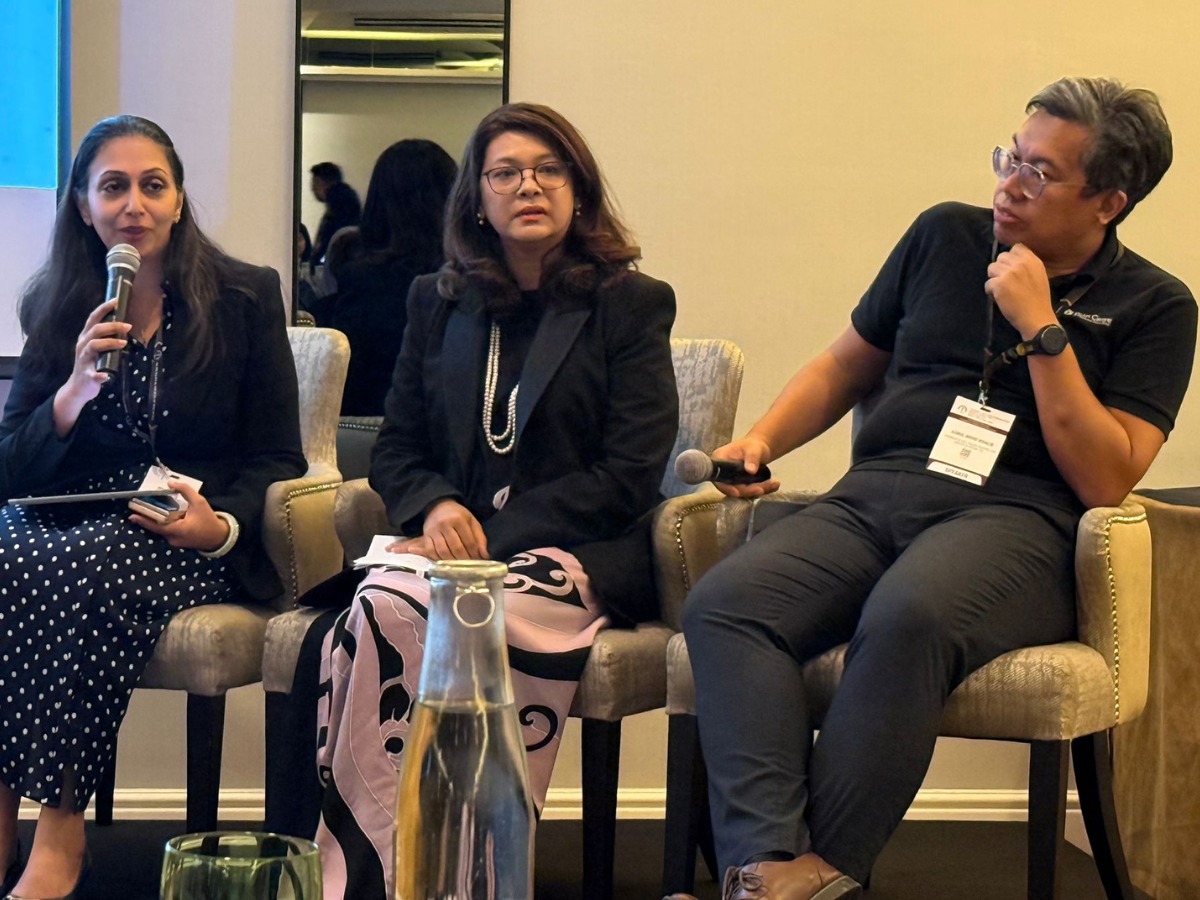
Galen Centre for Health and Social Policy chief executive Azrul Mohd Khalib, who spoke at the same session as Eileen Soraya at MLSM’s conference, said his presentation explored current issues that are shaping or changing the relationship between private hospitals and doctors.
These included the doctrine of non-delegable duty of care, particularly after the 2024 landmark Federal Court ruling in Siow Ching Yee v Columbia Asia Sdn Bhd that held private hospitals liable for medical negligence, rejecting the defence of doctors operating as “independent contractors”.
Azrul’s presentation also explored the developing situation regarding health insurance, takaful, and TPAs.
“Many of the arguments discussed referenced case law from the United States, which have explored the depth and breadth of the roles and scope of ITOs in the management and delivery of health care,” Azrul told CodeBlue, when met on the sidelines of MLSM’s conference.
“There are very few, if any, cases in Malaysian case law which deal specifically with circumstances and references specific to this country.
“It was agreed that a test case would possibly be needed to explore the issue, as well as provide judgements and arguments which set precedence and guide future decision-making.”
When asked about the conclusions from his session with Eileen Soraya, Azrul cited a need to reexamine how the burden and responsibility of medical liability is currently managed by hospitals and doctors, “especially when there is a possibility of ITOs having an influence or shaping clinical decision, which may or may not affect patient outcomes.”
“This is in light of the recent statements by the director-general of the Ministry of Health (MOH) and Bank Negara that warned against interference with clinical decisions, which may be illegal under existing laws such as the Private Healthcare Facilities and Services Act 1998 (Act 586),” said Azrul.
“Cost containment is an important factor, especially in dealing with medical inflation. However, it must not override the professional judgement of medical practitioners or the rights of patients to informed and consensual care.”
Health director-general Dr Mahathar Abd Wahab recently warned ITOs and TPAs that interfering with doctors’ clinical decisions may be illegal, citing Sections 82 and 83 of Act 586.
In response to CodeBlue’s health insurance survey among specialists, Bank Negara Malaysia similarly told ITOs and TPAs not to “direct” patient care that it said remains under the exclusive purview of clinicians.
The central bank maintained that claims must be honoured if treatments are established to be “medically necessary”, saying ITOs assess claims based on “accepted treatment protocols”, as guided by clinical practice guidelines.
CodeBlue’s 200-page health insurance survey report – which has penetrated not just the health sector, but also finance and legal sectors – contained hundreds of specialist testimonies about how ITOs or TPAs interfered with the practice of medicine, leading to increased patient morbidity and even mortality in some cases.
Specialists described insurers denying inpatient admissions by insisting on daycare or outpatient classification, rejecting general anaesthesia for surgeries, or refusing to cover standard therapies, including both innovative and generic medicines, among many examples of insurance interference in clinical decisions.
More than two-thirds of survey respondents have experienced cases of guarantee letters (GLs) being revoked or denied after admission or the start of treatment.
Insurers also frequently invoked “pre-existing condition” exclusions, most commonly diabetes, to deny coverage, even if such chronic conditions were incidental or unrelated to the admission diagnosis, like dengue, pneumonia, or fracture.


