

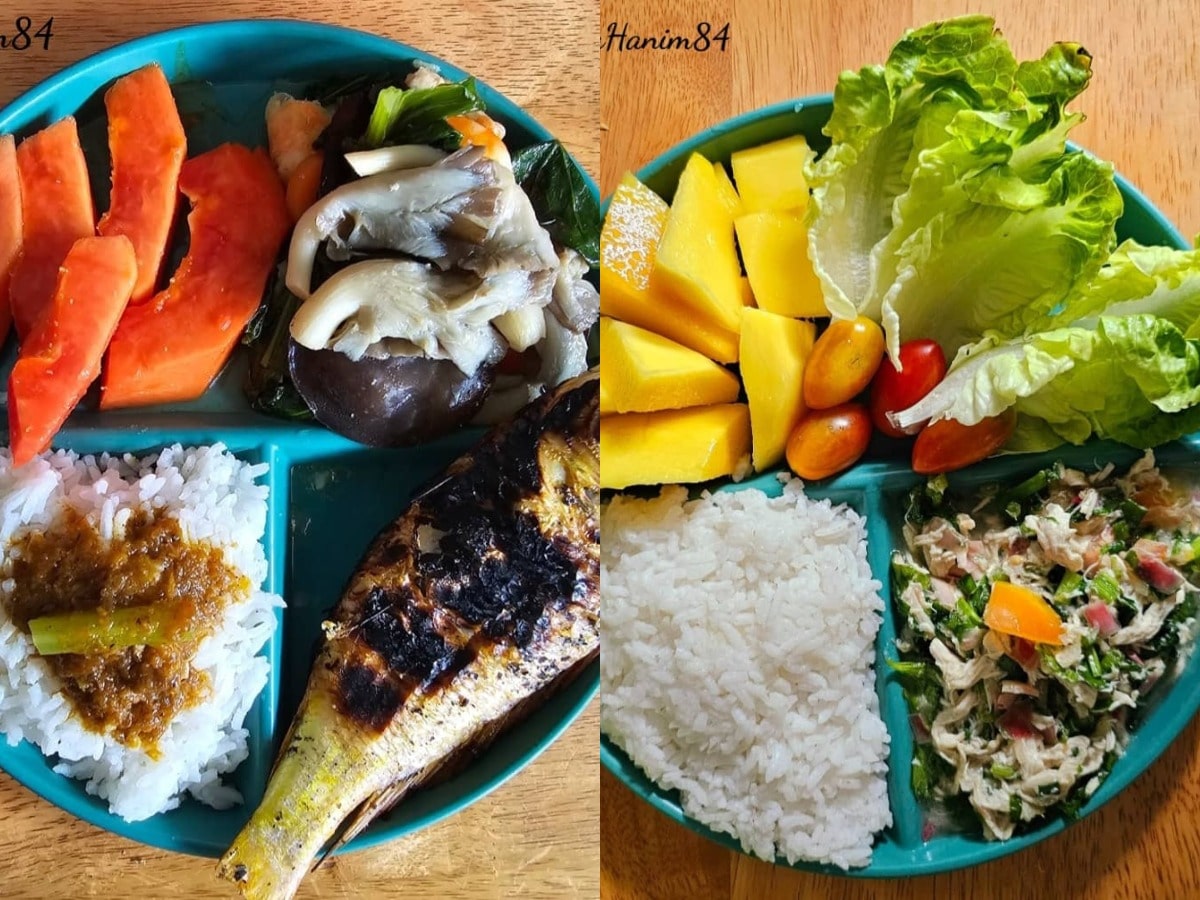
KUALA LUMPUR, Sept 22 — The Ministry of Health (MOH) has acknowledged that healthy “Suku-Suku Separuh” (SSS) meals may not be accessible to average or lower-income Malaysian families, but only wealthier people.
Citing the Household Income and Expenditure Survey 2022, the MOH noted that the bottom 40 per cent (B40) group spends 29 per cent of their income on food, almost double the national average of 16.3 per cent.
“The SSS concept, introduced in 2016 through the Malaysian Healthy Plate campaign, is simple and practical: one-quarter grains, one-quarter protein, and half fruits and vegetables.
“While the concept is sound, affordability remains a major barrier,” said MOH’s nutrition division, with inputs from the disease control division, in a commentary on a CodeBlue article titled: “‘Suku-Suku Separuh’ Meals Unaffordable For Most Malaysian Families, Survey Shows”.
CodeBlue reported a recent survey by the Galen Centre for Health and Social Policy and Universiti Teknologi MARA (UiTM) that found eating two daily SSS meals costs 46 per cent of Malaysia’s median household income, ranging by state from 32 per cent in Labuan to 66 per cent in Sarawak. A Suku-Suku Separuh plate costs about RM12.60 on average nationwide.
Citing Engel’s law, the MOH pointed out that food accounts for only 10 per cent to 11 per cent of household income in high-income countries like the United States, but 25 per cent to 40 per cent or more in developing countries.
“Malaysia sits uncomfortably between these extremes, leaving lower-income households highly vulnerable to food price hikes,” said MOH’s nutrition division.
Engel’s law is an economic principle, proposed by German statistician Ernst Engel in 1857, that describes how the proportion of income spent on food decreases as a household’s income rises, even if absolute spending on food increases. This is because once basic food needs are met, extra income tends to be spent on non-food items like housing, education, entertainment, savings, etc.
The Galen Centre-UiTM poll demonstrates Engel’s law. Although a Suku-Suku Separuh plate is most expensive in Kuala Lumpur at about RM16.30, eating two daily SSS meals costs 37 per cent of household income in the capital city.
In comparison, although a Suku-Suku Separuh plate is the cheapest in Kedah at about RM8.50, eating two SSS meals a day costs 45 per cent of household income in the northern state.
MOH’s nutrition division pointed out that Malaysia faces a double burden of malnutrition, alongside an increasing trend of non-communicable diseases (NCDs).
More than half of adults are overweight or obese, one in six has diabetes, and almost all fail to eat enough fruits and vegetables. NCDs already cost Malaysia an estimated RM64 billion a year.
“If healthier diets remain financially out of reach, the prevalence of NCDs will likely remain high for years to come,” said MOH’s nutrition division.
“Malaysia’s public health system, already stretched and heavily burdened, cannot indefinitely absorb the escalating costs of long-term NCD care.
“Towards a ‘Healthier Malaysia’, the SSS concept remains a sound guide to better nutrition. But without tackling affordability, it risks becoming a privilege for the few.
“As Malaysia faces the dual challenge of rising NCDs and growing living costs, nutrition policies must focus as much on affordability and access as they do on education and awareness. Prevention through accessible, healthy diets is far more sustainable than paying endlessly for NCD treatments.”
Affordable Protein Alternatives, Cook At Home
MOH’s nutrition division suggested more affordable alternatives that provide nearly the same nutritional value (both macro- and micronutrients), such as chicken and eggs instead of beef, as well as plant-based protein like tempeh and dhal, as more economical sources of protein.
“Similarly, buying local and seasonal vegetables can help reduce expenses without compromising nutrition.”
The Health Ministry recommended cooking at home, saying that families could buy raw ingredients in bulk, select seasonal produce, and adopt healthier cooking methods while reducing reliance on excessive salt, sugar, and oil.
“This not only lowers food expenditure compared to dining out, but also enables households to consume healthier meals tailored to their needs.”
MOH also cited its MyMeal and the Domestic Trade and Cost of Living Ministry’s (KPDN) Menu Rahmah initiatives.
MOH awards MyMeal recognition to menus that meet healthy eating criteria based on the Malaysian Healthy Plate model, include plain drinking water, and are priced at not more than RM6 to RM8 in peninsular Malaysia, and RM8 to RM10 in Sabah, Sarawak, and Labuan.
KPDN’s Menu Rahmah programme is a voluntary initiative where food and beverage (F&B) operators offer a balanced lunch or dinner set for no more than RM5.
“These meals typically include rice or an equivalent carbohydrate, one source of protein such as chicken or fish, and vegetables. However, as the programme is business-driven and voluntary, some operators have been reported to compromise on the nutritional quality that do not fully reflect the intended purpose of providing healthy and balanced meals,” said MOH’s nutrition division.
Menu Rahmah at some fast food restaurants doesn’t include fruits or vegetables, but only chicken and a bun. At some hypermarkets, Menu Rahmah includes rice, fish or chicken, and vegetables (mostly white vegetables instead of green leafy vegetables), but no fruits.
“Public education also helps Malaysians make healthier food choices. But these efforts alone are not enough. What is urgently needed are policies that make nutritious food more affordable,” said MOH’s nutrition division.
The ministry called for the national Sara aid programme to be expanded to cover fruits and vegetables, with targeted and consistent assistance to low-income households.
“In addition, fostering greater collaboration with the Ministry of Agriculture and Food Security (KPKM) and other relevant ministries and agencies under the Cabinet Committee on National Food Security Policy (FSCC), as well as with KPDN through the National Cost of Living Council (Naccol) with involvement of industry players is crucial to ensure availability, accessibility and affordability of nutritious foods for all.”
In a statement to CodeBlue, Agriculture and Food Security Minister Mohamad Sabu dismissed a link between Suku-Suku Separuh affordability and local food supply issues, merely describing SSS as a public health and healthy eating strategy.


