

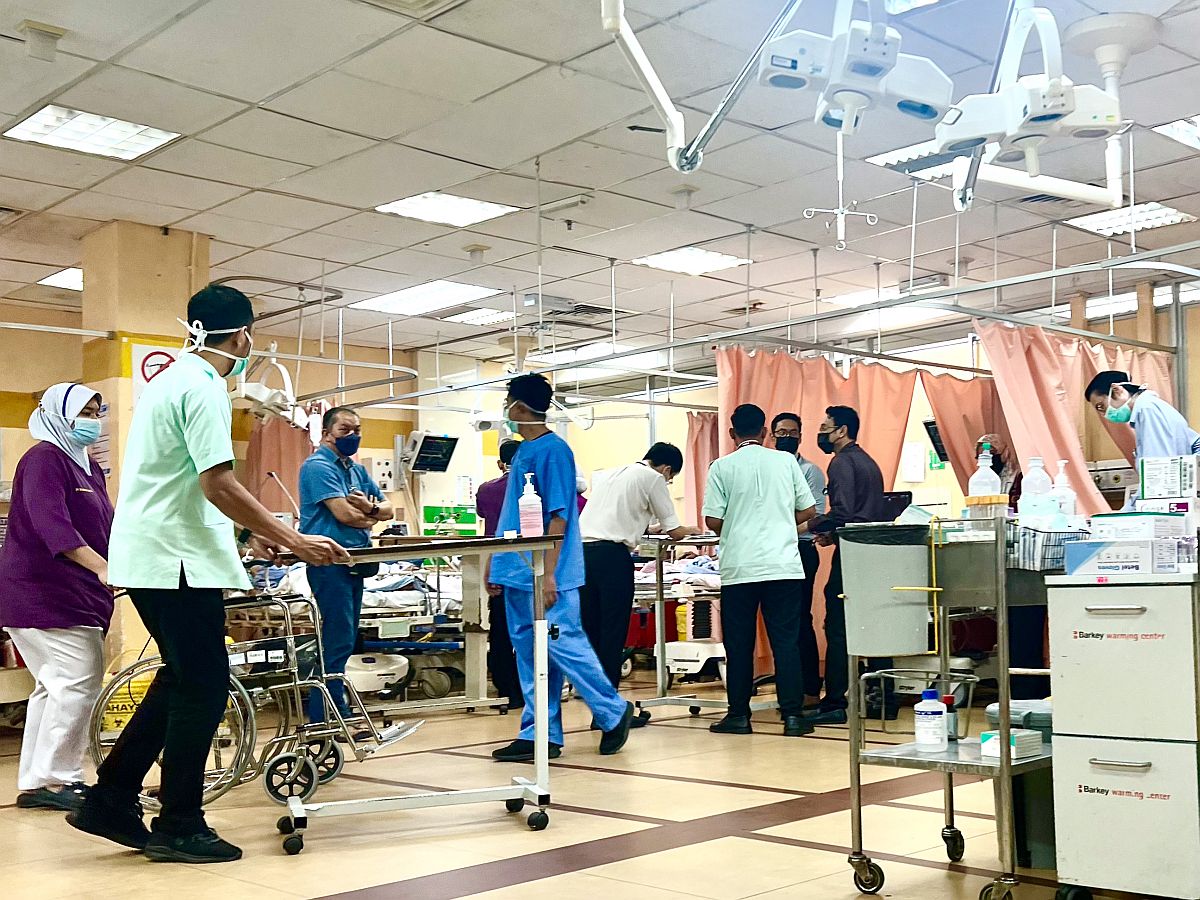
KUALA LUMPUR, April 23 — The traditional mindset that civil servants should just go wherever they’re posted no longer appears to be held by doctors in the health service, according to a CodeBlue survey.
In a recent CodeBlue poll on 938 contract and permanent medical officers (MOs) across the country – mostly senior doctors in their 30s and 20s with at least three years of experience in government service – 62 per cent said they would rather quit than serve outside their home state.
But the picture is more complex: a case study on the Perak subsets of the survey shows that not all doctors born in Perak want to serve their home state and vice versa (not all who selected Perak as a preferred placement were born there).
One interesting finding is how medical officers prioritise family above career: 61 per cent ranked state above department and facility type in deciding where to serve, while 86 per cent, for whom state is an important factor, want to serve where their family resides.
Below is a selection of verbatim quotes from survey respondents, who are all working at health care facilities under the Ministry of Health (MOH):
‘Just Let Us Choose What We Like’
Personal choice emerged as the strongest theme among the over 400 responses to a survey question seeking opinions on how to reform the placement process for MOs.
Many doctors expressed a desire to choose their postings, akin to being in a job, as opposed to conventional government service.
“Give us what we want. It’s not like the salary we are getting will keep us working in KKM. Sending us off when we already have commitments and families etc will make us quit. Stop giving excuses – ‘you are serving your country’. Without fair treatment and better pay, people would still leave for a better life. Who wouldn’t?” — contract MO at MOH hospital in Negeri Sembilan, 3-5 years in service.
“Nowadays, many doctors will prioritise themselves and their families above their careers. Give doctors a chance to serve in their desired locations and to be with their families. Don’t make it a culture to separate spouses and their children for the sake of career; this will reduce doctors’ motivation to last in the government sector” — permanent MO at MOH hospital in Kuala Lumpur, 6-7 years in service.
“Allow doctors to serve in the state they want to serve in with their family support” — contract MO at MOH hospital in Perak, 3-5 years in service.
“I have very little experience with this issue, but I think it’s better to allow what people request. This would also make people willing to work despite the low salary and tired environment. People request certain places for a reason” — contract MO at MOH hospital in Perlis, less than 3 years in service.
“I think that medical officers have the right to be given the opportunity to work at the place of their choice, their preferred facility and desired department. If such a right is met, I’m sure there won’t be any more quitting from KKM and there won’t be any manpower shortages. If they give, I’m sure we will give more in return. If only our voices are heard, it will be a win-win situation” — contract MO at MOH hospital in Pahang, 3-5 years in service.
“Prioritise MO’s choice and preference of department first, then state. If there are limited departments in that particular state, meaning more applicants than slots available, interviews could be done to select the final candidates. Those who did not pass the interview might need to wait for the next opening or go with their second or third choice of department/ state. I believe the most important determining factor is in which department we are going to work in. Some people might have had preference and exposure in certain departments for some time despite not having external exam papers’ qualification/ MEDEX, but still that does not deny the fact that they have had certain exposure for that field.” — permanent MO at MOH hospital in Sabah, 3-5 years in service.
Several doctors participating in the survey also called for a system to enable them to mutually exchange postings. Health Minister Dzulkefly Ahmad said last February that the MOH’s Mutual Posting Swap Platform, or “Suka Sama Suka”, will be launched this month. But with just a week left in April, he has yet to announce the launch.
Family First
Many respondents cited family priorities, whether they were married with or without young children, or single people with elderly parents.
“Please consider placing us near our ageing parents. It’s unfair as we are serving the public, but our parents’ health and welfare are neglected as we’re placed far away” — contract MO at MOH hospital in Sarawak, male, 20s, single.
“I think I speak for the majority who are married to other medical health care workers. Please do something about placement for the married couples or the ones with children…the least that should be done is to place them in the same state. I drive during postcalls two to three hours just to meet my husband for a day or so, then I have to drive back, which isn’t the safest. We have no choice if we want to make the most of time and meet, since we both are in on-call based departments and work on weekends and living in different states” — contract MO at MOH hospital in Selangor, female, 20s, married with no children.
“Take into account people’s families. I have been serving in a rural clinic for two years and delayed having my first child, but I was still placed far away from my family. It’s time to let doctors take turns to go to district, not always the same ones” — permanent MO at Klinik Kesihatan in Sarawak, female, 30s, married with at least one child.
“Priority to those married women who need to work far and stay away from family and child alone” — contract MO at Klinik Kesihatan in Johor, female, 30s, married with no children.
“Please don’t post people out of their place just because of their marital status. Single does not mean portable to anywhere you want” — permanent MO at MOH hospital in Perak, male, 30s, single.
Decentralise Placements To Individual Hospitals, Year-Round Recruitment
A few respondents suggested decentralising placements to individual facilities or hospital departments and to open recruitment throughout the year, instead of the current centralised practice of fixed intakes by the Human Resources Division (BSM) at MOH’s Putrajaya headquarters.
“Facilities or at least State has the authority to open up slots and let others apply directly to the facilities/ state. If they have more, they can do an internal interview with certain weightages being put on decided criteria” — permanent MO at MOH hospital in Negeri Sembilan, 6-7 years in service.
“Give hospitals more independence in salary and hiring/ firing” — contract MO at MOH hospital in Perak, 3-5 years in service.
“Make it an all-year long process (not scheduled at certain times). Give flexibility to choose and relocate to other areas as preferred. For urban area etc, I suggest mandatory two years’ service with GUARANTEE transfer back to any place preferred at the end of contract; no delay or even lengthening the time window of two years” — permanent MO at MOH hospital in Perak, 3-5 years in service.
“1. Open application direct to hospital/department. 2. Department position availability in the hospital (to prevent being transferred to different departments). 3. Be given the option of staying at the same hospital/department” — contract MO at MOH hospital in Perak, 3-5 years in service.
“Advertise empty MO jobs and apply. Go for interview by specific department/ hospital” — permanent MO at MOH hospital in Putrajaya, more than 7 years in service.
Multiple doctors also demanded the ability to remain at their current place of work, instead of being forced to relocate when they transition from contract to permanent status.
Proposals For A New System
A few doctors proposed new placement processes to replace the first-come, first-served ePlacement system.
Permanent MO at MOH hospital in Pahang, 3-5 years in service:
“One approach that KKM could consider is adopting a system similar to the UPU application process, where SPM candidates select their preferred universities and fields of study, providing up to 10 choices. In this context, medical officers could be given the opportunity to list their top 10 preferred facilities and departments.
“Alongside these preferences, candidates would submit supporting documents such as their work experience, courses attended, and exams taken (whether passed or not, as this demonstrates commitment). They could also include any relevant social or personal issues, if desired. Hospitals or departments listed in the candidates’ choices could then evaluate applications and either accept them directly or conduct interviews or exams to identify the best fit for their facilities.
“This process mirrors the postgraduate admission system at university institutions, where interviews are required for acceptance. Ultimately, this system would provide transparency and clarity for candidates, as they would know whether their applications were accepted or not. If none of their 10 choices are available, KKM could then step in to assign placements elsewhere based on organisational needs. This approach balances candidate preferences with operational requirements while fostering a fair and merit-based placement system.”
Contract MO at MOH hospital in Kuala Lumpur, 3-5 years in service:
“We should consider implementing MO posting like that of Singapore. Every six-monthly or yearly, we have a national MO posting exercise, which should allow MOs to rank the top 10 departments and hospitals of their choice. Then the individual hospital department should rank the candidates according to resume and recommendations.
“It will be entirely based on merits and the department ranking, fair and square if they get into the department of their choice (MOH to decide the number of slots allocated for each department). If they do not, they can try again next cycle. We should also have a clear pathway for those who plan to do a Master’s (like that of the Singapore residency programme).”
Permanent MO at Klinik Kesihatan in Sarawak, 6-7 years in service:
“Placement should begin from housemanship. The first selection is where doctors will undergo training and it is usually based on the doctor’s preference, unless there are no vacancies. After completing their housemanship, they move on to become contract MOs. Indirectly, the MO will be floating in the department they are interested in at the teaching hospital where they completed their housemanship. They are already familiar with the hospital’s system from A to Z. This plays an important role.
“Absorption of the MO into departments or any available vacancies in that hospital or surrounding hospitals/ public health clinics should be based on the doctor’s interest (the reason for internal or nearby placement is because the MO already understands the system there). If they get a permanent position, it should follow the same principle—internal absorption.
“For officers who wish to transfer to another state, they must submit an application, and this process should be made easier—without delays and with proper feedback. Developing an application or upgrading the HRMIS system to allow officers to open up their positions to others who want to switch with them (on the Suka Sama Suka basis) is also a good idea.
“It would be better if there were a decentralised system, where placements are managed by the state health department (JKN), starting from MOs who have just completed housemanship. This is to avoid chaos or imbalance between the number of outgoing and incoming doctors. JKN knows their needs better.
“Unless the doctor wants to transfer to another JKN, then an application must be submitted (this application system must be transparent, efficient, and fast without bureaucratic delays).
Housemanship selection can still use the current federal or national system, but it should be upgraded to be more efficient. The first come, first served principle should still apply because each place has a different number of vacancies. If the preferred hospital is full, then the officer must choose another location.”


