

KUALA LUMPUR, April 18 — The Ministry of Health (MOH) has instructed all public hospitals to assign house officers in the internal medicine department exclusively to general wards, barring their placement in subspecialty units, cluster hospitals, or external case reviews.
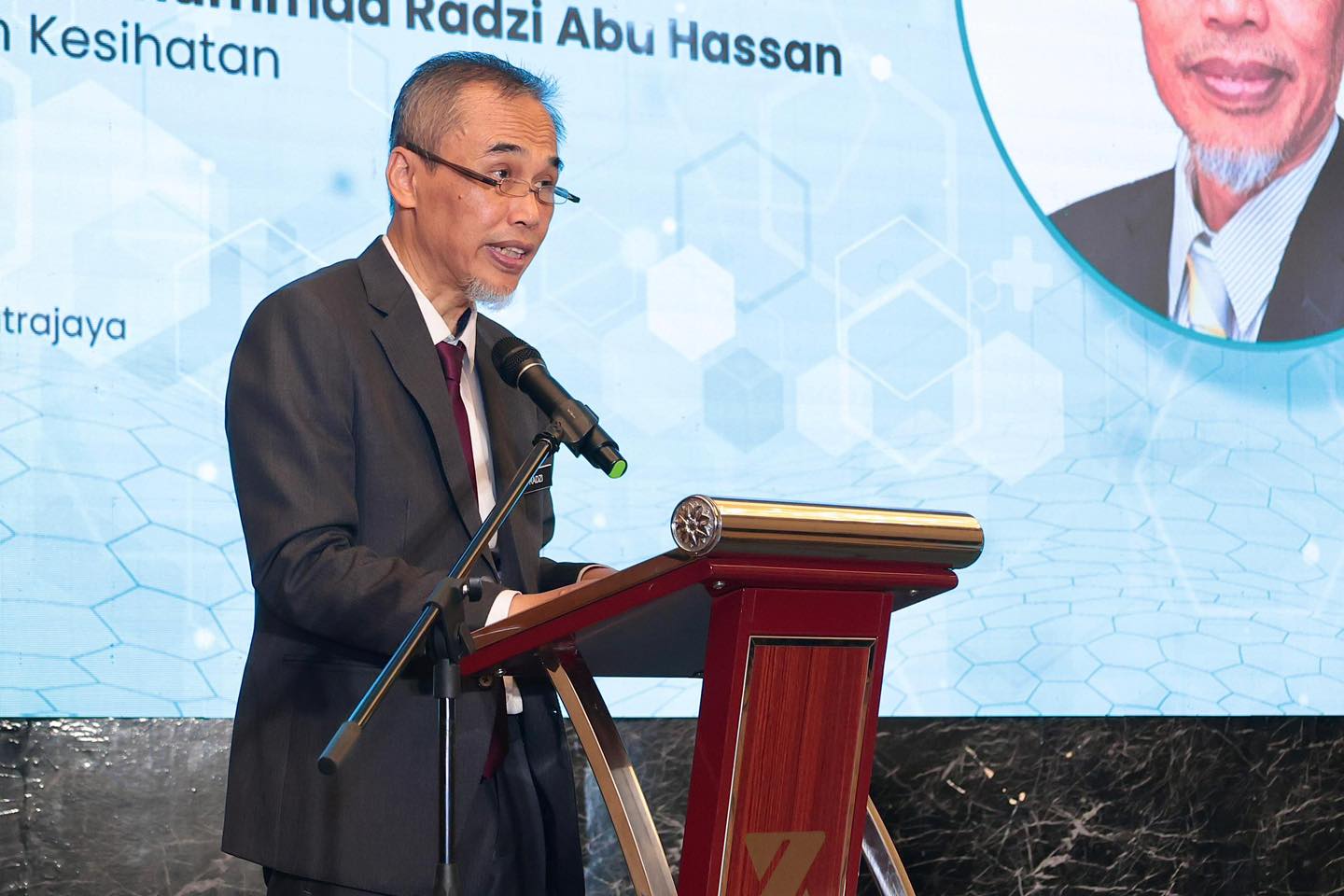
In a circular dated April 11, 2025, Health director-general Dr Muhammad Radzi Abu Hassan said the directive was issued following continued reports of house officers being placed outside main wards, despite a similar instruction issued on April 5, 2024.
“This office would like to emphasise that all hospital directors and heads of medical departments must realign the placement of house officers centrally – that is, only in the main wards,” Dr Radzi wrote in the circular, which was posted on the Malaysian Medical Association’s Section Concerning House Officers, Medical Officers, and Specialists (MMA Schomos) Facebook page on Wednesday.
“House officers are not allowed to be placed in sub-specialty units, departments or wards, are not required to attend referred cases in other wards with medical officers, and are not allowed to follow physicians or medical officers to cluster hospitals.”
Hospital directors and heads of departments have been directed to ensure that house officers are not assigned to accompany medical officers or specialists to other wards or hospitals, and are not involved in reviewing referral cases from other departments.
Dr Radzi said not all medical wards will have house officer placements under this policy. In facilities with multiple general wards, house officers must remain in each ward for a minimum of two weeks before rotation.
“This is to ensure that the continuity of training for house officers is not affected and becomes more focused,” he said.
Dr Radzi also stressed that house officer placements are intended strictly for training purposes, not to address staffing shortages. “It must be emphasised that the placement of house officers is specifically for training purposes and not to substitute the workforce in addressing human resource shortages.”
The directive was approved during the Special Meeting of the Health Director-General No. 3/2025 on March 17. State health directors have been instructed to monitor implementation in line with the MOH’s Program Penempatan Siswazah (PPS) guidelines.
MMA Schomos questioned the implications of the policy on training, stating: “How will this affect the training of house officers? Interdepartmental diplomacy is an important training item during housemanship.”
In the comments section, several medical practitioners expressed concern about the narrowing scope of housemanship training, as well as staff shortages in public hospitals.
One wrote: “At this point, we might as well ask the DG to abolish housemanship altogether. It no longer serves its original purpose as a training phase; it has become more about comfort and care than preparing doctors for the real challenges ahead.
“House officers should be rigorously trained so that by the time they receive full Malaysian Medical Council (MMC) registration, they’re capable of functioning independently and responsibly, especially given the legal and clinical expectations placed on them.
“The reality is, the medical field has become increasingly demanding, yet we are inadequately preparing our trainees for it. This is why we’re seeing so many HOs quit immediately after completing their housemanship — they lack resilience and adaptability because these traits were never nurtured during their early training.”
Another doctor wrote: “Over time, houseman training is becoming more and more limited. No wonder they don’t even bother to review patients or join the rounds these days.”
CodeBlue has contacted Dr Muhammad Radzi for comment on whether the ministry is aware of hospitals possibly using house officers to cope with workforce shortages, as implied in the circular. Despite previous directives, the April 11 circular noted that some hospitals continued placing house officers outside general wards.
Among the questions raised are whether such practices are driven by staffing gaps, and if so, what the MOH is doing to address these shortages, now that house officers are expected to focus exclusively on training. CodeBlue also asked if the ministry is considering scaling down certain services in affected hospitals.
Dr Radzi acknowledged the inquiry, but has yet to provide a response at the time of writing.


