

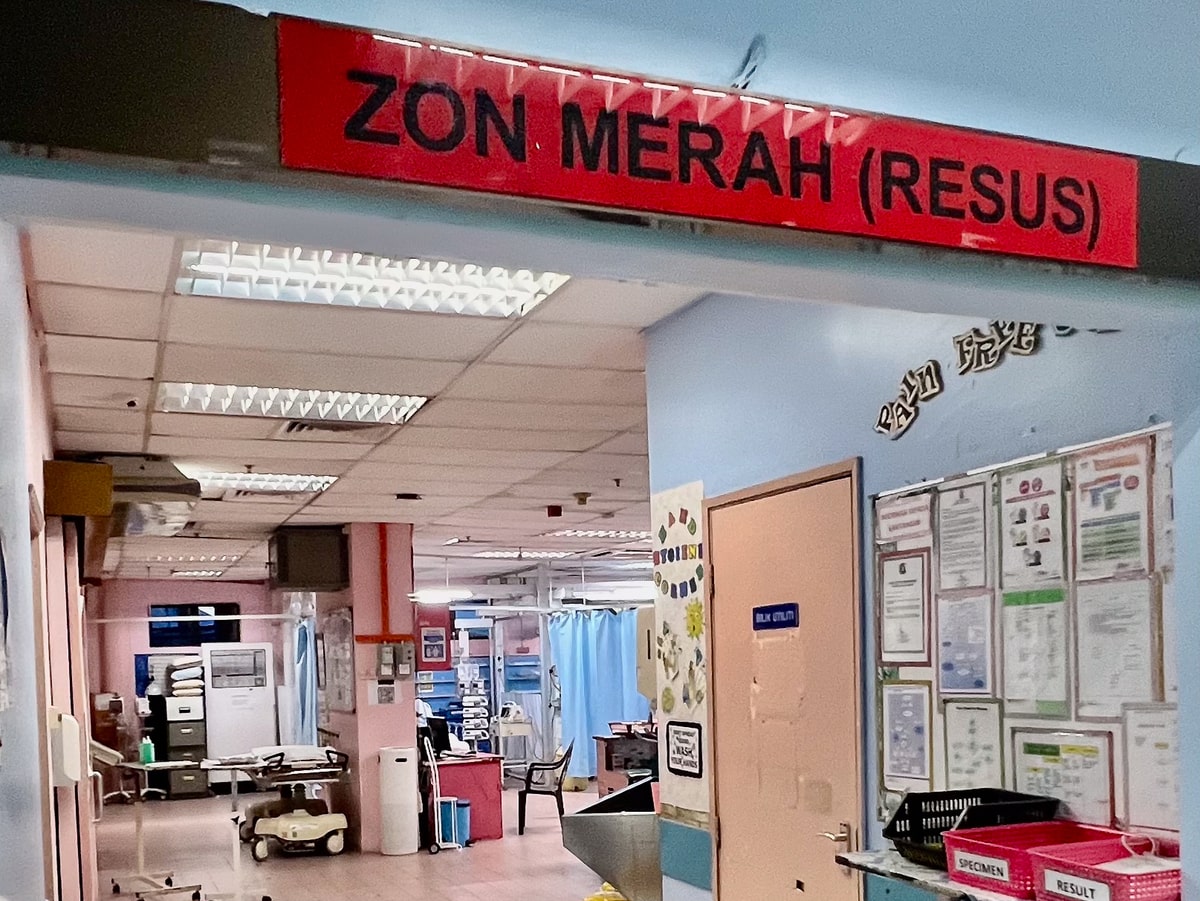
Perhaps those sitting comfortably in their ivory towers are either tone-deaf or deliberately indifferent.
How else can we explain their disregard for the people holding this fragile system together – the doctors, nurses, and support staff grinding tirelessly on the ground?
Without us, you are nothing. Let me say it again, loud and clear — without us, you are nothing.
If medical officers like me leave the public sector en masse, who will you govern? Who will you serve? Open your eyes. The writing is on the wall.
Each year, fewer house officer (HO) positions are filled. Bright young minds, once drawn to the prestige of medicine, are now walking away. Why? Because of the intolerable conditions we endure. The lack of respect. The endless sacrifices that go unacknowledged.
Meanwhile, the system continues to haemorrhage talent. Nurses are leaving in droves for the Middle East, Singapore, and other countries where they’re paid significantly better.
Can you blame them? Who wouldn’t want to escape this relentless grind for a decent wage and a healthier work-life balance? It’s maddening. The gaps they leave behind are gaping, and we’re left struggling to hold everything together.
You ignored our warnings, now young people see the reality. They see our suffering and refuse to join the profession. Medicine, once a career of honour and purpose, has become a soul-crushing grind. And you expect the next generation to step into this mess?
Don’t fool yourselves into thinking we don’t have options. If it weren’t for my elderly parents depending on me, I’d have packed my bags and left for greener pastures in a foreign country long ago. That’s the truth. And I’m not alone.
How much longer do you think public health care can survive like this? How close are we to complete collapse? When that day comes, it won’t just be the system that crumbles. The people – the rakyat – will suffer. And the blame will rest squarely on your shoulders.
Those in ivory towers expect us to keep grinding through impossible hours, pretending everything’s fine. Let me spell it out for anyone who doesn’t understand our reality.
“Normal” working hours for on-call doctors in Malaysia look like this: punch in at 8am on Monday (if you’re lucky; we often start by 7am) and punch out at 5pm the next day. That’s 33 hours straight.
Now imagine doing that twice a week, eight times a month. Throw in two weekend calls a month, and you’re clocking 318 hours a month. That’s nearly 80 hours a week. Compare that to Malaysia’s labour laws, which clearly state the maximum working hours are 45 hours a week.
Are we not bound by those laws? Are we not human? Or are doctors some kind of expendable labour force?
And then there’s the endless talk about Waktu Bekerja Berlainan (WBB). What a joke. How do you expect to achieve that when there aren’t enough doctors to share the workload? Where are the doctors? I’ll tell you — they’ve left.
Too few HOs lead to too few medical officers (MOs), which eventually leads to too few specialists. The cycle is vicious and it will continue unless bold, systemic changes are made.
Working WBB for 18 hours might be acceptable if it were fairly compensated — but it’s far from that. Denying claims on weekdays is nothing short of exploitation, and even weekend claims fail to justify the time, energy, and sacrifice involved. For context, I could locum at any GP clinic and earn at least RM40 per hour and this can go up much higher, yet WBB offers a meager RM11.90 per hour (weekends only!). This isn’t just unfair — it’s demeaning to the profession. Exploitation is the only word that fits.
It’s time to set a maximum number of working hours per week, including overtime and on-call hours. The current system is not just inhumane — it’s deadly. Long working hours, particularly those exceeding 55 hours per week, have been directly linked to an increase in global deaths from stroke and heart disease, accounting for 745,000 deaths in 2016, according to a WHO-ILO study.
These numbers disproportionately affect men and workers in Asia — exactly the demographic many of us fall into. If we must continue working, cap total working hours, including overtime and on-call, to a maximum of 55 hours per week. Stop ignoring the science. Stop ignoring our humanity. The time for change is now.
To the “dinosaurs” in the system who say, “During my time…” — let’s get real. Can you seriously compare your workload to ours? What was the mortality rate during your time? Patient satisfaction? Waiting times in clinics and emergency departments? How many complaints flooded SISPAA back then?
If today’s key performance indicators (KPIs) and hospital performance indicators for accountability (HPIAs) are failing, the reasons are obvious: manpower shortages and lack of resources, no need for shortfall in quality (SIQs) or root cause analysis (RCAs).
I’m done. I’m exhausted. I’m working just to pay my bills. My passion for medicine burned out long ago. I’ve received offers from the private sector, and I’m seriously considering leaving.
The spark that once drove me in this field is gone. Those in power, you have failed me. You have failed all of us.
Take action now. Improve our well-being. Stop turning a blind eye. We are overworked, burned out, and underappreciated. The warning signs have been flashing for years. If you don’t act, the consequences will be catastrophic. Time is running out. The few of us who still care enough to raise our voices are losing hope.
Do something. Now. Before it’s too late.
The author is a medical officer at a government hospital in Selangor.
- This is the personal opinion of the writer or publication and does not necessarily represent the views of CodeBlue.


