

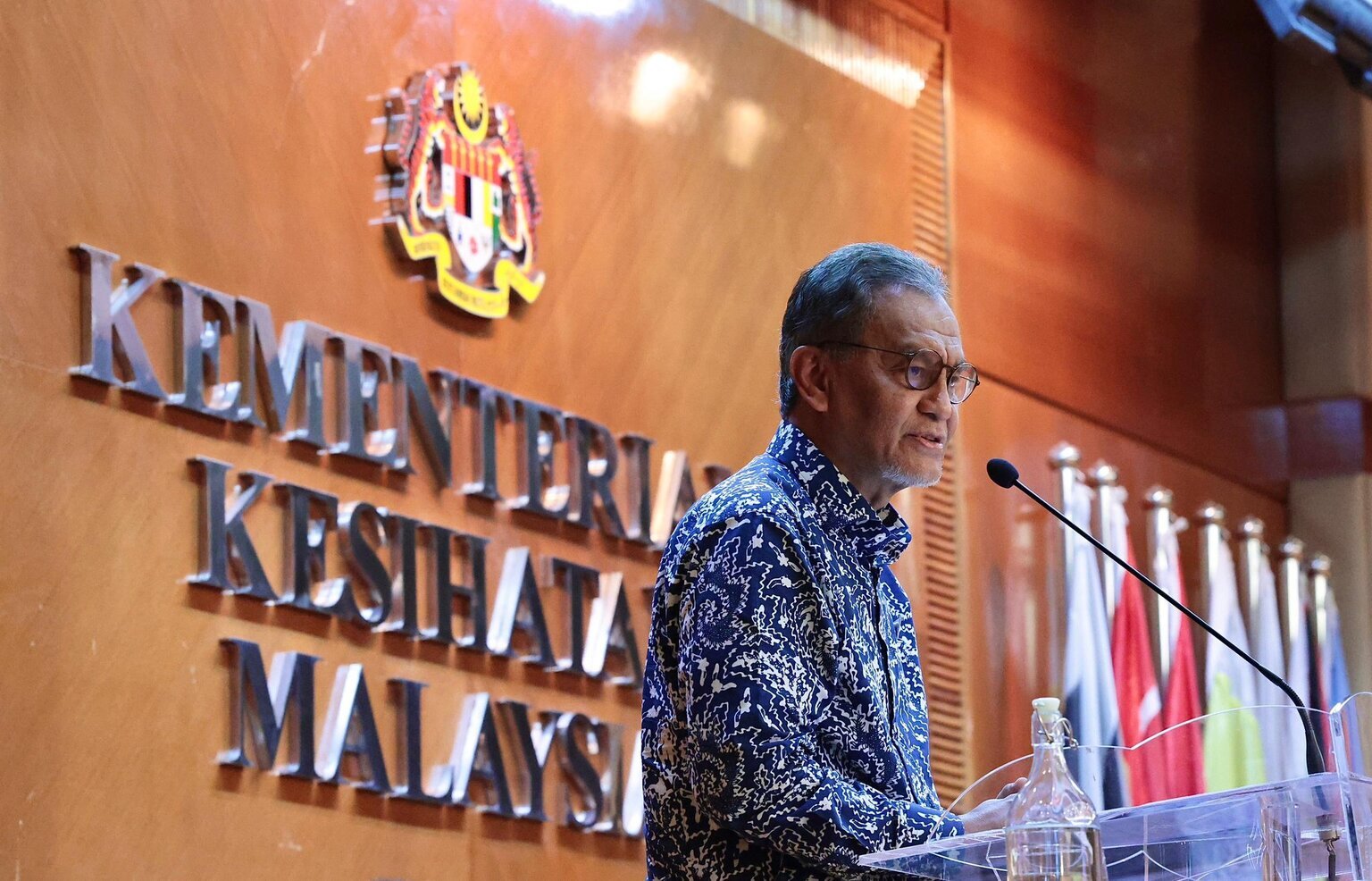
KUALA LUMPUR, Jan 3 — The Ministry of Health (MOH) will not impose an American model of the diagnosis-related groups (DRG) payment system on private hospitals, Dzulkefly Ahmad said today.
The health minister touted the DRG or clinical risk groups (CRG) reimbursement models as a way to curb Malaysia’s high medical inflation of 12.6 per cent, amid public outrage over rising health insurance premiums.
“This is not coming from a wholesale adoption of the American [model]; we’ll have our own customised hybrid DRG or CRG,” Dzulkefly said in his New Year’s address to MOH staff at the ministry’s headquarters in Putrajaya today.
He acknowledged that a DRG model can only be introduced with data and an electronic medical record (EMR) system, saying: “It’ll be a nightmare to practise DRG without digital support, data, classification of diseases, and reimbursement.”
Dzulkefly touted the ministry’s Hospital Services Outsourcing Programme (HSOP) through ProtectHealth Corporation, in which more than 24,000 cases were outsourced to 94 private hospitals last year for RM66.5 million.
“When we first started, they [private hospitals] wanted to charge us like patients in their facilities. Now they understand how they will charge with our bundled payments, MOH’s sort of DRG,” he said.
“That’s an introduction. When we have diagnosis-related groups, or better still clinical related groups, we now move from DRG to CRG.”
The health minister also touted the Rakan KKM programme as “health financing transformation” by creating a “premium economy” wing in government hospitals, beginning with Cyberjaya Hospital.
“Through Rakan KKM, we’ll get resources for better remuneration for health care staff, not just specialists,” he said. “We’ll make sure we retain our specialists, nurses, and health care workers.”
The Association of Specialists in Private Medical Practice Malaysia (ASPMP) has opposed the DRG model, noting its flaws in the United States.
Paediatrician Dr Musa Mohd Nordin has also written several articles criticising the DRG. The Malaysian Medical Association (MMA), similarly, pointed out that specialist doctors may avoid taking on complex cases if these are not adequately compensated in a DRG framework.
In its latest op-ed, ASPMP claimed that specialist doctors – whose fees are capped under the Private Healthcare Facilities and Services Act 1998 and have not been raised for over a decade – may end up earning less per service or hour under a DRG system than a hairdresser, plumber, or electrician.
Under the DRG model, hospital cases are categorised into groups based on diagnoses and procedures. This system establishes standard payment rates by providing a fixed amount for each group, rather than itemising individual charges. Hospitals must operate within this predetermined budget that is negotiated in advance between payers and hospitals.
Currently, private hospitals in Malaysia operate on a fee-for-service model, in which private health care providers are paid based on the amount of services delivered.
The MOH is organising a town hall on DRG in its Putrajaya headquarters on January 9 at 2pm. Based on its invitation list, the only private medical organisations invited were the Association of Private Hospitals Malaysia (APHM) and MMA. Representatives from university and military hospitals were invited.
The Bank Negara governor, as well as three insurance associations – Life Insurance Association of Malaysia (LIAM), Persatuan Insurans Am Malaysia (PIAM), and Malaysia Takaful Association (MTA) – were also invited to the MOH’s town hall on DRG, besides a few think tanks and consumer groups, as well as business consulting firm Macquarie Capital Securities Malaysia.
During his New Year’s address to MOH staff today, Dzulkefly briefly touched on doctors’ unhappiness in the public health service.
“On the acute shortage of doctors and the like, they attack me, I attack back. Thank you for your service. I don’t run a hospital.”
It is unclear what the minister was referring to. His December 30 post on X – in response to a notice about the absence of workers for on-call duties at Kiulu Klinik Kesihatan in Sabah due to staff shortages as a result of their contracts ending – was heavily criticised by government doctors.
A slide shown during his speech stated that 3,950 contract medical, dental, and pharmacy officers were given permanent positions last year, besides an increase in the on-call allowance for medical and dental officers by RM55 to RM65 for active calls.
He also told MOH’s senior leadership, including the director-general, secretary-general, and their deputies, to be on board with him.
“I’m here to provide leadership, I’m here to provide stewardship. I’m not here to take over your tasks as KPK and KSU and the deputies. I need the entire team to be on board with me. If you really cannot help me, just don’t stifle me, but I believe we’re all in this together.”


