

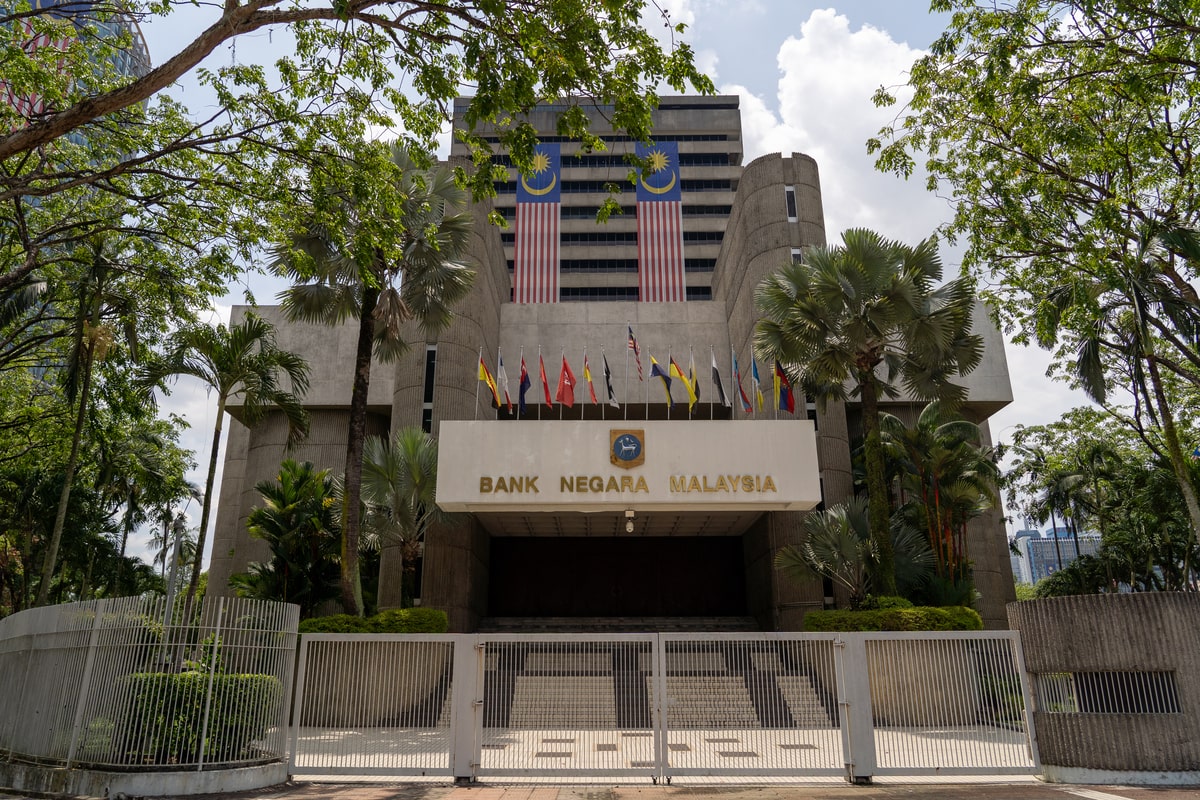
KUALA LUMPUR, August 11 — MediAsas doesn’t cover pre-existing conditions or mental disorders, among many other exclusions similar to conventional medical plans in the market, according to Bank Negara Malaysia (BNM).
The central bank recently published a 22-page FAQ on its website, dated July 29, 2026, on the “pilot” version of MediAsas. BNM deputy governor Aznan Abdul Aziz reportedly told the Sasana Symposium that the government-designed product had entered its pilot phase that day for internal testing before a public launch in January 2027.
However, the MediAsas FAQ for customers indicates that the pilot was originally intended for the public, as the document states that a policy issued under the “pilot version” of MediAsas can be replaced with the “final approved MediAsas version” later. It’s unclear why the government scrapped plans to pilot the product for the public.
Although the government previously touted “affordable” premiums of between RM60 and RM550 monthly, depending on age, the MediAsas FAQ omits details on premium rates, beyond simply saying that premiums or contributions for the medical plan aren’t guaranteed.
“The insurer or takaful operator reserves the right to revise the premium/contribution by giving a written notice of at least 30 days prior to the policy/certificate anniversary date,” said the FAQ.
“MediAsas may be subject to future medical repricing, in line with changes in medical costs, claims experience and regulatory requirements. Any repricing activity shall be communicated through a written notice of at least 30 days prior to the policy/certificate anniversary date.”
There are two products under MediAsas – Teras and Fleksi – that also come with takaful versions. MediAsas Teras has an annual limit of RM100,000 for policyholders aged 59 years and younger, and RM150,000 for those aged 60 years and older, whereas MediAsas Fleksi’s annual limit is RM300,000. There are no lifetime limits for either product.
MediAsas is available for individuals aged zero to 70 years, with coverage renewable up to age 85. Premiums/contributions will change based on one’s attained age.
According to the FAQ, MediAsas doesn’t adjust premiums or contributions based on an individual’s claims. “Any changes are made based on the overall performance and sustainability of the MediAsas portfolio.”
MediAsas’ 35 Major Exclusions: Pre-Existing Conditions, Mental Disorders, Others
BNM’s FAQ lists 35 major exclusions under MediAsas, such as pre-existing conditions, congenital conditions, mental or nervous disorders, attempted suicide, dental conditions and treatment, plastic or comestic surgery, sexually transmitted infections, pregnancy complications, impotence, ritual circumcision, sickness or injury from hazardous sports, claims primarily for investigative or preventive purposes, etc.
Many of these are boiler-plate exclusions found in conventional medical plans designed by the private sector.
MediAsas also doesn’t cover stem cell therapy, except for hematopoietic blood disorders; treatments specifically for weight management; treatments of an experimental, investigational or research nature; or supplements, tonics, vitamins, health products, nutraceuticals or food supplements, unless these form part of a “medically necessary treatment provided during hospitalisation”.
MediAsas further excludes coverage of alternative, complementary or traditional medical treatments, such as chiropractic treatment or acupuncture, among others, besides external prosthetic appliances or devices like artificial limbs, hearing aids, and pacemakers, among others.
A pre-existing condition is defined by MediAsas as an illness, injury, or medical condition that the customer had before their coverage started. This includes conditions for which he/she had received or is receiving treatment; had sought or been advised to seek medical advice, tests, care, or treatment; had “noticeable” signs or symptoms; or “reasonably should have been aware of the condition”. Exclusions mean that MediAsas doesn’t reimburse charges incurred for any claims directly or indirectly resulting from any of the listed medical conditions or situations, and its complications.
MediAsas doesn’t cover claims for specified illnesses within 120 days of the Risk Commencement Date or reinstatement date of the policy, whichever is later, nor any medical or physical conditions (except for accidental injuries) arising within 30 days. Specified illnesses aren’t listed in the FAQ.
These 120-day and 30-day waiting periods under MediAsas are standard in conventional medical plans. However, CodeBlue’s October 2025 survey among 855 specialists practising in private hospitals on health insurance issues found that guarantee letters (GLs) were often denied or revoked for patients whose policies were less than two years old.
“MediAsas is a fully underwritten product. Applicants are required to disclose all relevant health information through the health questionnaire during the application process. Where an applicant has pre-existing conditions (PEC), depending on the information provided, additional medical evidence or assessments may be required to determine insurability,” said the FAQ.
“Claims relating to PEC (i.e., illness, injury or medical conditions that customer already had before coverage starts) will be assessed in accordance with the terms and conditions of the policy/certificate. This includes exclusions and any underwriting terms imposed at policy/certificate issuance.”
Health Minister Dzulkefly Ahmad reportedly claimed last February that the government-designed base MHIT product, or MediAsas as it’s known now, would be offered to individuals with “stable and controlled” pre-existing conditions, including those with mental health issues.
The MediAsas FAQ did not state if premiums would be loaded for policyholders who declared pre-existing illnesses, such as non-communicable diseases like diabetes, before purchasing their policy. Neither did BNM’s document guarantee coverage of people with “stable and controlled” chronic conditions, seemingly leaving it to ITOs to decide whether to accept them as customers for MediAsas.
Despite problems with claim denials due to insurance and takaful operators (ITOs) frequently invoking “pre-existing condition” exclusions, even when the findings were incidental or unrelated to the admission illness, the government did not mandate medical check-ups for purchase of MediAsas.
“A medical check-up is usually not required but it is subject to the health conditions disclosed. A medical check-up or additional medical information may be requested if you have any health condition that needs further review. The cost of the medical examination will be borne by the insurer or takaful operator,” said the MediAsas FAQ.
“It is important to disclose your health condition accurately and completely when applying for MediAsas. Failure to do so may affect your coverage and could result in claims being delayed or rejected.
“If false or incomplete information is provided, the application or claim may be rejected, delayed or subject to further action in accordance with the terms and condition of the policy/certificate.”
Seven-Year Moratorium Before Prohibiting Claim Denials Over Non-Disclosure
Last March, BNM governor Abdul Rasheed Ghaffour reportedly touted MediAsas’ “no look-back” clause as a consumer protection mechanism to prevent ITOs from denying claims on the grounds of undeclared pre-existing conditions.
The central bank’s FAQ stated a moratorium period of a whopping seven continuous years from the Risk Commencement Date for MediAsas, after which claims cannot be contested on the grounds of non-disclosure or misrepresentation.
“However, the insurer or takaful operator may reject or contest a claim if the insurer or takaful operator establishes that non-disclosure or misrepresentation was fraudulent, deliberate or reckless; or the claim relates to a Pre-Defined Medical Condition that existed before, or first manifested within 30 days from, the Risk Commencement Date.”
Pre-Defined Medical Conditions under MediAsas are listed as follows:
- All cancers, including any malignant neoplasms, whether active or in remission.
- End-stage organ failure and transplant-related conditions namely cardiac, renal, hepatic, pulmonary, pancreatic, hematological failure, and complication related to organ or bone marrow (stem cell) transplantation.
- Major cardiovascular conditions namely coronary artery disease (ischaemic heart disease), heart failure, cardiomyopathy, moderate to severe valvular heart disease, and infective endocarditis.
- Major neurological disorders, including Parkinson’s disease, epilepsy and chronic seizures, motor neurone disease, and multiple sclerosis.
- Systemic autoimmune and inflammatory disorders, including systemic lupus erythematosus (SLE), rheumatoid arthritis, systemic sclerosis (Scleroderma), dermatomyositis, and systemic vasculitis.
What this “no look-back” clause or moratorium means is that MediAsas policyholders are protected from their insurer digging into their old medical records – only after paying for their policy for at least seven years.
But even after seven years, ITOs can still deny a claim if the company believes that policyholders were “fraudulent, deliberate, or reckless” in their alleged non-disclosure of pre-existing conditions, or if the ITO believes that the policyholder already had cancer, among other diseases listed above, prior to purchasing their policy.
CodeBlue previously reported the case of a 57-year-old cancer patient, whose insurer demanded medical records dating back to 2017, after he submitted a claim for a CT scan in July 2025, a little more than two years after his policy took effect in April 2023. His medical plan had a 120-day waiting period for specified illnesses, including cancer.
His insurer didn’t pay out any of his claims, but voided his policy early this year and gave him a full refund of premiums after CodeBlue’s article was published. The man later died.
Deductibles: RM500-RM1,000 (MediAsas Teras), RM10,000-RM15,000 (MediAsas Fleksi)
For the MediAsas Teras plan, deductibles are charged at RM500 per disability for policyholders aged 59 years and below, and RM1,000 per disability for those aged 60 years and older. Policy annual limits are RM100,000 and RM150,000 for both age groups respectively.
For treatment at Out-of-Network Providers, a 20 per cent co-insurance/co-takaful, capped at RM3,000 per disability, is charged on top of deductible.
Copayments (deductible and co-insurance/co-takaful) don’t apply to treatment at government health care facilities, emergency treatment, and outpatient cancer treatment, but this copayment waiver is applicable only for MediAsas Teras.
As for MediAsas Fleksi with an RM300,000 annual limit, deductibles are charged at RM10,000 per annum for treatment at Preferred In-Network Providers, and RM15,000 per annum for treatment at Out-of-Network Providers.
Deductibles are the amount that a policyholder must pay upfront before their plan takes care of the balance of eligible expenses. Given that MediAsas Fleksi deductibles are as high as RM10,000 to RM15,000 and aren’t waived even for emergency cases, policyholders cannot use this plan to go to any hospital when struck with a medical emergency unless they can afford to pay those amounts upfront.
MediAsas may further impose co-insurance/co-takaful of up to 20 per cent on the cost of specified cancer drugs, according to a Cancer Drug List, for both inpatient and outpatient care.
MediAsas also slaps on additional deductibles for its outpatient illness treatment benefit for dengue fever, influenza A, influenza B, bronchitis, pneumonia/bronchopneumonia. Under MediAsas Teras, this benefit is as charged, up to RM3,000 per year, subject to an RM50 deductible per outpatient visit and annual limit.
For MediAsas Fleksi, its outpatient illness treatment benefit is listed “as charged, up to RM3,000 per year, subject to RM10,000 or RM15,000 deductible per annum and overall annual limit”.
MediAsas Fleksi is presented in the FAQ as supplementary medical coverage to one’s employee benefit scheme that is assumed to cover MediAsas’ RM10,000 deductible.
Shared Room And Board, Cashless Facility Only For Preferred Hospitals, GL Not Guaranteed
MediAsas’ room and board (R&B) benefit is only room-sharing (four-bedded or two-bedded, depending on availability), without a daily monetary cap, to support “cost-efficient and sustainable health care delivery”.
A policyholder who wants a room upgrade must pay the remaining balance of the daily charge, as reimbursement will be limited to the Sharing Room rate.
Cashless facilities under MediAsas are only available for treatment at a Preferred In-Network hospital, whereas treatment at Out-of-Network Providers may only be reimbursed on a pay-and-claim basis.
MediAsas provides a GL facility for treatment at Preferred In-Network hospitals, but pre-authorisation requirements apply and approval is subject to the assessment and policy/certificate terms. If a GL isn’t issued, policyholders need to pay the expenses upfront and subsequently claim for reimbursement.
Claim processing time may vary, depending on the completeness of documents and the type of claim. “Claims processing may be delayed until all required documents are submitted. Consumers will be notified by the hospital or insurer/takaful operator to provide the necessary information before the claim can be processed.”
Claims decisions can be disputed by submitting a request, subject to the ITO’s review process, which may include referral to the Financial Markets Ombudsman Service (FMOS) or BNM’s Laman Informasi Nasihat dan Khidmat (BNMLINK), where applicable.
The current list of MediAsas’ Preferred In-Network Providers includes:
- KPJ Sentosa KL Specialist Hospital
- KPJ Tawakkal Specialist Hospital
- KPJ Rawang Specialist Hospital
- KPJ Kajang Specialist Hospital
- Pantai Hospital Klang
- Pantai Hospital Cheras
- Pantai Hospital Ampang
- Bukit Tinggi Medical Centre
- Columbia Asia Hospital Klang
- Subang Jaya Medical Centre
Preferred In-Network Providers are hospitals and other health care providers enlisted by ProtectHealth Corporation Sdn Bhd or any other entity authorised by the government.
The six participating ITOs so far are:
- AIA Berhad
- Allianz Life Insurance Malaysia Bhd
- Etiqa Family Takaful Bhd
- Great Eastern Life Assurance (Malaysia) Bhd
- Prudential BSN Takaful Bhd
- Syarikat Takaful Malaysia Keluarga Bhd
Conventional Hospitalisation Benefits, Outpatient Illness Treatment Benefit Limited To Hospitals, No Gatekeeping Of Care
Besides shared room and board, MediAsas provides conventional hospitalisation benefits like intensive care unit (maximum 90 days per disability), as well as hospital supplies and services, surgical fees, anaesthetist fees, operating theatre fees, ambulance fees, and in-hospital physician visit (maximum two visits per day) as charged, subject to annual limit.
Outpatient benefits include day surgery, pre-hospitalisation treatment within 30 days prior to hospitalisation (consultation, diagnostic tests, medication and treatment), and post-hospitalisation treatment within 90 days after hospital discharge (medication and treatment, general practitioner or specialist follow-up), as charged, subject to annual limit.
MediAsas also offers a post-hospitalisation outpatient physiotherapy treatment benefit within 90 days after discharge from hospital, up to RM200 per session, subject to a maximum of 10 sessions per disability and annual limit.
Post-hospitalisation home nursing care (subject to a maximum of 90 days per lifetime) is available, up to RM3,000 per year, subject to annual limit.
MediAsas’ outpatient cancer treatment benefit is covered as charged, subject to annual limit.
MediAsas’ outpatient illness treatment benefit for dengue fever, bronchitis, influenza A and B, and pneumonia/bronchopneumonia is limited to the outpatient department of hospitals, covering consultation fees, diagnostic tests, as well as medication or “fluids and monitoring”. It’s unclear what the FAQ means by “fluids and monitoring” in a hospital’s outpatient department, as management of fluids and monitoring of such cases are normally done in an inpatient setting.
MediAsas doesn’t gatekeep care, which means that policyholders can self-refer to a specialist or hospital, unlike some other medical plans in the market that charge 20 per cent copayments if policyholders don’t follow their general practitioner (GP) referral pathway for non-emergency treatment.
“No, it is not compulsory to visit a clinic first. However, for non‑emergency and less severe conditions, customers are encouraged to start treatment at a clinic for better‑coordinated care before going to a hospital,” said the FAQ.
“The cost of GP referral for hospitalisation is covered under MediAsas. This includes the consultation and/or treatment provided, including investigation and tests which are performed for diagnostic purposes within 30 days preceding hospitalisation.”
MediAsas doesn’t provide a no-claim bonus, unlike some other medical plans in the market.
MediAsas Adopts ‘Standardised, Cost-Focused Design’
MediAsas, a standalone medical insurance/takaful plan, adopts a “standardised and cost-focused design” that includes defined benefits and limits, cost-sharing features, selected preferred and cost-effective network hospitals with lower copayments, and broader risk pooling to spread claims costs across more policyholders.
MediAsas also adopts cost-control mechanisms to reduce unexpected bill variations, such as a diagnosis-related groups (DRG) payment system and prescribed covered drugs/devices based on effectiveness assessed by the Ministry of Health (MOH).
“These features work together to support affordability and better manage premium/contribution increases over time,” said the FAQ, even as it also explicitly stated that MediAsas could be subject to repricing, simply communicated with a 30-day written notice.
MediAsas is targeted at uninsured individuals and those looking to downgrade from their increasingly unaffordable existing MHIT plan.
BNM’s FAQ described MediAsas as a “key component” of the Reset strategy by the MOH, Ministry of Finance (MOF), and the central bank to address medical inflation and “strengthen” Malaysia’s health care system, aiming to enable Malaysians to obtain basic protection against essential, high-impact health care costs; channelling private health care spending more efficiently to complement public health care services; and accelerating progress towards value-based health care.
Download the English and BM versions of the MediAsas pilot FAQ here.

